25 Sep 2026
21 Aug 2026
Turning Waste into Treasure: Smarter Recycling for a Sustainable Materials Future
What if yesterday’s waste could power tomorrow’s technologies?
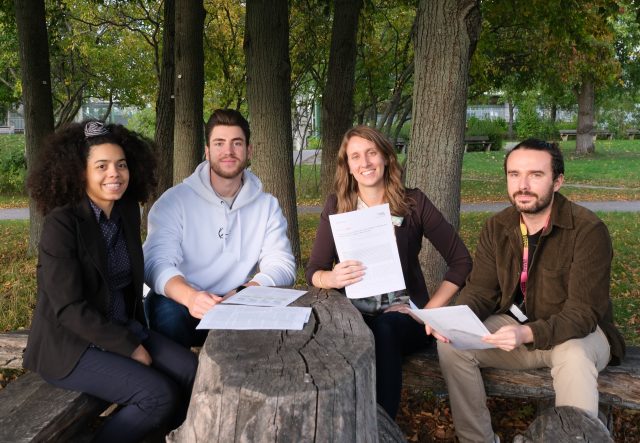
At Luleå University of Technology, Associate Professor Sadia Ilyas and her research team are working to make that vision a reality. Their work focuses on transforming industrial waste and low-grade raw materials into valuable metals, key ingredients in everything from batteries and wind turbines to electronics and electric vehicles. By rethinking how we source these critical materials, their research helps pave the way toward a more sustainable and circular economy.
Why critical metals matter
Modern life requires, in addition to the well-known elements like Fe and Si, also essential elements like nickel, copper, lithium, molybdenum, and rare earth elements. However, traditional mining of these resources is energy-intensive, environmentally demanding, and increasingly uncertain due to global supply risks.
At the same time, vast amounts of valuable metals already exist in what is often treated as waste: used batteries, spent catalysts, discarded magnets, and mine tailings. Yet much of this material remains underutilized, as current recycling methods are often inefficient, energy-heavy, or environmentally problematic.
A new approach: extracting value from waste
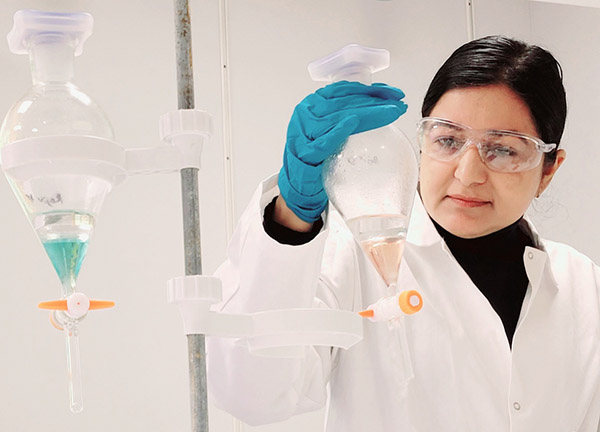
Sadia Ilyas and her team are developing next-generation hydrometallurgical processes techniques that use liquids to extract metals to recover valuable elements from complex waste streams and low-grade ores. Their goal is to create smarter, more sustainable ways of recovering these materials, while reducing reliance on newly mined resources.
One of the key innovations is combining chemical and biological methods. By carefully controlling how metals dissolve and move between solutions, the researchers can selectively extract and concentrate specific elements. This allows multiple metals to be recovered from a single waste stream in a controlled and efficient way.
Importantly, the team also integrates sustainability assessments into their process design. This means evaluating not only how well the methods work, but also their environmental and economic impact ensuring that the solutions are viable in real-world applications.
Promising results from complex materials
The approach is already showing strong results. The team has successfully recovered metals such as molybdenum, lithium, nickel, cobalt, and rare earth elements from challenging waste materials. These include sources that were previously difficult or uneconomical to process.
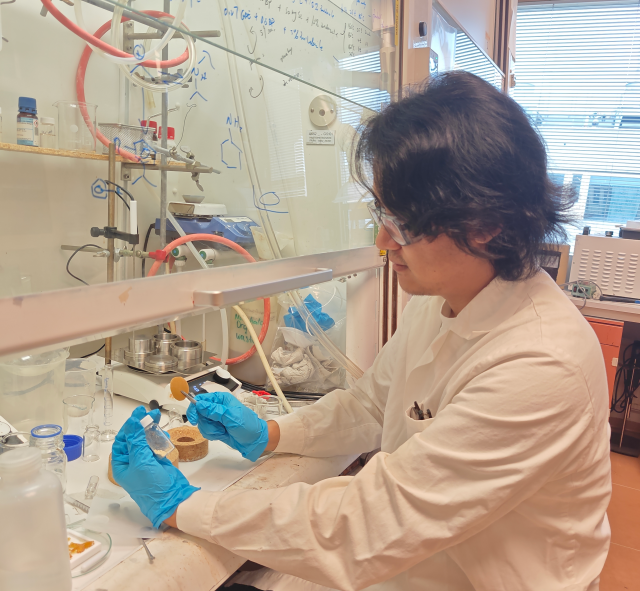
In one case, scientists have developed a smarter way to recover valuable metals from industrial waste. They were able to extract high‑quality molybdenum, a metal used in everything from steel to electronics from used catalysts that would otherwise be discarded.
The method works a bit like carefully “washing out” the useful material and then letting it reform into pure crystals. By fine‑tuning each step, the researchers can target specific metals more precisely, use fewer chemicals, and separate them more efficiently.
In simple terms, this means turning waste into a valuable resource in a cleaner and more effective way, an important step toward more sustainable use of materials.
This growing understanding of how to optimize recovery processes also opens the door to scaling up from laboratory experiments to real industrial systems.
From lab to industry
The research is closely linked to industry needs and is carried out within the WISE research programme, in collaboration with industrial partners. The technologies have clear application potential in fields such as:
- Battery recycling
- Catalyst manufacturing
- Production of advanced materials
- Circular resource recovery systems
The research conducted is basic materials science research with the potential to upscale solutions to semi-pilot systems and evaluate them through life cycle assessments and techno-economic analyses. This is crucial for bridging the gap between research and industry turning promising ideas into practical, large-scale solutions.
Building a circular future
At the heart of this research lies a simple but powerful idea: materials should not be wasted they should be reused, recycled, and reintegrated into new value chains.
“What excites me most is the opportunity to transform waste and underutilized materials into valuable resources and contribute to a more sustainable future,” says Sadia Ilyas.
The challenge, she explains, is to design extraction processes that are not only efficient, but also environmentally and economically sustainable, especially when dealing with increasingly complex waste streams.
By developing flexible, resource-efficient recycling strategies, the team is helping to close the loop for critical materials. Their work supports a future where Europe and the world can rely less on primary mining and more on circular, sustainable resource use.