19 Oct 2026
20 Oct 2026
Can we agree on what sustainability means in bioelectronics?
The authors stress the need to report sustainability metrics alongside performance, assess whole devices rather than just the active layer, and look at the full life cycle, from sourcing to disposal. The final goal is a field in which “sustainable” means something measurable that other labs can test and build on.
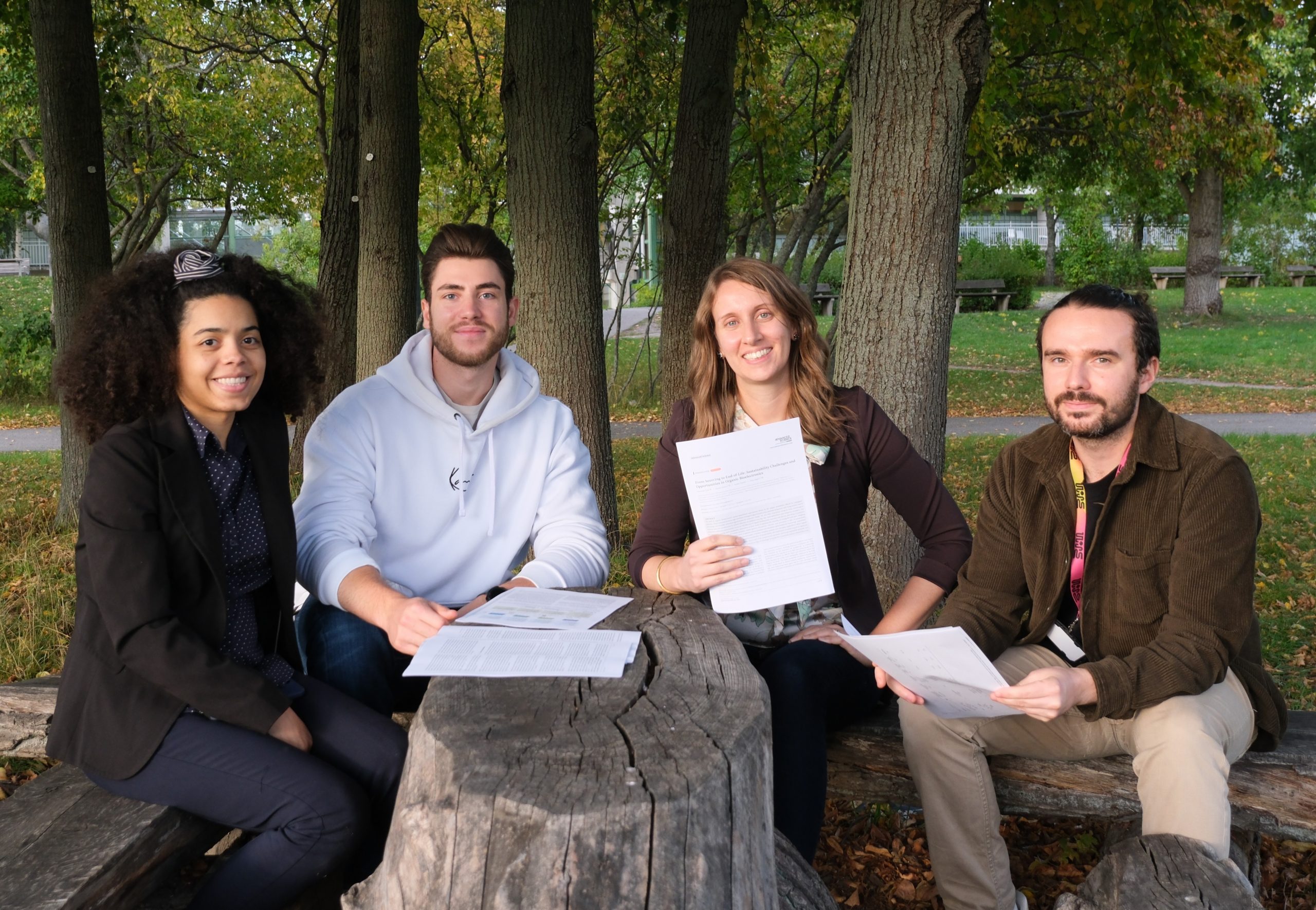
The scientific method is a systematic way of investigating questions and building reliable knowledge about the natural world. It rests on observation, testing, and evidence rather than assumption or authority. But the method only works if scientists speak the same language: without clear definitions and common standards, one lab cannot reproduce another’s results, and progress stalls. This is one of the challenges at the heart of a new perspective article published in Advanced Science, “From Sourcing to End-of-Life: Sustainability Challenges and Opportunities in Organic Bioelectronics,” by Gwennaël Dufil, Marine Batista, Andrea Bionda, and Erica Zeglio.
Professor Zeglio works at Stockholm University and is a WISE fellow. Her group took a critical look at organic bioelectronics, a field that uses organic electronic materials in devices that interact with biology, from glucose biosensors to tools that monitor electrical activity in cells and tissue. The materials at the core of these devices, called conjugated polymers, are soft, flexible, and compatible with living tissue. However, sustainability aspects of these materials need to be framed adequatly. Their building blocks typically come from the oil industry, and the field is sometimes called plastic bioelectronics. The authors warn that its growth could create a new waste stream. Yet there are opportunities too: bioelectronic materials could replace durable components in short-lived applications.
—In our group, we sat together to discuss sustainability in our field. We ask ourselves questions like: what do we really mean by degradability? Are we using the correct term? We wrote this perspective to discuss and quantify sustainability properly, says Gwennaël Dufil, WISE postdoc and first author of the publication.
Where the footprint really sits
The life-cycle studies the authors review hold a surprise: the exciting new material is often not the main culprit. In one analysis of an organic solar cell, the polymer PEDOT accounted for just 0.16% of the energy needed to make the device. In a study of a sensing platform, the sensing materials made up about 3% of the global warming potential, while the flexible circuit board assembly contributed up to 95.9%. Improving the sustainability of conjugated polymer synthesis and processing still matters, since many high-performance polymers rely on toxic organotin compounds, palladium catalysts, and chlorinated solvents, but it is only part of the picture.
Devices designed to disappear
One answer to waste is transient electronics, devices built to work for a set time and then degrade, disintegrate, or resorb. For medical implants, that could mean no second surgery to remove them. But degradable doesn’t automatically mean greener. Where recycling already works, as with electronic textiles, degradation could waste valuable materials. And breakdown products’ toxicity must be tested as carefully as the original material.
Agreeing on the words
Terms such as biodegradable, bioresorbable, dissolvable, and transient are used differently across disciplines, and often interchangeably. The authors list and define them, linking each to IUPAC and ISO definitions and assessment standards where these exist. For some terms, such as “transient,” no agreed metric exists yet.
The authors also stress the need to report sustainability metrics alongside performance, assess whole devices rather than just the active layer, and look at the full life cycle, from sourcing to disposal. The final goal is a field in which “sustainable” means something measurable that other labs can test and build on.
Finally, the article also brings a lot of tools and keys to adopt sustainable strategies in the synthesis of materials and fabrication of devices.
The original article with the title: “From Sourcing to End-of-Life: Sustainability Challenges and Opportunities in Organic Bioelectronics” by Gwennaël Dufil, Marine Batista, Andrea Bionda, Erica Zeglio can be found at https://advanced.onlinelibrary.wiley.com/doi/10.1002/advs.77121?af=R
To know more about Professor Erica Zeglio’s research at WISE please visit: