26 Oct 2026
6 Oct 2026
Meet the WISE Fellows – Yu-Chiao Lu
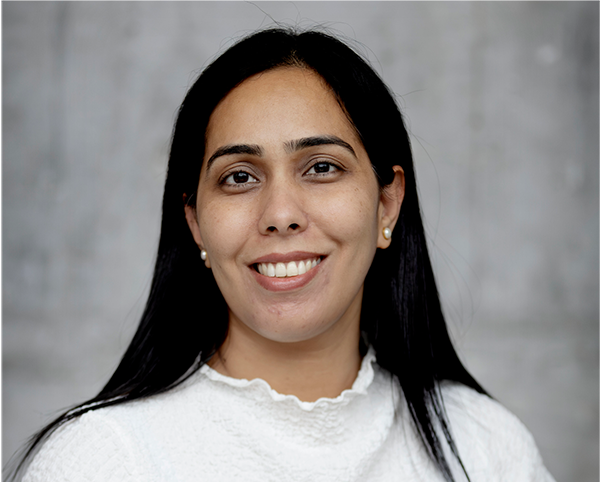
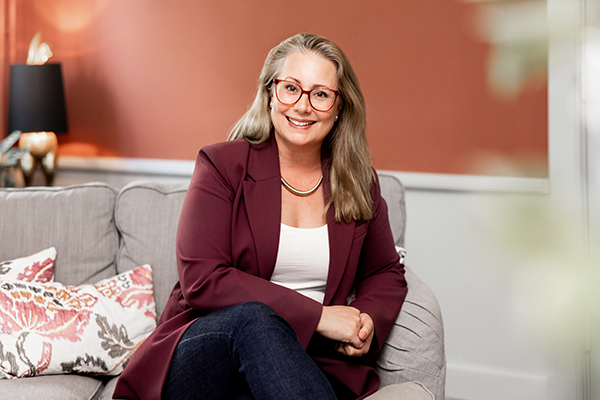
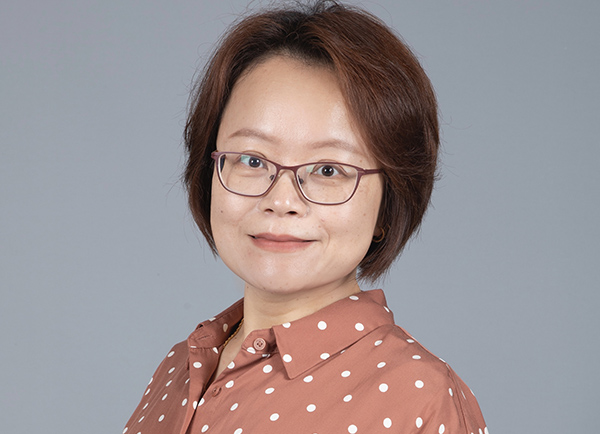
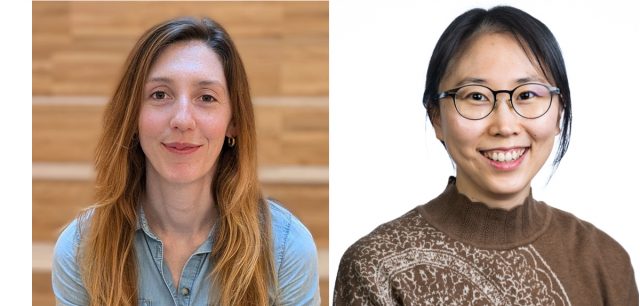
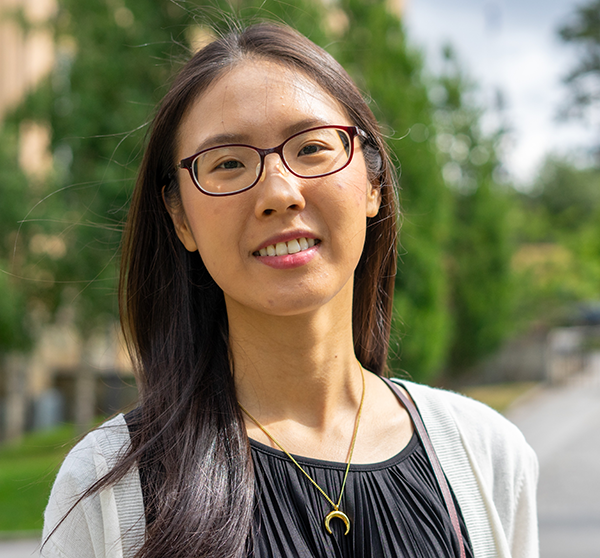
In this series of interviews, you will meet the WISE Fellows. This time you will meet Assistant Professor Yu Chiao Lu, who has joined KTH Royal Institute of Technology as a WISE Fellow.
Yu-Chiao Lu completed her bachelor studies in Mechanical Engineering at The University of Hong Kong and then graduated her Mater’s degree and Ph.D. degree at KTH under the Materials Science and Engineering Department. After graduation of her Ph.D. degree, she continued as a postdoc within the same department. Early this year in May, she was promoted as an assistant professor in the same department and will focus on the sustainable production of metals with a specific focus on pyrometallurgy.
What attracted you to WISE, and what made you decide to join the programme?
WISE is a platform that brings top notch researchers together to exchange ideas and together contribute to the sustainable development of materials, which I think is very important for the green and circular transition and this is what had drawn me to WISE. I decided to join WISE because I am generally interested about how researchers from the other sectors approach the sustainability and circularity challenges of materials. Additionally, I hope to make new connections within the WISE network so that I can collaborate with different sectors to facilitate the effective use of raw materials, waste, and by-products which is one of the focus of my research.
Can you tell us about your research and what you find most exciting about it?
My research aims to support the green and circular transition of the metal industry. This involves developing new steelmaking and waste-recycling processes, as well as facilitating cross-sector collaboration to enable their large-scale implementation. For example, my Ph.D. project focused on utilizing by-products from the Swedish pulp and paper industry as valuable raw materials in steelmaking.
My contribution was mainly laboratory research, including characterizing secondary materials and conducting bench-scale experiments to understand their behaviour in steelmaking processes. What I found particularly fascinating was seeing the research progress from laboratory studies to pilot-scale testing and eventually industrial implementation. It was rewarding to see how research can directly impact the day-to-day operations of two of Sweden’s largest energy-consuming sectors.
During my postdoc, I worked with a stainless steel company to develop new slag-former recipes. The aim was to reduce their use of fluorspar, a critical raw material, while also improving slag recyclability. I particularly enjoy collaborating with steel companies because it allows me to visit the plant and see how laboratory-developed solutions perform in a real industrial environment.
Looking ahead, I aim to combine thermodynamic and kinetic modelling, advanced characterization of carbonaceous, ceramic, and metallic materials, and metallurgical experiments at steelmaking temperatures of 1500–1700 °C. My goal is to support the development of innovative steelmaking processes, such as smelting reduction, as well as pyrometallurgical recycling processes for industrial by-products.
How do you think your research could benefit society in the future?
Metal products will remain essential to our daily lives, so the metal industry will continue to play an important role in society. If we can produce metals using less energy, with lower CO₂ emissions and less waste, I believe we can make an important contribution to global sustainable development.
Are there any specific industries, technologies, or applications where you see your research making an impact?
My research directly contributes to reduction the CO2 emissions of the metal industry while decreasing the amount of waste and by-products along the production chain. Therefore, I see that my daily research makes a direct impact on the metal industry.
When did you first become interested in research, and what inspired you to pursue a research career?
I first became interested in research when I studied the Master’s Programme at the department of Materials Science and Engineering at KTH, which is the department that I currently work for. Prof. Pär Jönsson, Prof. Björn Glaser, and Docent Andrey Karasev gave lively examples in their lectures of how metallurgists applied fundamental and applied research techniques to steer innovation in steel production over the years such that Sweden made it to the top of specialized steel production in the world. I had always thought that scientific research results would take decades to reach commercial maturity but my education at MSE completely changed my perspective. I took part in a few research projects during my master’s studies and I fell in love with the feeling of being able to solve the industry’s problem with my research and be able to witness the implementation of my research output instantly.
What motivated you to specialize in your particular research area?
I was inspired at a very young age by the animation films made by Hayao Miyazaki who founded the Ghibli Studio that I want to do something good for the environment but I wasn’t sure how I would realize it in my professional life. After having studied at MSE, I became certain that performing sustainability research for the metals industry is the best way to realize my childhood dreams. The villains in the Ghibli film that I love the most, Princess Mononoke, are in fact steelmakers who would cut down forests and destroy nature to produce weapons. I am glad that twenty years later, I have the opportunity to become the hero whom I used to admire in the animation film to facilitate the sustainable development of the metal industry such that it can co-exist peacefully with the environment.
What do you hope to achieve through your research in the coming years?
I would target two main areas in my research. Firstly, I would support the implementation of near-net-zero emission steel production processes through research. For example, I am currently investigating the effect of gangue content on the direct reduction process and smelting of iron ore pellets and smart carbon usage in direct reduction and in the electric arc furnace process. The second is developing innovative pathways to facilitate the recycling of industrial residues and by-products. For example, I currently focus on valorization of low-grade biomass for metallurgical applications, recycling of steelmaking slags, and reducing the consumption of critical raw materials in steelmaking processes through material substitution and process modification.