21 Aug 2026
Turning Waste into Treasure: Smarter Recycling for a Sustainable Materials Future
What if yesterday’s waste could power tomorrow’s technologies?

26 Aug 2026
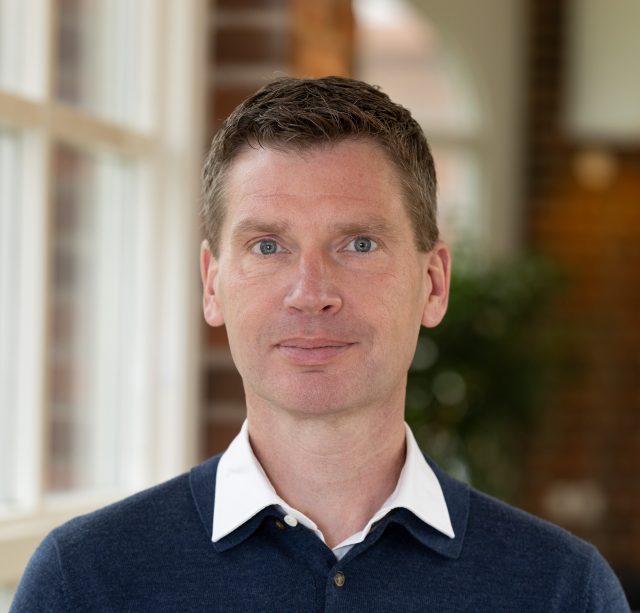
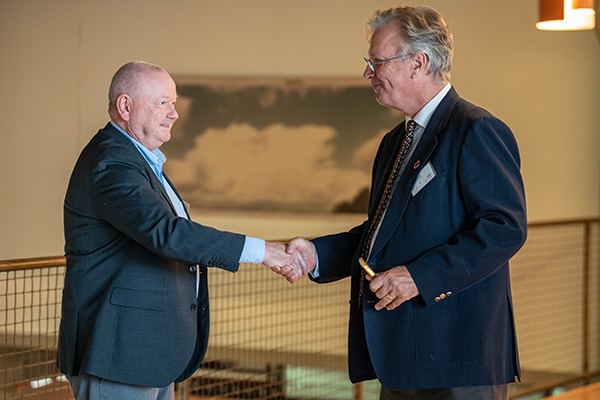
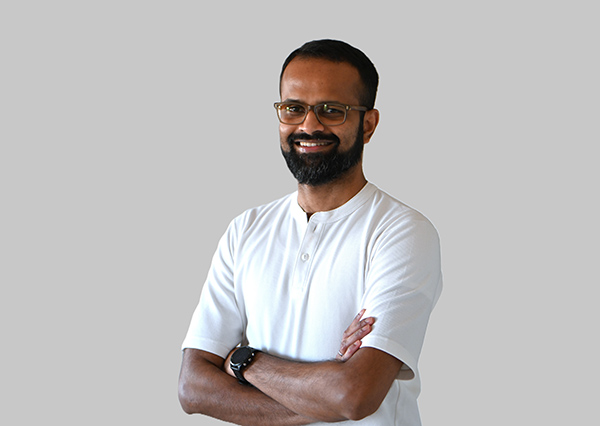
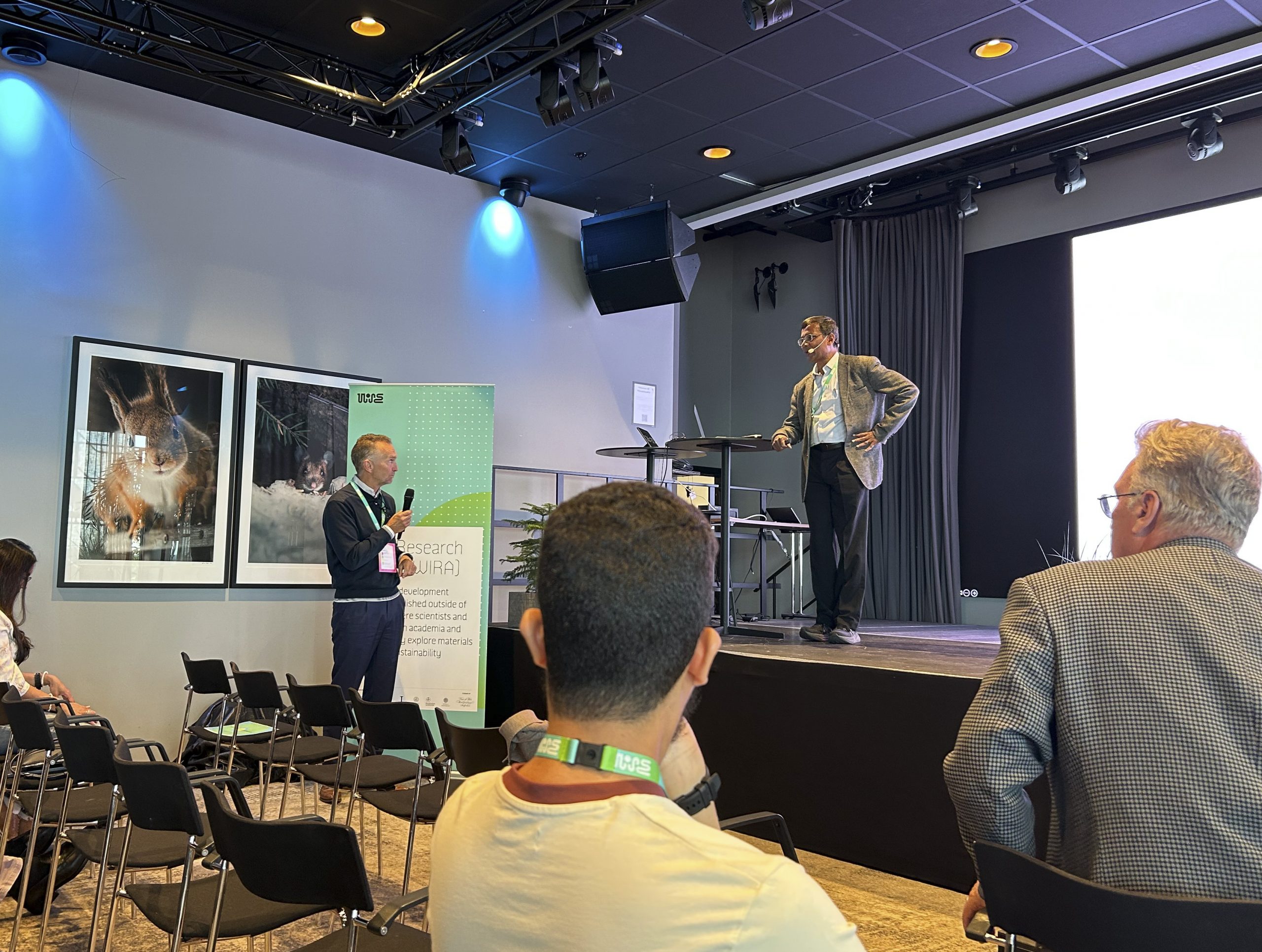
The second day of the WISE Welcome Meeting opened with an inspiring keynote lecture by distinguished Professor Dipankar Das Sarma, who introduced new PhD students and postdocs joining WISE to a fascinating class of materials: halide perovskites.
During the coffee break, we sat down with Professor Sarma to talk more about his presentation and his research. Professor Sarma is an ANRF National Science Chair and Emeritus Professor at the Indian Institute of Science in Bangalore, India. His research combines theoretical insights with experimental validation, often offering new perspectives on long-standing scientific questions or introducing entirely new concepts. A particular focus of his work is the electronic structure of materials: how electrons behave and interact within a material, ultimately determining many of its physical properties.
During his keynote, Professor Sarma presented some of his extensive research on halide perovskites and reflected on his long-standing fascination with these materials.
—I have studied these fantastic materials for the last 10–12 years, and I have mentored three generations of outstanding scientists in this field only, said Professor Sarma.
When we asked him what he finds most exciting about his research, his answer was immediate: the unexpected.
“For example, we started our research on these perovskites a bit away from optoelectronics (technology that connects electricity and light, like solar cells, light-emitting devices, detectors), which was, at the time, the main focus for these kinds of materials. Instead, we started looking at perovskites’ thermal conductivity. Then we realised how surprisingly low their thermal conductivities are and how by tuning the structure of these materials, we could modify their thermal properties.”
This insight opened a whole new range of possibilities. Professor Sarma and his research team modify the structure of perovskites by introducing organic and inorganic components between the layers of the material. This increases the distance between the atomic layers and can give the material a more pronounced two-dimensional character that differs from its usual three-dimensional structure.
The approach may sound highly complex, but Professor Sarma has a simple analogy:
“It is really like playing with Lego bits. You turn the pieces (the inorganic/organic molecules) until you see that they fit, and then you have constructed something new and exciting”.
During his talk, Professor Sarma asked us to imagine transporting fish from one location to another. How can you be sure that the fish was kept at the right temperature throughout the journey? In other words, “How do I know if my fish is fresh?”
The answer lies in the material’s ability to “remember” its temperature history. Thanks to the combination of organic and inorganic components, even a tiny temperature change of just 1 K can leave a detectable mark in the material. Additionally, if you use hydrophobic molecules, you can even make the material water resistant.
Professor Sarma is a WISE Invited Professor at Uppsala University, where he is hosted by Professor Håkan Rensmo. He will be in Uppsala until the end of August. Please check our website to find out when Professor Sarma will be visiting Sweden again.
To learn more about our WISE Invited Professor visit:
21 Aug 2026
What if yesterday’s waste could power tomorrow’s technologies?
21 Aug 2026
The call for the Knut and Alice Wallenberg Foundation (KAW) Proof of Concept Grants in Materials Science for Sustainability 2026 opens on September 1, 2026.
20 Aug 2026
WIRA-SuPRA is a collaborative platform where academia and industry work together to develop the next generation of sustainable plastics and coatings.
19 Aug 2026
CircuLab is a research infrastructure (Research Technology Platform, RTP) funded by WISE and Stockholm University for the synthesis, processing and application of sustainable materials through integrated AI-driven workflows.
18 Aug 2026
Looking for fresh research perspectives and the opportunity to connect with leading experts? Join us online for the upcoming WISE Invited Professor Lecture on 10 September 2026, from 3:00–4:00 pm […]
18 Aug 2026
From Italy to Germany and now Sweden, Cecilia Bruschi’s academic journey has been driven by a passion for chemistry and materials research.
17 Aug 2026
“We ask ourselves not only what is scientifically possible today, but also what advances are needed to bring these technologies closer to commercialization”, says WISE Fellow and Assistant Professor Lizhou Fan from Linköping University.
10 Aug 2026
Jiayao Duan is currently a postdoctoral researcher at Stockholm University, working with Prof. Erica Zeglio. His research is about developing organic electronic materials for bioelectronics, with a growing focus on sustainability and degradability.
7 Aug 2026
What if the next generation of medical implants could safely dissolve in the body once they’ve done their job and be produced with minimal environmental impact?
3 Aug 2026
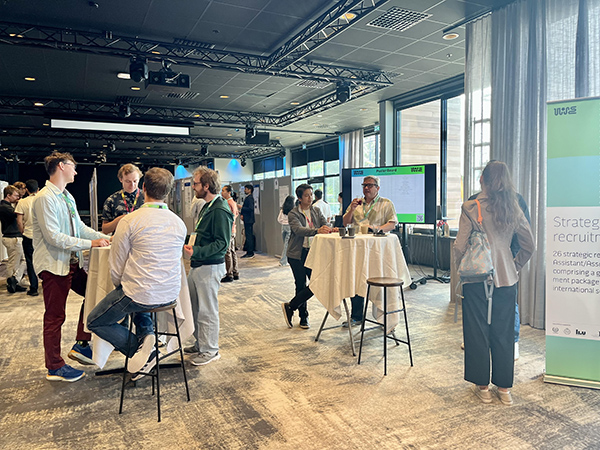
On 24 – 25 August, the WISE Community will welcome its newest members to the WISE Welcome Meeting 2026 at Vildmarkshotellet in Kolmården.
25 Jun 2026
Magnus Berggren, Director of WISE, will assume the role as the Executive Director of Knut and Alice Wallenberg Foundation from 1 January 2027. As a result, he will step down as Program Director of the WISE program and remain at Linköping University on a part-time basis.
23 Jun 2026
“Sustainability is the central theme of my research. Rather than focusing only on performance, we aim to develop technologies that are sustainable from the materials level all the way to manufacturing and end-of-life”, says Magdalena Titirici, Professor at the Imperial College London and WISE Invited Professor.
23 Jun 2026
WISE-affiliated researcher, Professor Ergang Wang at Chalmers University of Technology in Sweden, is coordinating a new EU-funded project, SPECTRA, to develop groundbreaking technologies that use solar energy to transform plastic waste into valuable resources. The project also involves Professor Moyses Araujo at Karlstad University, another WISE-affiliated researcher, as a partner.
22 Jun 2026
Knut and Alice Wallenberg Foundation has increased the searchable framework budget with an additional SEK 265 million to the Wallenberg Initiative Materials Science for Sustainability (WISE), marking a significant expansion of the programme.
12 Jun 2026
Imagine opening a juice box made from materials designed with deeper scientific insight into how they behave at the smallest scales.
4 Jun 2026
“My best advice is simple: think before you buy. Many of the products we purchase today ultimately end up very quickly in our waste streams”, says WISE co-Director for Sustainability, Niclas Svensson.
3 Jun 2026
When Zhejian (Jerry) Cao joined the WISE programme in 2023, he was already exploring a promising research direction. What followed was a journey defined by intellectual freedom, interdisciplinary growth, and a clear path toward academic independence
29 May 2026
Don’t miss to register for the upcoming WISE Invited Professor Lecture on 4 June 2026, from 3.00–4.00 pm CET.
28 May 2026
A new research platform for advanced tribological measurements was inaugurated on May 26 at Luleå University of Technology.
27 May 2026
“We want to influence the way electric vehicles are designed and built so multifuctional possibilities are integrated in the design from the beginning”, continues Prof. Leif Asp from Chalmers University of Technology and WISE-afilliated researchers.
26 May 2026
The May WISE Study Trip brought doctoral students and postdocs to Jönköping.
26 May 2026
The call for KAW Proof of Concept Grants in Materials Science for Sustainability will open soon
25 May 2026
The Knut and Alice Wallenberg Foundation has published the call text for the 2026 Proof of Concept Grants in Materials Science for Sustainability is now available. The call opens September 1, 2026, and closes October 15, 2026, at 13:00.
24 May 2026
“Undertaking my PhD under the WISE framework has been a wonderful opportunity and positive experience thus far. It has connected me with a strong network of outstanding researchers and provided a collaborative environment focused on solution-oriented research for a more sustainable future,” says Patrick Korir, PhD student at LTU and Höganäs.
19 May 2026
A successful partnership between CelluXtreme, KTH, and WISE is redefining what sustainable materials can achieve and deliver.
13 May 2026
“The most valuable aspect of this program was meeting different people and understanding different aspects of research”.
11 May 2026
Join us for the 9th Machine Learning Meets Materials Science Seminar, part of the WASP–WISE initiative! Mark your calendars: May 20 at 10:00!
11 May 2026
Don’t miss to register for the upcoming WISE Invited Professor Lecture on 4 June 2026, from 3.00–4.00 pm CET.
8 May 2026
The 2026 Machine Learning for Materials and Molecular Discoveries (ML2MD) symposium will bring together researchers to discuss recent advances at the intersection of machine learning, materials science, and molecular research.
7 May 2026
Sustainability is at the heart of WISE-ap3. All projects are expected to combine cutting-edge materials science with a meaningful contribution to a sustainable future.