20 Oct 2026
20 Aug 2026
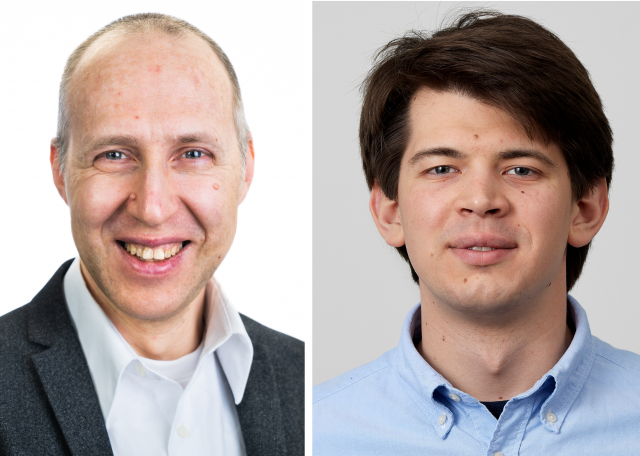
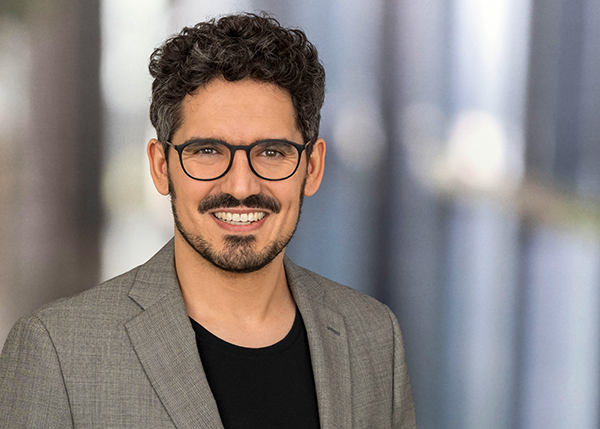
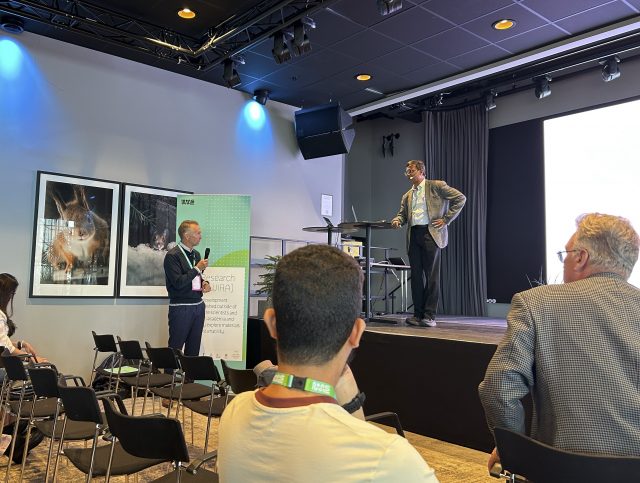
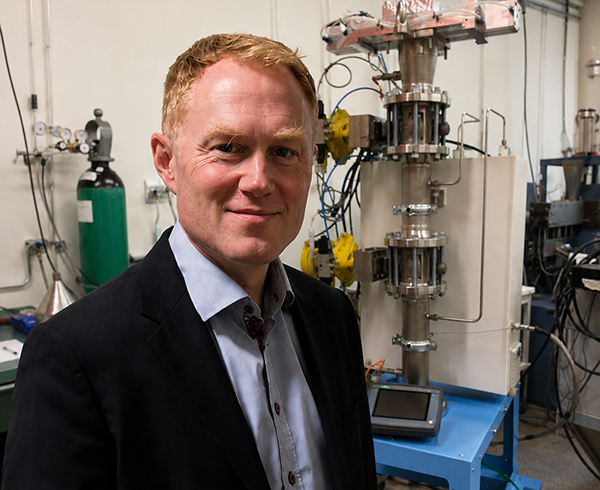
We are happy to introduce Lars Jerpdal, project manager at WIRA-SuPRA and one of our speakers at the Welcome Meeting conference, August 24-25.
WIRA-SuPRA is a collaborative platform where academia and industry work together to develop the next generation of sustainable plastics and coatings.
By combining research excellence with industrial needs, the platform helps transform promising material innovations into scalable, real-world solutions.
Could you briefly introduce your company and WIRA SuPRA and explain how your work connects to the research areas within WISE?
In my role at TRATON, I work closely with the challenges that WISE seeks to address, enabling circular material flows, increasing the use of recycled and bio-based materials, and ensuring that new innovations can meet demanding industrial requirements. My contribution is to connect research with practical implementation, helping translate scientific advances into sustainable products and manufacturing solutions for the transport industry.
An important part of WIRA-SuPRA is the continuous dialogue between academia and industry. Together with our partner companies Thule and Husqvarna, we regularly engage with researchers to discuss industrial challenges, identify knowledge gaps, and explore how academic expertise can help address future sustainability and material innovation needs. These interactions have already resulted in several ongoing research projects, a number of proposals currently under funding evaluation, and additional initiatives being developed for future research calls. By creating a common arena for collaboration, WIRA-SuPRA helps ensure that research efforts remain relevant to industrial needs while opening new opportunities for scientific innovation.
What do you see as the most important challenges or opportunities in sustainable materials research from an industry perspective?
From an industry perspective, one of the biggest challenges is to redesign materials and products to significantly reduce their environmental footprint while maintaining the performance and reliability that customers expect. We are seeing progress in areas such as recycled and bio-based materials, circular product design, and more resource-efficient manufacturing technologies. These developments have the potential to transform entire value chains and support the transition towards a more sustainable society.
At the same time, the challenge is that sustainability cannot come at the expense of functionality, quality, safety, or cost competitiveness. New materials must be thoroughly validated and proven to work under demanding real-world conditions before they can be widely adopted. This requires close collaboration between academia and industry to better understand material behavior, long-term performance, and scalability.
This is where initiatives like WIRA-SuPRA play an important role. By creating a platform where industry partners and researchers can continuously exchange knowledge and define common research priorities, we can accelerate the development of sustainable material solutions that are both scientifically advanced and industrially relevant. In my view, the greatest opportunity lies in bridging the gap between research and implementation, ensuring that new discoveries can create real impact in products, manufacturing, and circular value chains.
What makes collaboration between academia and industry valuable, and what advice would you give to researchers who are interested in working with industrial partners?
Collaboration between academia and industry is valuable because it combines two complementary perspectives. Academia brings deep scientific expertise, creativity, and the ability to explore new concepts, while industry contributes real world challenges, application knowledge, and an understanding of market and implementation requirements. Together, this creates a powerful environment for innovation and increases the likelihood that research will generate tangible societal and industrial impact.
From my experience within WIRA-SuPRA, the most successful collaborations are built on continuous dialogue and mutual understanding. Researchers gain valuable insights into industrial challenges and future needs, while companies gain access to new knowledge, methods, and technologies that may shape future products and processes. This interaction often leads to new research questions that neither academia nor industry would have identified on their own.
My advice to researchers interested in working with industrial partners is to engage early and invest time in understanding the broader context of the challenge they are addressing. It is important not only to focus on scientific excellence but also to consider aspects such as scalability, manufacturability, sustainability, and business relevance. At the same time, industry should remain open to new ideas and long-term perspectives, as some of the most transformative innovations originate from curiosity-driven research.
Ultimately, successful collaboration is about building trust, maintaining an open dialogue, and creating a shared vision of how scientific discoveries can be translated into real-world solutions. When this happens, both academia and industry benefit, and society benefits as well.
What skills, perspectives, or experiences do you think will be especially important for the next generation of researchers working towards a more sustainable future?
The next generation of researchers will need more than deep expertise within a single discipline. Solving sustainability challenges requires the ability to work across traditional boundaries, combining knowledge from materials science, engineering, chemistry, digitalization, manufacturing, and environmental assessment. The most impactful innovations will often emerge at the intersection of these fields.
I also believe that systems thinking will become increasingly important. Sustainable solutions cannot be evaluated based on a single parameter; researchers need to understand how material choices influence entire value chains, from raw materials and production to product use, reuse, and end-of-life management. Being able to connect technical performance with environmental, economic, and societal perspectives will be a key strength.
Another area that will become increasingly important is the ability to combine experimental research, simulation, and artificial intelligence. Physical testing will always be essential for generating reliable data and validating new materials and products. At the same time, advanced simulations can help researchers understand complex behavior, predict performance, and explore a much larger design space than would be possible through experiments alone. AI has the potential to accelerate this process even further by analyzing large datasets, identifying patterns, optimizing material formulations, and supporting the development of predictive models. Researchers who can effectively integrate domain expertise, testing, simulation, and AI will be well positioned to accelerate innovation and sustainability transitions.
Collaboration skills will also be crucial. Many sustainability challenges are too complex for a single organization or discipline to solve alone. Researchers who can engage with industry, understand real-world needs, and communicate their findings to different stakeholders will be better equipped to create impact beyond the laboratory.
Finally, I would encourage young researchers to remain curious and open-minded. The transition towards a more sustainable future will require both incremental improvements and disruptive innovations. By combining scientific excellence with collaboration, creativity, and a willingness to challenge established solutions, the next generation of researchers has a unique opportunity to drive meaningful change and contribute to a more sustainable society.