3 Aug 2026
New WISE Researchers to Gather at the Welcome Meeting 2026
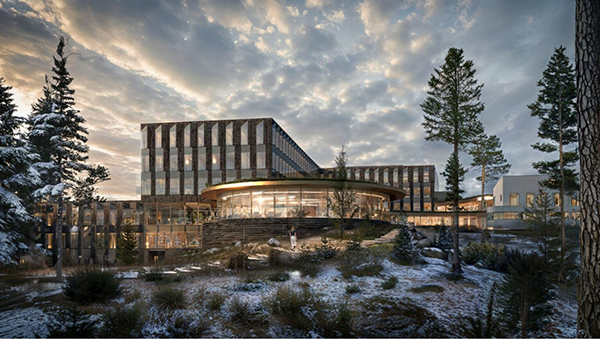
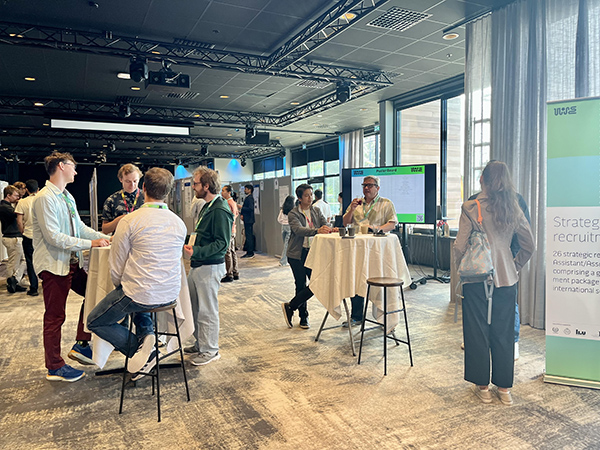
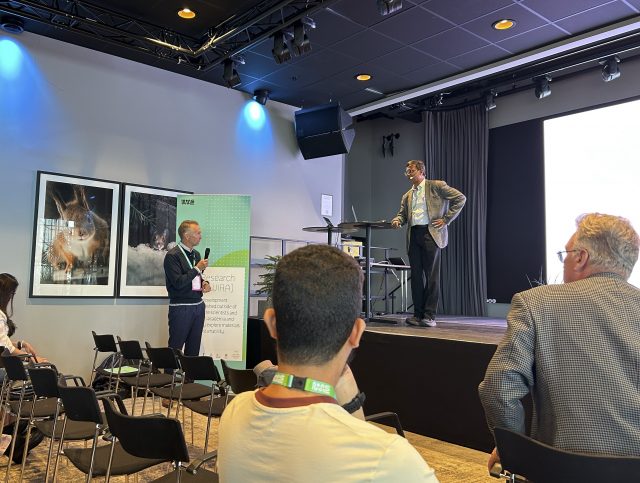
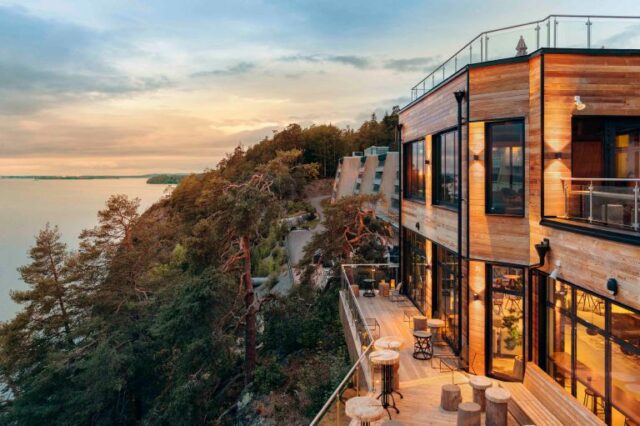
On 24 – 25 August, the WISE Community will welcome its newest members to the WISE Welcome Meeting 2026 at Vildmarkshotellet in Kolmården.

7 Aug 2026
What if the next generation of medical implants could safely dissolve in the body once they’ve done their job and be produced with minimal environmental impact?
Thanks to a newly awarded research grant, Proof of Concept 2025, that vision is moving one step closer to reality. The project builds on years of fundamental materials research and now enters an exciting new phase: translating lab-scale discoveries into real-world applications. With a focus on advanced 3D-printed metals, the work could pave the way for a new class of sustainable, patient-specific implants.
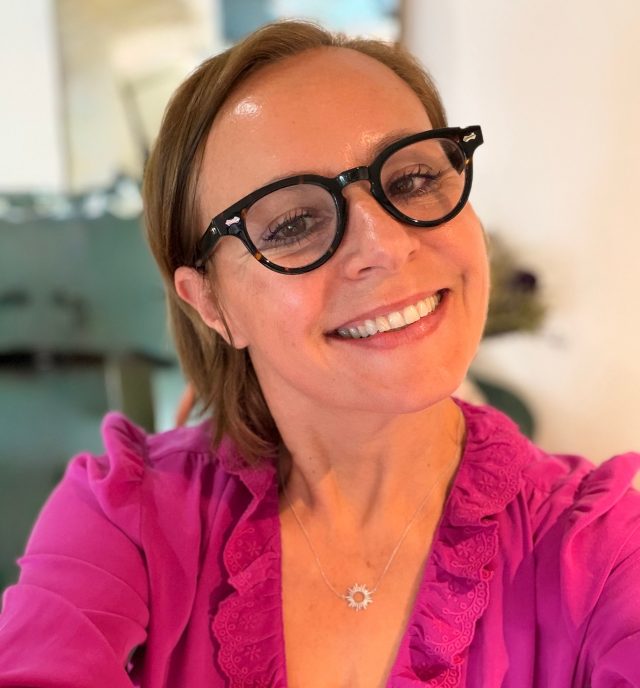
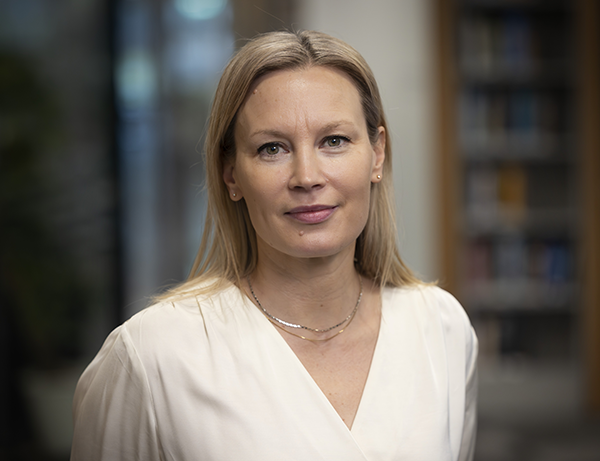
“We were absolutely thrilled,” says WISE researcher Cecilia Persson, principal investigator of the research project “Amorphous-matrix degradable alloys for sustainable bone repair solutions” from Uppsala University.
How did it feel when you found out you had been awarded this grant?
Fantastic, and very excited that we can get this work going!
What does this recognition mean to you personally and professionally?
“It is a confirmation that the fundamental research we have done has the potential to be further developed into something useful for society, which means a lot. Professionally, it’s a quality stamp, and it means that we can now verify the material’s potential for future applications.
My PhD student, Giulio Cavaliere, has worked very hard to develop this material, and this grant allows him to take several important steps forward to develop this material as a post-doctoral researcher.”
At the heart of the project is an advanced form of additive manufacturing – often referred to as 3D printing – used to create a special class of materials known as bulk metallic glasses. Unlike conventional metals, these materials have a unique internal structure that can provide improved performance, including better resistance to corrosion.
What was the original research idea behind your project, and what made you see its real-world potential?
“The idea was to use a specific additive manufacturing process to create rare-earth-free bulk metallic glasses with a specific composition and microstructure. This would allow us to achieve improved corrosion properties.
I’ve worked for a long time with materials development in collaboration with orthopaedic surgeons, and this type of material could be very promising for resorbable implants.”
Turning a promising material into a real medical product is far from straightforward. It requires scaling up the manufacturing process, understanding how the material behaves in realistic conditions, and ensuring it meets strict regulatory standards.
How does this grant help you move from fundamental research to practical use?
“It will allow us to develop the material into printable implant structures and investigate its properties in a setting that’s closer to the final application.
What’s not obvious is how the macroscopic structure and the overall shape affects the structure at the microscopic level. Also, mechanisms relating to risks for cracking are not fully understood. These are some of the key challenges we can now address, together with biocompatibility studies on the material.”
While the potential is exciting, significant challenges remain both in understanding the material itself and in refining how it is produced.
What are the main challenges in developing this solution?
“There are many. Scientifically, we need to fully understand the underlying mechanisms that determine how we obtain a specific microstructure with beneficial properties.
Technically, there are challenges such as the limitations of powder reuse in additive manufacturing. We must maintain high material quality, which is especially critical in a highly regulated field like medical implants.”
If successful, the research could have a wide-ranging impact, not only in healthcare, but also in sustainability.
How could your results contribute to society in the long term?
“This work can enable better resorbable implants that gradually degrade and disappear once they’ve fulfilled their function.
Our solution is rare-earth-free and can be produced using additive manufacturing with minimal material waste. The microstructure we can achieve, with lower corrosion rates, may also enable larger, patient-specific geometries.”
The benefits go beyond materials:
By combining cutting-edge materials science with sustainable manufacturing, the project represents a shift toward smarter, more responsible innovation. What began as a fundamental research idea is now evolving into something that could directly benefit patients and the planet.
With the support of this grant, the journey from experiment to application accelerates, bringing us closer to implants that not only heal but safely disappear when no longer needed.
3 Aug 2026
On 24 – 25 August, the WISE Community will welcome its newest members to the WISE Welcome Meeting 2026 at Vildmarkshotellet in Kolmården.
25 Jun 2026
Magnus Berggren, Director of WISE, will assume the role as the Executive Director of Knut and Alice Wallenberg Foundation from 1 January 2027. As a result, he will step down as Program Director of the WISE program and remain at Linköping University on a part-time basis.
23 Jun 2026
“Sustainability is the central theme of my research. Rather than focusing only on performance, we aim to develop technologies that are sustainable from the materials level all the way to manufacturing and end-of-life”, says Magdalena Titirici, Professor at the Imperial College London and WISE Invited Professor.
23 Jun 2026
WISE-affiliated researcher, Professor Ergang Wang at Chalmers University of Technology in Sweden, is coordinating a new EU-funded project, SPECTRA, to develop groundbreaking technologies that use solar energy to transform plastic waste into valuable resources. The project also involves Professor Moyses Araujo at Karlstad University, another WISE-affiliated researcher, as a partner.
22 Jun 2026
Knut and Alice Wallenberg Foundation has increased the searchable framework budget with an additional SEK 265 million to the Wallenberg Initiative Materials Science for Sustainability (WISE), marking a significant expansion of the programme.
12 Jun 2026
Imagine opening a juice box made from materials designed with deeper scientific insight into how they behave at the smallest scales.
4 Jun 2026
“My best advice is simple: think before you buy. Many of the products we purchase today ultimately end up very quickly in our waste streams”, says WISE co-Director for Sustainability, Niclas Svensson.
3 Jun 2026
When Zhejian (Jerry) Cao joined the WISE programme in 2023, he was already exploring a promising research direction. What followed was a journey defined by intellectual freedom, interdisciplinary growth, and a clear path toward academic independence
29 May 2026
Don’t miss to register for the upcoming WISE Invited Professor Lecture on 4 June 2026, from 3.00–4.00 pm CET.
28 May 2026
A new research platform for advanced tribological measurements was inaugurated on May 26 at Luleå University of Technology.
27 May 2026
“We want to influence the way electric vehicles are designed and built so multifuctional possibilities are integrated in the design from the beginning”, continues Prof. Leif Asp from Chalmers University of Technology and WISE-afilliated researchers.
26 May 2026
The May WISE Study Trip brought doctoral students and postdocs to Jönköping.
26 May 2026
The call for KAW Proof of Concept Grants in Materials Science for Sustainability will open soon
25 May 2026
The Knut and Alice Wallenberg Foundation has published the call text for the 2026 Proof of Concept Grants in Materials Science for Sustainability is now available. The call opens September 1, 2026, and closes October 15, 2026, at 13:00.
24 May 2026
“Undertaking my PhD under the WISE framework has been a wonderful opportunity and positive experience thus far. It has connected me with a strong network of outstanding researchers and provided a collaborative environment focused on solution-oriented research for a more sustainable future,” says Patrick Korir, PhD student at LTU and Höganäs.
19 May 2026
A successful partnership between CelluXtreme, KTH, and WISE is redefining what sustainable materials can achieve and deliver.
13 May 2026
“The most valuable aspect of this program was meeting different people and understanding different aspects of research”.
11 May 2026
Join us for the 9th Machine Learning Meets Materials Science Seminar, part of the WASP–WISE initiative! Mark your calendars: May 20 at 10:00!
11 May 2026
Don’t miss to register for the upcoming WISE Invited Professor Lecture on 4 June 2026, from 3.00–4.00 pm CET.
8 May 2026
The 2026 Machine Learning for Materials and Molecular Discoveries (ML2MD) symposium will bring together researchers to discuss recent advances at the intersection of machine learning, materials science, and molecular research.
7 May 2026
Sustainability is at the heart of WISE-ap3. All projects are expected to combine cutting-edge materials science with a meaningful contribution to a sustainable future.
7 May 2026
During our recent study visit to Kiruna in northern Sweden, participants had the opportunity to explore cutting-edge research, large-scale industry, and unique cultural experiences in an inspiring and unforgettable setting.
6 May 2026
Registration is now open for WISE Networking Days 2026, taking place on November
23 – 24, 2026.
5 May 2026
This time, you’ll have the chance to hear from Professor Carsten Gachot and Professor Yen-Chieh Huang. If you haven’t signed up yet, now’s a great time to secure your spot. It’s shaping up to be a valuable and engaging experience, and we don’t want you to miss out!
4 May 2026
This call aims to support joint research projects between researchers within WACQT and WISE in the areas of quantum technology for materials science or materials science for quantum technology, with a required focus on sustainability.
30 Apr 2026
We are excited to welcome all new members of the WISE Community and invited guests to this year’s WISE Welcome Meeting!
29 Apr 2026
A new powerhouse for materials research is emerging at Luleå University of Technology.
20 Apr 2026
The call text for the third WISE Industrial Project Call (WISE-ip3) is now available, marking the start of a new round of funding aimed at strengthening collaboration between academia and industry. The application portal is set to open in April 2027.
17 Apr 2026
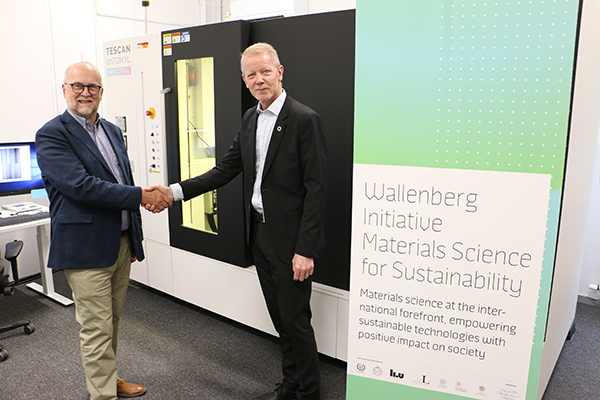
In the spring sunshine, the Uppsala node of Wise-EST was officially inaugurated at Uppsala University by Vice Rector Charlotte Platzer Björkman and WISE co-director Olle Eriksson, marking the launch of a new research infrastructure for tribology.
15 Apr 2026
An international team of researchers has developed a high-performance, biodegradable membrane made from jute agricultural waste to filter oily water. The material is produced using a simple and scalable process and it can be removed using ultrasound and easily re-casted, restoring its performance again and again. Even after repeated use, the membrane maintains over 99% separation efficiency.