21 Aug 2026
Turning Waste into Treasure: Smarter Recycling for a Sustainable Materials Future
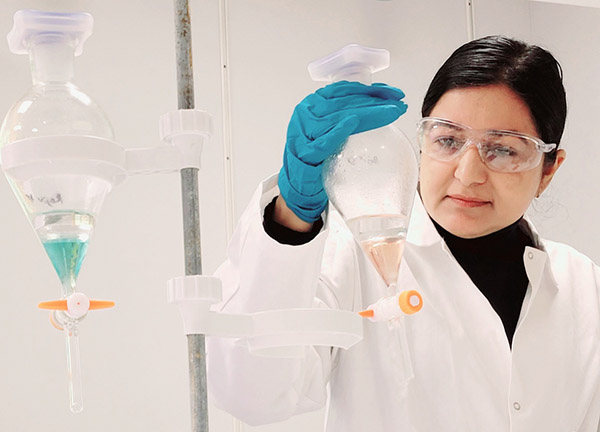
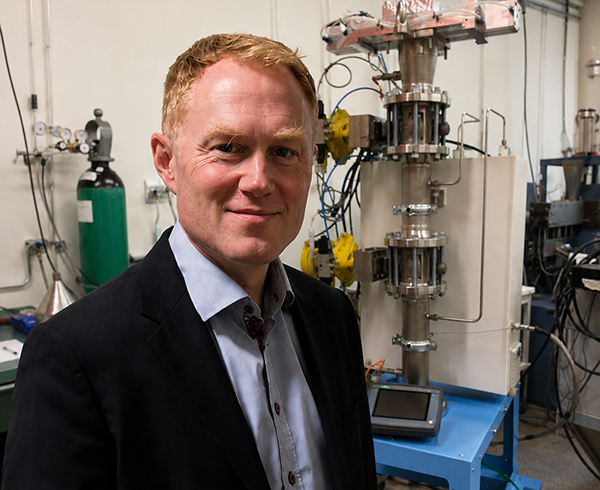
What if yesterday’s waste could power tomorrow’s technologies?

3 Jun 2024
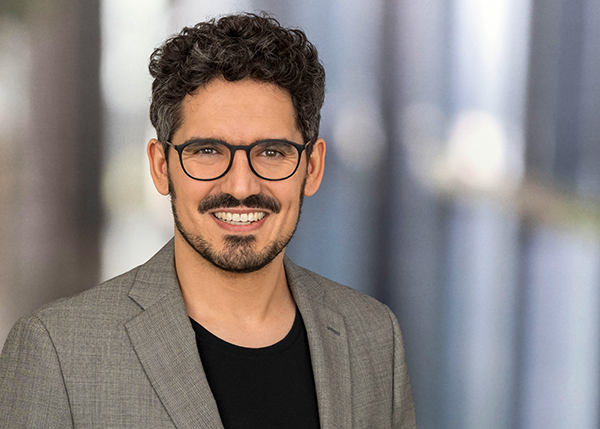
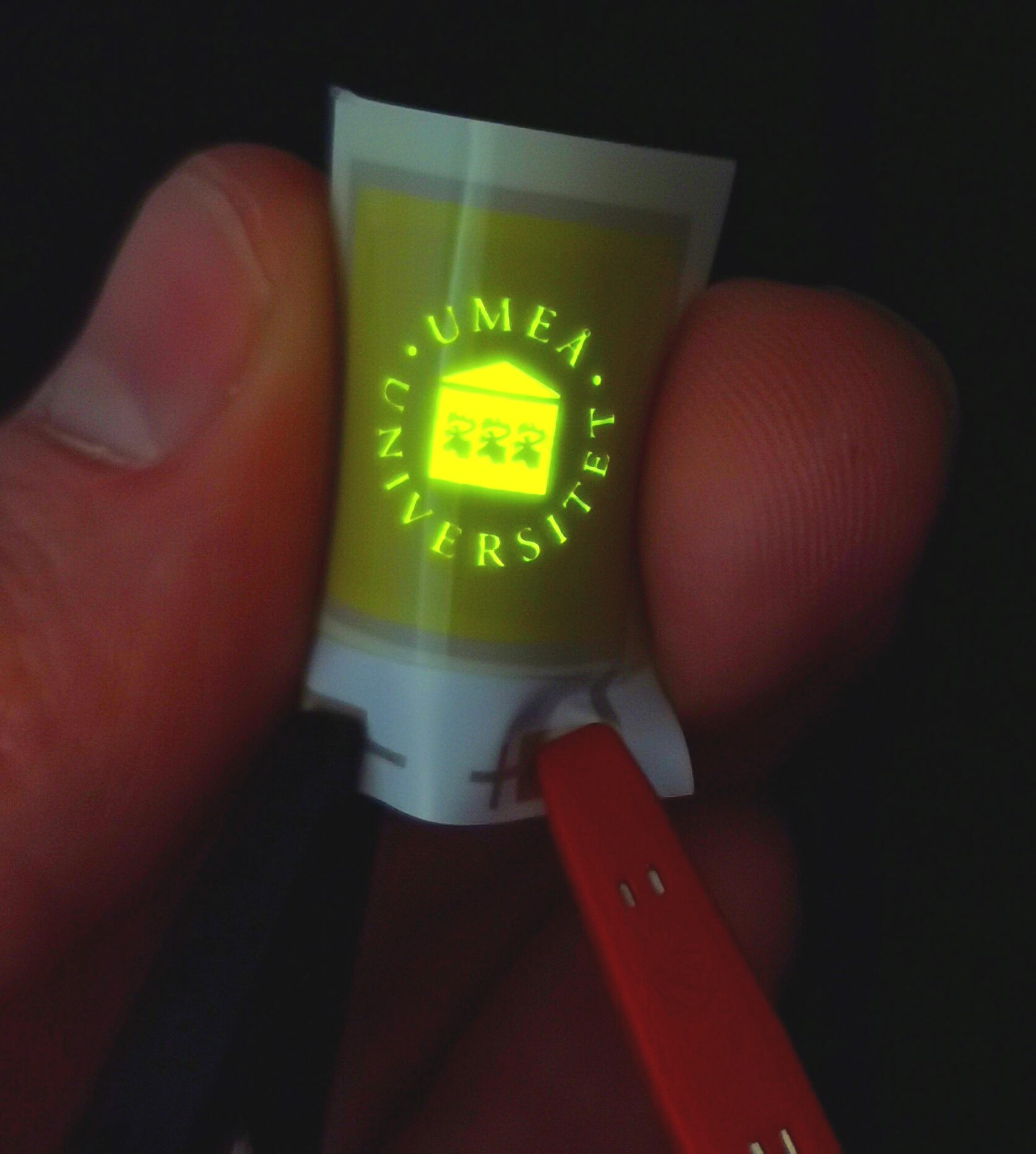
Professor Ludvig Edman and his team at Umeå University have introduced a novel method to quantify efficiency losses in light-emitting electrochemical cells, detailed in their article “Efficiency Roll-Off in Light-Emitting Electrochemical Cells” in the journal Advanced Materials.
The commercial introduction of the light-emitting diode (LED) has revolutionized how we can efficiently illuminate our surroundings, while the development of the organic LED (OLED) enables high-quality displays such as those in our cell phones. The light-emitting electrochemical cell (LEC) is an emerging technology that offers the same attractive features as the OLED in the form of thin-film and flexible device architectures and vibrant and tunable emission colors.
In contrast to both LEDs and OLEDs, LECs can be fabricated by material-efficient and low-energy printing and coating methods. Furthermore, LECs can be fabricated completely free from critical raw materials and rare metals. These are obvious advantages from a sustainability perspective, however a drawback with current LEC devices is that the emission efficiency drops with increasing current in a process termed “efficiency roll-off”.
Professor Ludvig Edman and his team at Umeå University, in collaboration with researchers at Uppsala University and RISE, have recently addressed this issue in their scientific article, “Efficiency Roll-Off in Light-Emitting Electrochemical Cells,” published in April 2024, in the journal Advanced Materials [Adv. Mat. 36, 2310156 (2024)]. This article introduces a novel and practical method for understanding and quantifying the efficiency losses in LEC devices.
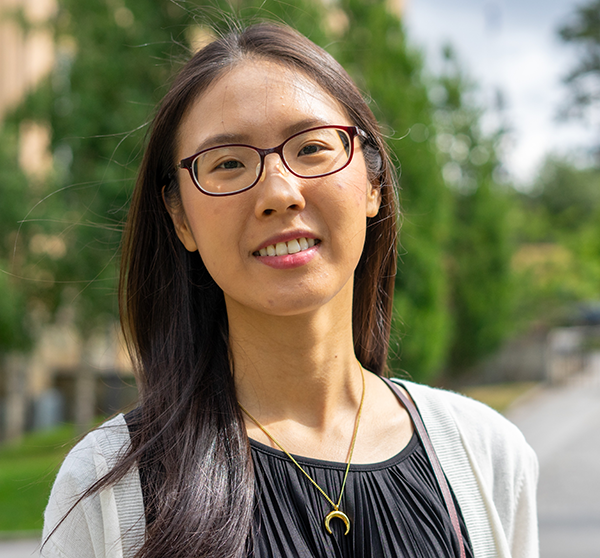
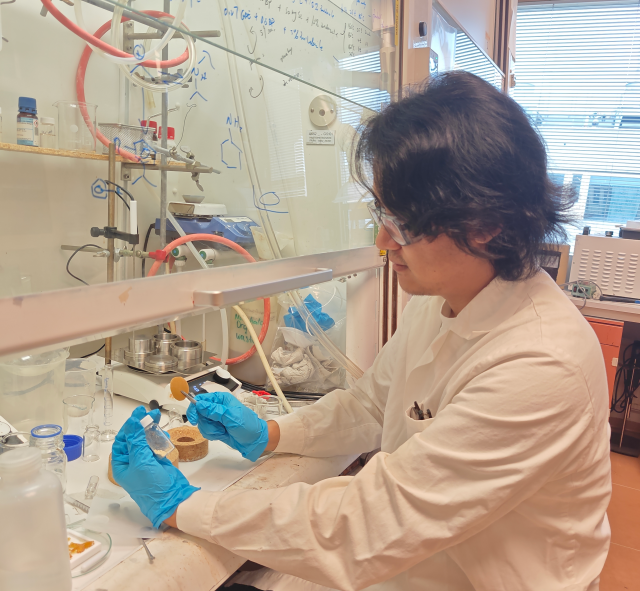
– We identified the mechanism behind the decreased light emission efficiency with increasing current, as being due to an increased probability for quenching collisions between the electronic charger carriers and the excitons (the precursor of the photons) in the emissive p-n junction region, explains Xiaoying Zhang, a PhD student at the Department of Physics at Umeå University and first author of the study.
The full article can be found at: https://doi.org/10.1002/adma.202310156
Professor Ludvig Edman is the leader of the Organic Photonics and Electronics Group at Umeå University, a WISE researcher, and he also represents the WISE affiliated group of excellence at Umeå University.
-Our recent demonstration that flexible and thin LECs can be fabricated using energy- and material-efficient printing in low-cost facilities, avoiding critical raw materials, has opened many possibilities. Our WISE project’s goal is now to develop tools for the rational tuning of the LEC’s unique dynamic p-n junction doping structure to improve the emission efficiency, using sustainable processes and bio-based and/or recyclable materials,” says Prof. Ludvig Edman at Umeå University.
Professor Edman’s WISE project can be found at:
A sustainable light-emission technology through control of dynamic doping

21 Aug 2026
What if yesterday’s waste could power tomorrow’s technologies?
21 Aug 2026
The call for the Knut and Alice Wallenberg Foundation (KAW) Proof of Concept Grants in Materials Science for Sustainability 2026 opens on September 1, 2026.
20 Aug 2026
WIRA-SuPRA is a collaborative platform where academia and industry work together to develop the next generation of sustainable plastics and coatings.
19 Aug 2026
CircuLab is a research infrastructure (Research Technology Platform, RTP) funded by WISE and Stockholm University for the synthesis, processing and application of sustainable materials through integrated AI-driven workflows.
18 Aug 2026
Looking for fresh research perspectives and the opportunity to connect with leading experts? Join us online for the upcoming WISE Invited Professor Lecture on 10 September 2026, from 3:00–4:00 pm […]
18 Aug 2026
From Italy to Germany and now Sweden, Cecilia Bruschi’s academic journey has been driven by a passion for chemistry and materials research.
17 Aug 2026
“We ask ourselves not only what is scientifically possible today, but also what advances are needed to bring these technologies closer to commercialization”, says WISE Fellow and Assistant Professor Lizhou Fan from Linköping University.
10 Aug 2026
Jiayao Duan is currently a postdoctoral researcher at Stockholm University, working with Prof. Erica Zeglio. His research is about developing organic electronic materials for bioelectronics, with a growing focus on sustainability and degradability.
7 Aug 2026
What if the next generation of medical implants could safely dissolve in the body once they’ve done their job and be produced with minimal environmental impact?
3 Aug 2026
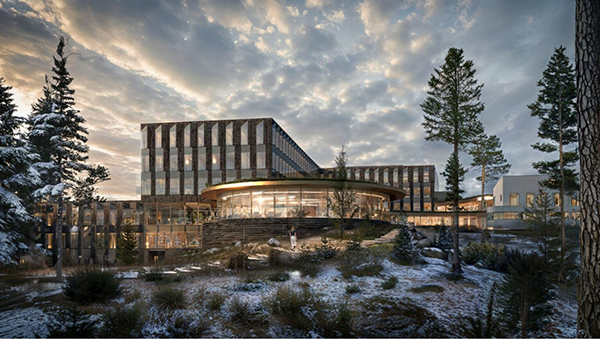
On 24 – 25 August, the WISE Community will welcome its newest members to the WISE Welcome Meeting 2026 at Vildmarkshotellet in Kolmården.
25 Jun 2026
Magnus Berggren, Director of WISE, will assume the role as the Executive Director of Knut and Alice Wallenberg Foundation from 1 January 2027. As a result, he will step down as Program Director of the WISE program and remain at Linköping University on a part-time basis.
23 Jun 2026
“Sustainability is the central theme of my research. Rather than focusing only on performance, we aim to develop technologies that are sustainable from the materials level all the way to manufacturing and end-of-life”, says Magdalena Titirici, Professor at the Imperial College London and WISE Invited Professor.
23 Jun 2026
WISE-affiliated researcher, Professor Ergang Wang at Chalmers University of Technology in Sweden, is coordinating a new EU-funded project, SPECTRA, to develop groundbreaking technologies that use solar energy to transform plastic waste into valuable resources. The project also involves Professor Moyses Araujo at Karlstad University, another WISE-affiliated researcher, as a partner.
22 Jun 2026
Knut and Alice Wallenberg Foundation has increased the searchable framework budget with an additional SEK 265 million to the Wallenberg Initiative Materials Science for Sustainability (WISE), marking a significant expansion of the programme.
12 Jun 2026
Imagine opening a juice box made from materials designed with deeper scientific insight into how they behave at the smallest scales.
4 Jun 2026
“My best advice is simple: think before you buy. Many of the products we purchase today ultimately end up very quickly in our waste streams”, says WISE co-Director for Sustainability, Niclas Svensson.
3 Jun 2026
When Zhejian (Jerry) Cao joined the WISE programme in 2023, he was already exploring a promising research direction. What followed was a journey defined by intellectual freedom, interdisciplinary growth, and a clear path toward academic independence
29 May 2026
Don’t miss to register for the upcoming WISE Invited Professor Lecture on 4 June 2026, from 3.00–4.00 pm CET.
28 May 2026
A new research platform for advanced tribological measurements was inaugurated on May 26 at Luleå University of Technology.
27 May 2026
“We want to influence the way electric vehicles are designed and built so multifuctional possibilities are integrated in the design from the beginning”, continues Prof. Leif Asp from Chalmers University of Technology and WISE-afilliated researchers.
26 May 2026
The May WISE Study Trip brought doctoral students and postdocs to Jönköping.
26 May 2026
The call for KAW Proof of Concept Grants in Materials Science for Sustainability will open soon
25 May 2026
The Knut and Alice Wallenberg Foundation has published the call text for the 2026 Proof of Concept Grants in Materials Science for Sustainability is now available. The call opens September 1, 2026, and closes October 15, 2026, at 13:00.
24 May 2026
“Undertaking my PhD under the WISE framework has been a wonderful opportunity and positive experience thus far. It has connected me with a strong network of outstanding researchers and provided a collaborative environment focused on solution-oriented research for a more sustainable future,” says Patrick Korir, PhD student at LTU and Höganäs.
19 May 2026
A successful partnership between CelluXtreme, KTH, and WISE is redefining what sustainable materials can achieve and deliver.
13 May 2026
“The most valuable aspect of this program was meeting different people and understanding different aspects of research”.
11 May 2026
Join us for the 9th Machine Learning Meets Materials Science Seminar, part of the WASP–WISE initiative! Mark your calendars: May 20 at 10:00!
11 May 2026
Don’t miss to register for the upcoming WISE Invited Professor Lecture on 4 June 2026, from 3.00–4.00 pm CET.
8 May 2026
The 2026 Machine Learning for Materials and Molecular Discoveries (ML2MD) symposium will bring together researchers to discuss recent advances at the intersection of machine learning, materials science, and molecular research.
7 May 2026
Sustainability is at the heart of WISE-ap3. All projects are expected to combine cutting-edge materials science with a meaningful contribution to a sustainable future.