30 Apr 2026
A Warm Welcome to Our New WISE Community Members – WISE Welcome Meeting 2026 coming up in August
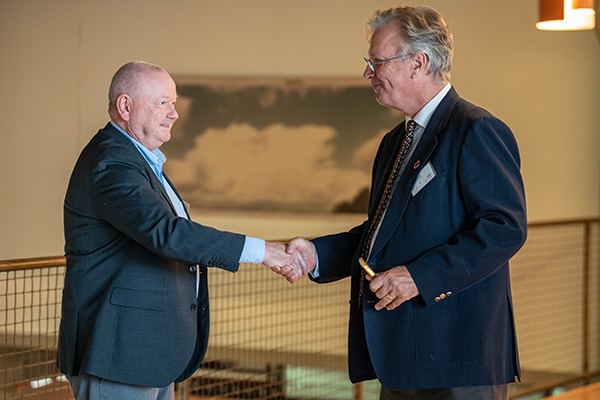
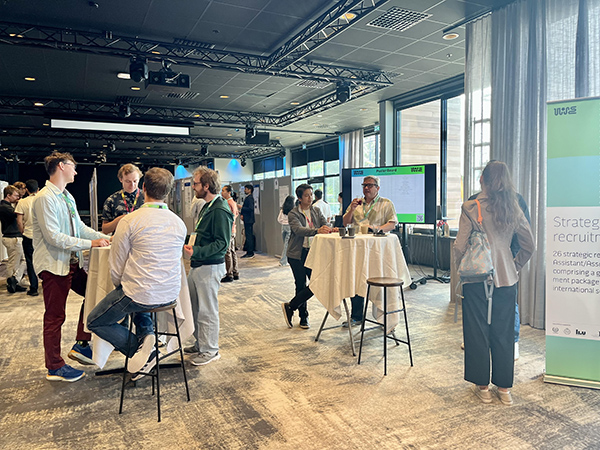
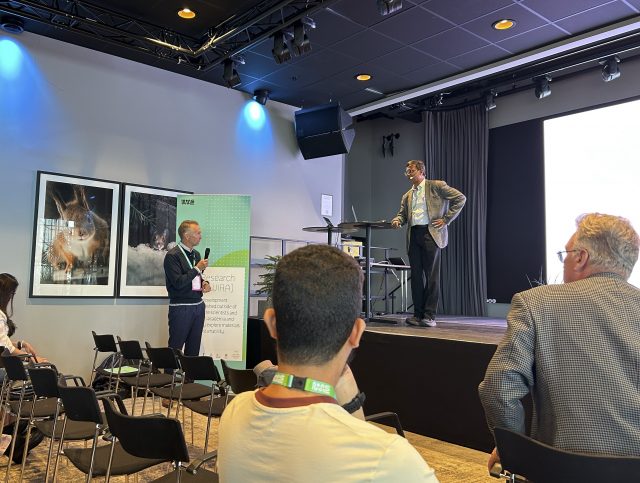
We are excited to welcome all new members of the WISE Community and invited guests to this year’s WISE Welcome Meeting!

13 May 2025
The hazardous materials within e-waste can pose severe environmental and health risks if not managed properly. To pave the way for a sustainable future, we need to embrace cutting-edge technologies and innovative approaches.
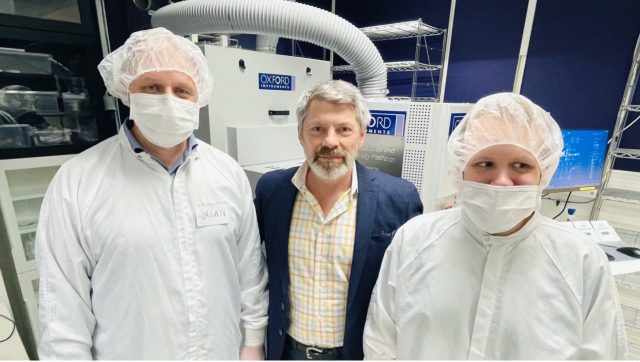
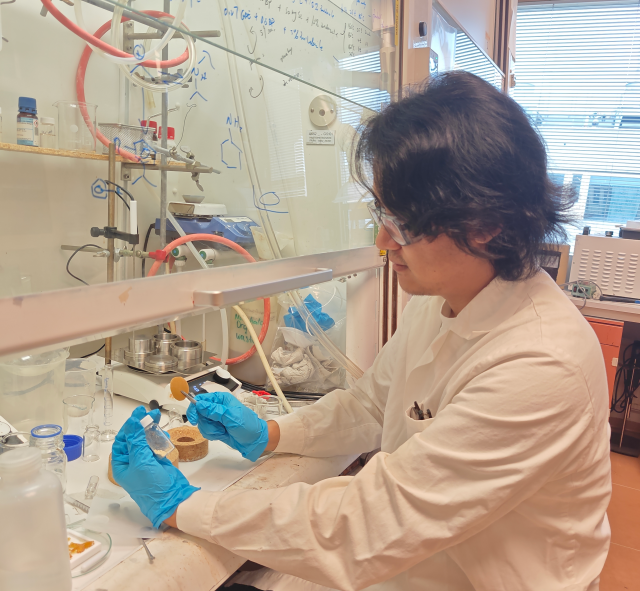
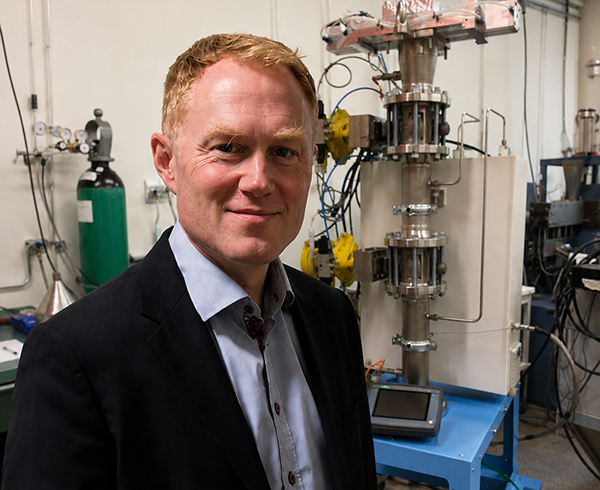
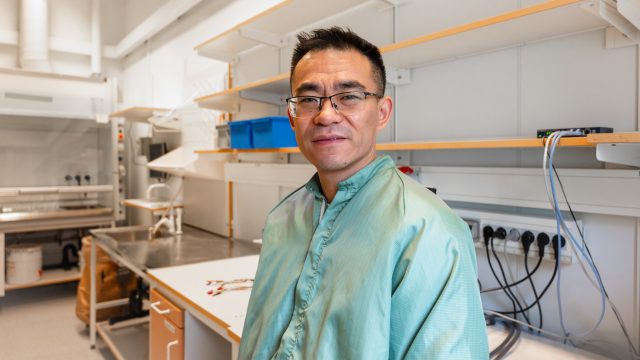
Picture taken by Mycronic.
One promising solution lies in the development of neuromorphic devices utilizing novel sustainable materials like MXene. These brain-like electronic systems, crafted from MXene, offer high energy efficiency, flexibility, and sustainability, presenting a transformative path forward in tackling the e-waste crisis.
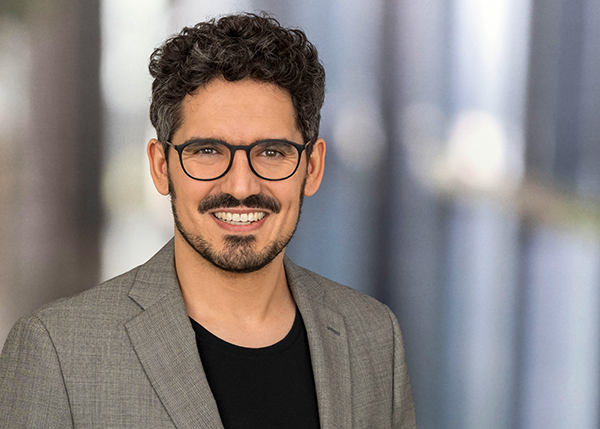
To gain deeper insight into this transition, we spoke with Gustaf Mårtensson, R&D Expert at Mycronic. The company is collaborating with KTH Royal Institute of Technology on a WISE-funded research project focused on developing production solutions for electronics manufacturing.
How can the innovations coming from this project help reduce the environmental impact of industries or everyday products?
This project aims to make a big change in the amount of energy needed to power electronics, especially modern computers, which are often not very energy efficient. Since electronic systems are everywhere in industries, improving even a small part of these systems can lead to significant gains in sustainability.
Could you give us examples of specific industries or products that might benefit most from these advancements in materials science?
Since electronics are relevant in all parts of modern society, we believe that this could introduce a paradigm shift in the use of energy by humanity.
What role do you think collaborations like this will play in solving global sustainability challenges over the next decade?
Collaborations of this kind are essential to meet the challenges that humanity faces. Collaborative research between academic researchers and industrial companies adds the aspects of focusing on industrial relevance and a sense of urgency to deliver productive solutions.
The discovery of 2D materials like MXene could transform parts of the materials industry, offering exciting new possibilities. However, the technology is still in its early stages of development. That’s why collaborations like this are so important—they help drive innovation and move these breakthroughs from the lab into real-world applications.
How does the idea of contributing to a more sustainable world through science inspire you personally and professionally?
It has become increasingly important for me to use my time and available skills for good in anything that I do. The challenges we face in affecting a positive environmental change is something that I have focused on in my work at Mycronic over the last few years. The project that we have in the WISE research program is a typical long-term, high-risk, high-reward project that is both intellectually exciting and has the potential of affecting enormous societal change.
Finally, what would you say to people who may not be familiar with materials science or sustainability research—why should they care about this project?
People should care about this project since it can enable a different future of electronics. Most people don’t pause to think about what is making their everyday lives possible, like electronics assembly techniques, material science advances etcetera, but I hope that we can all appreciate the efforts that are necessary to ease the pressure on the environment and humanity by decreasing energy use with the help of sustainable materials.
30 Apr 2026
We are excited to welcome all new members of the WISE Community and invited guests to this year’s WISE Welcome Meeting!
29 Apr 2026
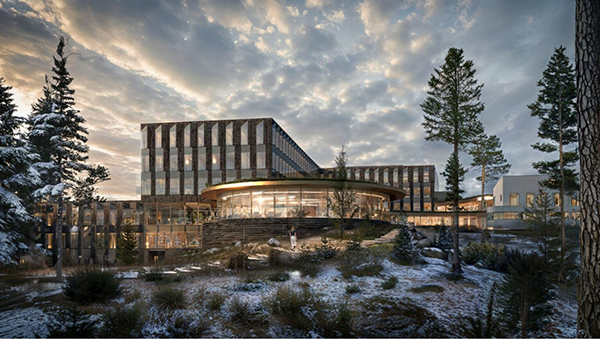
A new powerhouse for materials research is emerging at Luleå University of Technology.
20 Apr 2026
The call text for the third WISE Industrial Project Call (WISE-ip3) is now available, marking the start of a new round of funding aimed at strengthening collaboration between academia and industry. The application portal is set to open in April 2027.
17 Apr 2026
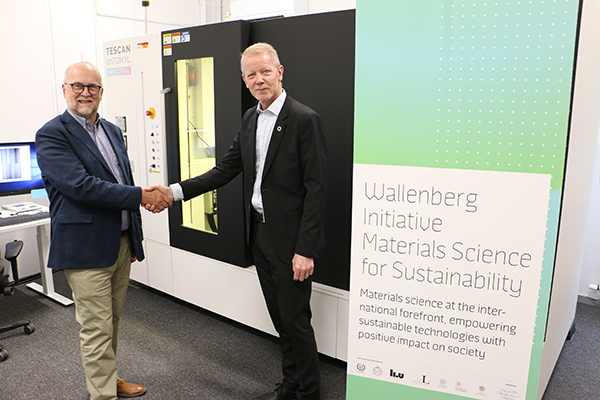
In the spring sunshine, the Uppsala node of Wise-EST was officially inaugurated at Uppsala University by Vice Rector Charlotte Platzer Björkman and WISE co-director Olle Eriksson, marking the launch of a new research infrastructure for tribology.
15 Apr 2026
An international team of researchers has developed a high-performance, biodegradable membrane made from jute agricultural waste to filter oily water. The material is produced using a simple and scalable process and it can be removed using ultrasound and easily re-casted, restoring its performance again and again. Even after repeated use, the membrane maintains over 99% separation efficiency.
15 Apr 2026
The purpose of the grants is to bridge the gap from academic basic research to innovations in materials science for sustainability.
31 Mar 2026
On April 16, 2026, the Uppsala node of WISE-EST will be officially inaugurated at the Ångströmlaboratoriet in Uppsala. The event will take place from 09:30 to 15:00 CET in the Siegbahn lecture hall.
31 Mar 2026
When the WISE research and technology platform (WISE RTP) CII at Chalmers University of Technology was launched a year ago, the team expected a gradual development after inauguration.
30 Mar 2026
We are pleased to announce that WISE Networking Days 2026 will take place on November 23–24, 2026.
30 Mar 2026
Are you preparing a proposal for WISE-ap3? Make sure you’re fully equipped to meet its strong sustainability ambitions.
27 Mar 2026
”My appointment reflects the board’s ambition to further strengthen and embed sustainability within WISE. In this role, my responsibility is to ensure that sustainability is fully integrated across all WISE activities”, says Professor Joseph Samec, WISE Director for Sustainability.
19 Mar 2026
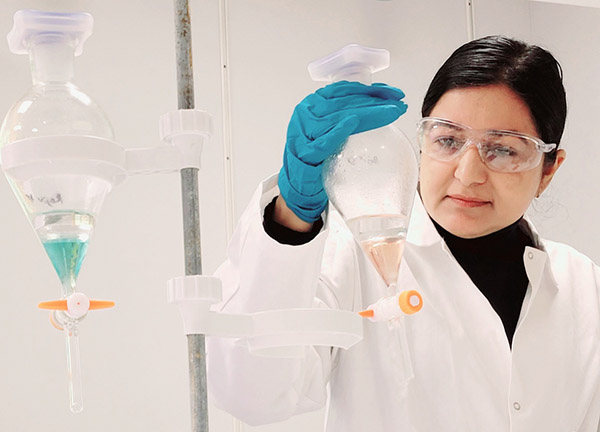
What if electronic devices could simply disappear once their job is done? From temporary medical implants to short-term diagnostic tools, researchers are exploring materials that perform like conventional electronics but safely degrade when no longer needed.
19 Mar 2026
WISE Dialogue 2026 has successfully wrapped up, gathering nearly 400 participants from academia, industry, and the public sector.
16 Mar 2026
Join us for the 8th Machine Learning Meets Materials Science Seminar, part of the WASP–WISE initiative! Mark your calendars: March 25 at 10:00!
12 Mar 2026
We are pleased to introduce Pär Jonsén as one of the speakers at the WISE Dialogue conference on March 17–18.
10 Mar 2026
“The WISE initiative is presently the most important initiative in materials science in Sweden. It is both exciting and imperative that MAX IV supports the programme by actively engaging in its activities. The WISE Dialogue is a great opportunity to learn about the latest developments and explore opportunities for deeper collaboration”, says Olof Karis, Director of MAX IV.
6 Mar 2026
“I’m very honored to receive the Göran Gustafsson Prize. For me, it recognizes the work my research group has carried out over many years to understand and control doping in organic semiconductors. I hope it will help us push this research further and develop new types of soft, flexible electronics” says Simone Fabiano.
6 Mar 2026
We are happy to introduce Erica Zeglio, Assistant Professor and WISE Fellow & Dr. Biswanath Das, two of our speakers at the WISE Dialogue conference, March 17-18.
2 Mar 2026
We are happy to introduce Francisco Panayo, one of our speakers at the WISE Dialogue conference, March 17-18. Francisco holds a key role as R&D Manager at Hitachi Energy.
27 Feb 2026
“Over the past few decades, computational modeling has gained widespread recognition in both academia and industry as an effective tool for accelerating materials design and deepening our understanding of materials behavior” says Carl-Magnus Lancelot, Technical Sales and Support Engineer at Thermo-Calc Software, responsible for customers in the UK and the Nordics.
26 Feb 2026
Until recently, most advanced 3D micro- and nanofabrication techniques were limited to polymers, restricting the range of materials that could be used. Now, an international research team has published a landmark study in the journal Nature demonstrating a state-of-the-art fabrication technique that overcomes these long-standing material limitations.
25 Feb 2026
Two cutting-edge research projects at Luleå University of Technology have been awarded Marie Skłodowska-Curie Postdoctoral Fellowships under the EU’s Horizon Europe programme.
23 Feb 2026
We are pleased to introduce Peter Dahlén as one of our speakers at the WISE Dialogue conference on March 17–18.
13 Feb 2026
The call text for the WISE Academic Project Call 2026–2027 (WISE-ap3) is now available. The application portal opens on 1 December 2026.
13 Feb 2026
WISE is introducing the WISE Research Master’s Thesis, a new research preparatory initiative designed for Master’s students in engineering and natural sciences.
Picture credit: Luleå University of Technology
11 Feb 2026
Eight collaborative research projects joining quantum technology and materials science have been approved funding. Together, the projects receive 1 MSEK each.
2 Feb 2026
WASP and WISE hereby announce the WASP–WISE 2026 call for NEST 2 (Novelty, Excellence, Synergy, and Teams) is open.
27 Jan 2026
WISE Dialogue 2026 is approaching – the major annual gathering for the entire WISE community!
20 Jan 2026
Don’t miss the chance to hear from two internationally renowned researchers in an upcoming digital seminar on February 5, 2026, from 3-4 pm CET.
16 Jan 2026
WISE is preparing its 3rd Academic Project Call (WISE-ap3) to fund PhD and postdoc research advancing sustainable, eco-friendly materials and manufacturing processes.