12 Jun 2026
From Molecules to Milk Cartons: Exploring New Paths Toward More Sustainable Packaging
Imagine opening a juice box made from materials designed with deeper scientific insight into how they behave at the smallest scales.

5 Mar 2025
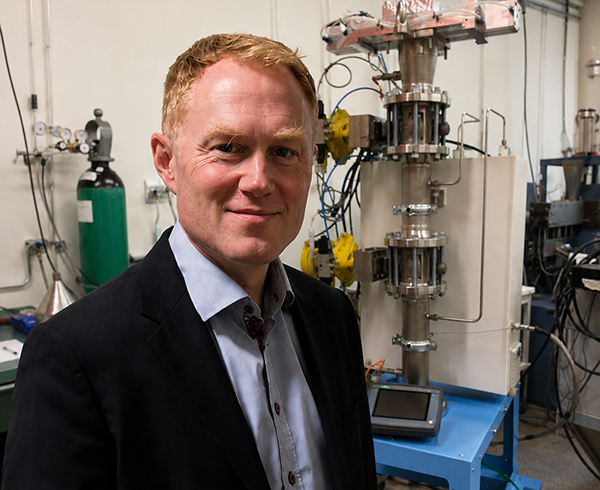
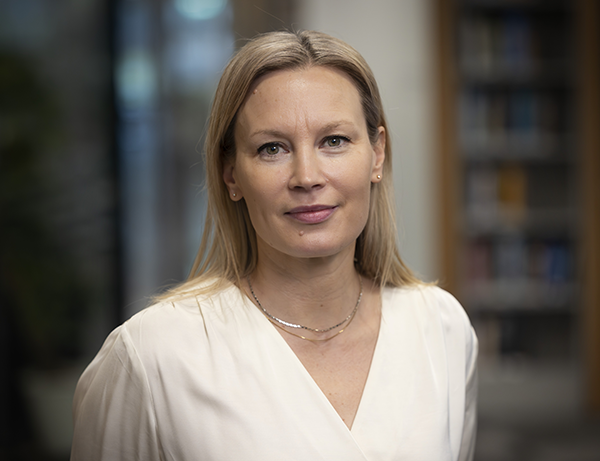
At the WISE Dialogue, I will present our cement technology Phlego—a low-carbon, white cement designed for seamless integration into existing manufacturing processes, says Tiziana Vanorio, Associate Professor at the school of Sustainability, Stanford University.
On March 12–13, the WISE Dialogue 2025 will bring together leading experts to exchange ideas and inspire future research in sustainability. With a focus on Energy Storage, Life Cycle Assessment, Concrete and Cement, and Innovations, this year’s event serves as a dynamic forum for dialogue and fostering collaboration. Among the distinguished speakers is Tiziana Vanorio, Associate Professor in the Earth and Planetary Sciences Department at the School of Sustainability, Stanford University. Vanorio, who leads the Rock Physics and Geomaterials Laboratory, will share her insights on the physical and mechanical properties of rocks and geomaterials—key to developing more sustainable infrastructure and resource management.
I am a geophysicist specializing in rock physics and geomaterials. My research group focuses on subsurface processes, particularly the characterization of reservoirs and rock seals through cementation—a natural example of material healing—and its impact on physical and mechanical properties. Traditionally, geophysicists have studied faulting in the context of earthquakes by examining how rocks deform and fracture. However, my research takes the opposite approach: rather than studying breakage, I focus on cementation. We can think of the Earth’s crust as functioning like a large-scale cement plant, where faulting grinds rock into micron or finer scales. Subsurface heat, much like a kiln, then calcines this material, priming it for hydration reactions that ultimately drive cementation. This paradigm shift offers a more direct framework for understanding how rock microstructures form and govern macroscopic properties.
Ordinary Portland Cement (OPC) is a critical material in industrial civilization, ranking as the second most used material globally after water, with an annual output of 4.4 billion tons and over a ten-fold increase in production over the past 65 years. However, its manufacturing is unsustainable and wasteful, contributing to 8% of global CO2 emissions, most of which stem from the calcination of limestone. The release of CO2 not only harms environmental sustainability but also causes a 44% mass loss of limestone, leading to wasted transportation costs. At the WISE Dialogue, I will present our cement technology, Phlego—a low-carbon, white cement designed for seamless integration into existing manufacturing processes. Phlego is inspired by the natural hydraulic cementation observed in rocks, employing a geomimetic approach. Developed through a geosciences-engineering partnership that integrates rock physics, materials science, and chemical engineering, Phlego uses a novel raw material: a blend of carbonate-free volcanic rocks that eliminates direct CO2 emissions from calcination while promoting the in situ, rapid growth of entangled fibrous phases, leading to a unique microstructure. The result is a sustainable, cost-effective cement, driven by higher throughput, that matches the strength of OPC while enhancing ductility.
12 Jun 2026
Imagine opening a juice box made from materials designed with deeper scientific insight into how they behave at the smallest scales.
4 Jun 2026
“My best advice is simple: think before you buy. Many of the products we purchase today ultimately end up very quickly in our waste streams”, says WISE co-Director for Sustainability, Niclas Svensson.
3 Jun 2026
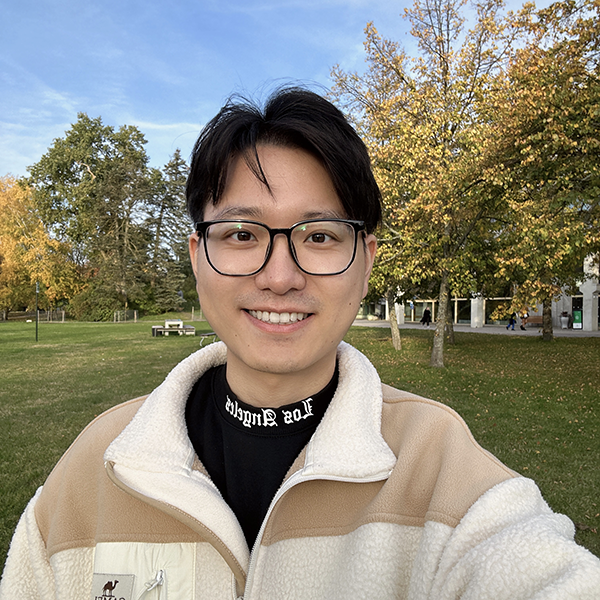
When Zhejian (Jerry) Cao joined the WISE programme in 2023, he was already exploring a promising research direction. What followed was a journey defined by intellectual freedom, interdisciplinary growth, and a clear path toward academic independence
29 May 2026
Don’t miss to register for the upcoming WISE Invited Professor Lecture on 4 June 2026, from 3.00–4.00 pm CET.
28 May 2026
A new research platform for advanced tribological measurements was inaugurated on May 26 at Luleå University of Technology.
27 May 2026
“We want to influence the way electric vehicles are designed and built so multifuctional possibilities are integrated in the design from the beginning”, continues Prof. Leif Asp from Chalmers University of Technology and WISE-afilliated researchers.
26 May 2026
The May WISE Study Trip brought doctoral students and postdocs to Jönköping.
26 May 2026
The call for KAW Proof of Concept Grants in Materials Science for Sustainability will open soon
25 May 2026
The Knut and Alice Wallenberg Foundation has published the call text for the 2026 Proof of Concept Grants in Materials Science for Sustainability is now available. The call opens September 1, 2026, and closes October 15, 2026, at 13:00.
24 May 2026
“Undertaking my PhD under the WISE framework has been a wonderful opportunity and positive experience thus far. It has connected me with a strong network of outstanding researchers and provided a collaborative environment focused on solution-oriented research for a more sustainable future,” says Patrick Korir, PhD student at LTU and Höganäs.
19 May 2026
A successful partnership between CelluXtreme, KTH, and WISE is redefining what sustainable materials can achieve and deliver.
13 May 2026
“The most valuable aspect of this program was meeting different people and understanding different aspects of research”.
11 May 2026
Join us for the 9th Machine Learning Meets Materials Science Seminar, part of the WASP–WISE initiative! Mark your calendars: May 20 at 10:00!
11 May 2026
Don’t miss to register for the upcoming WISE Invited Professor Lecture on 4 June 2026, from 3.00–4.00 pm CET.
8 May 2026
The 2026 Machine Learning for Materials and Molecular Discoveries (ML2MD) symposium will bring together researchers to discuss recent advances at the intersection of machine learning, materials science, and molecular research.
7 May 2026
Sustainability is at the heart of WISE-ap3. All projects are expected to combine cutting-edge materials science with a meaningful contribution to a sustainable future.
7 May 2026
During our recent study visit to Kiruna in northern Sweden, participants had the opportunity to explore cutting-edge research, large-scale industry, and unique cultural experiences in an inspiring and unforgettable setting.
6 May 2026
Registration is now open for WISE Networking Days 2026, taking place on November
23 – 24, 2026.
5 May 2026
This time, you’ll have the chance to hear from Professor Carsten Gachot and Professor Yen-Chieh Huang. If you haven’t signed up yet, now’s a great time to secure your spot. It’s shaping up to be a valuable and engaging experience, and we don’t want you to miss out!
4 May 2026
This call aims to support joint research projects between researchers within WACQT and WISE in the areas of quantum technology for materials science or materials science for quantum technology, with a required focus on sustainability.
30 Apr 2026
We are excited to welcome all new members of the WISE Community and invited guests to this year’s WISE Welcome Meeting!
29 Apr 2026
A new powerhouse for materials research is emerging at Luleå University of Technology.
20 Apr 2026
The call text for the third WISE Industrial Project Call (WISE-ip3) is now available, marking the start of a new round of funding aimed at strengthening collaboration between academia and industry. The application portal is set to open in April 2027.
17 Apr 2026
In the spring sunshine, the Uppsala node of Wise-EST was officially inaugurated at Uppsala University by Vice Rector Charlotte Platzer Björkman and WISE co-director Olle Eriksson, marking the launch of a new research infrastructure for tribology.
15 Apr 2026
An international team of researchers has developed a high-performance, biodegradable membrane made from jute agricultural waste to filter oily water. The material is produced using a simple and scalable process and it can be removed using ultrasound and easily re-casted, restoring its performance again and again. Even after repeated use, the membrane maintains over 99% separation efficiency.
15 Apr 2026
The purpose of the grants is to bridge the gap from academic basic research to innovations in materials science for sustainability.
31 Mar 2026
On April 16, 2026, the Uppsala node of WISE-EST will be officially inaugurated at the Ångströmlaboratoriet in Uppsala. The event will take place from 09:30 to 15:00 CET in the Siegbahn lecture hall.
31 Mar 2026
When the WISE research and technology platform (WISE RTP) CII at Chalmers University of Technology was launched a year ago, the team expected a gradual development after inauguration.
30 Mar 2026
We are pleased to announce that WISE Networking Days 2026 will take place on November 23–24, 2026.
30 Mar 2026
Are you preparing a proposal for WISE-ap3? Make sure you’re fully equipped to meet its strong sustainability ambitions.