25 Sep 2026
3 Nov 2026
Towards solar fuels with a little help from nanocrystals
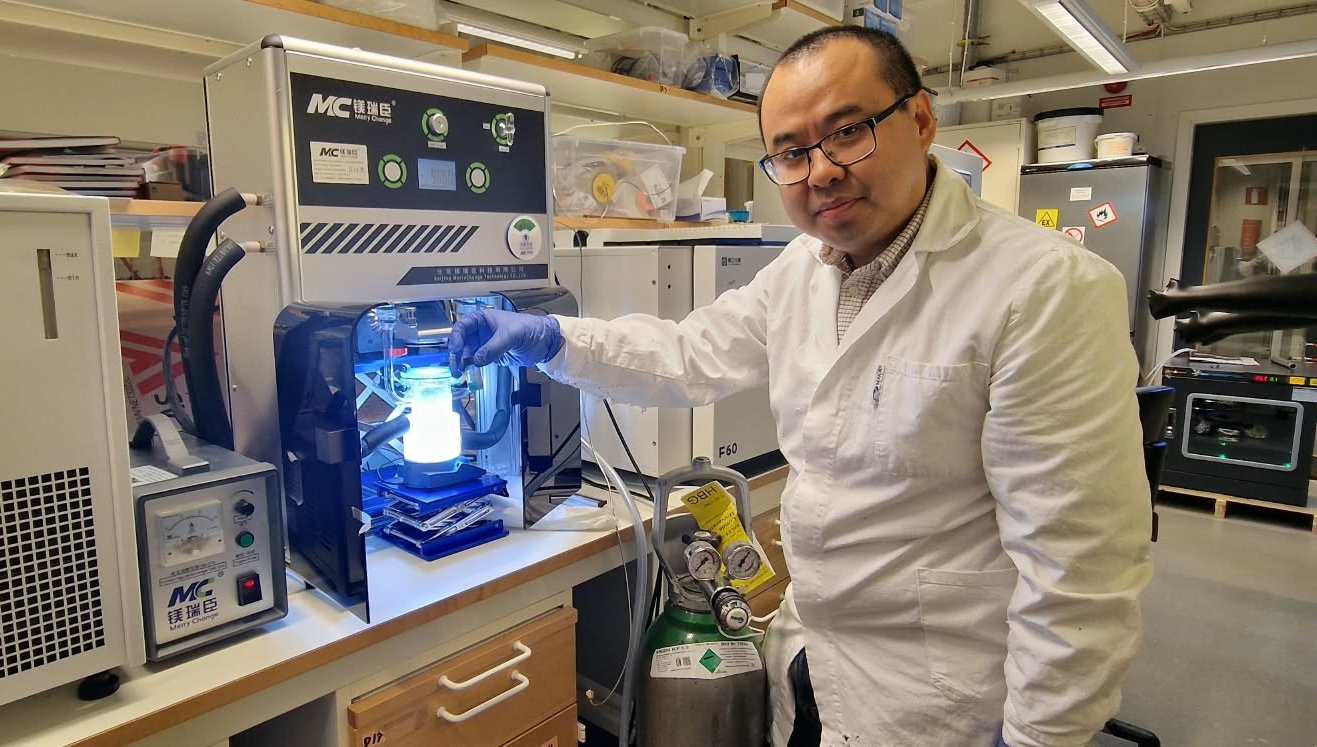
Could crystals far smaller than a grain of sand help convert sunlight into useful fuels and chemicals? At Lund University, WISE Fellow Maning Liu and his group are developing lead-free nanocrystals to bring that possibility closer. Their aim is to create materials that are both highly effective and environmentally responsible.
Could crystals far smaller than a grain of sand help convert sunlight into useful fuels and chemicals? At Lund University, WISE Fellow Maning Liu and his group are developing lead-free nanocrystals to bring that possibility closer. Their aim is to create materials that are both highly effective and environmentally responsible.
Sunlight is abundant. Turning its energy into clean fuels, however, requires materials that can capture light, put that energy to work and withstand the reactions they help drive. The latter means that they should remain stable during operation.
One promising family of materials is perovskite semiconductors. The order of the atoms in the material, its crystal structures, can be tailored to absorb light and move electrical charges, making them attractive for solar-energy technologies. But many high-performing perovskites contain lead, raising concerns about pollution during production, use and disposal. Removing lead introduces another challenge: alternatives can be less stable or struggle to move electrical charges efficiently. Liu’s team is working to combine strong performance and lasting stability with a reduced environmental footprint.
Building better materials, atom by atom
The researchers’ approach goes beyond swapping lead for another element. They also redesign the arrangement of atoms within the crystals. The team makes tiny, layered crystals known as double perovskite nanocrystals, exploring combinations of elements including tin, cobalt, indium, bismuth and antimony. Changing which atoms occupy particular positions allows the researchers to adjust how the crystals absorb light, transport light-generated electrical charges and resist degradation. Advanced microscopy and spectroscopy help reveal the materials’ structure and behaviour. The team then tests them in laboratory photoelectrochemical cells, where light helps drive chemical reactions.
Small crystals show staying power
Two published studies of Liu’s team have delivered encouraging results.
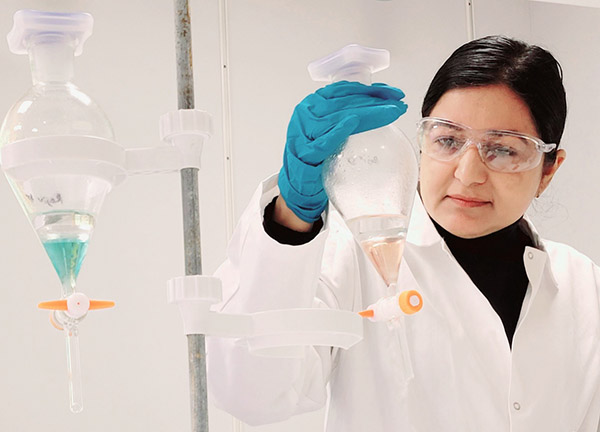
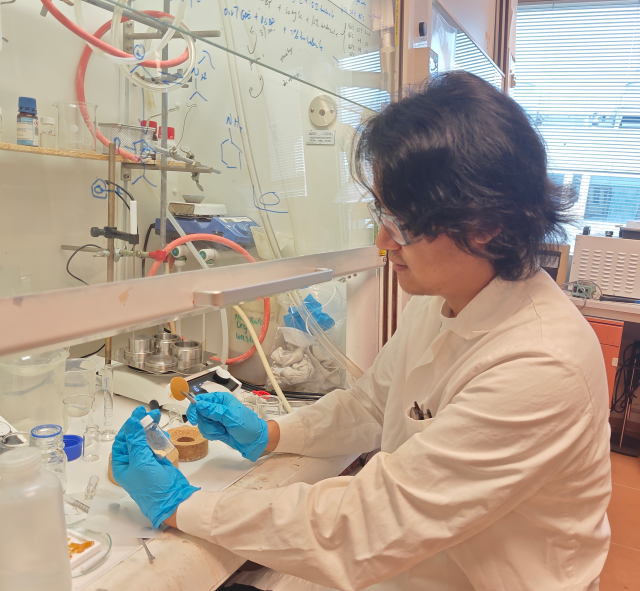
In one, WISE postdoctoral researcher Yukta and colleagues developed cobalt-based, lead-free nanocrystals. One composition remained stable in air for more than 100 days, while another produced a measurable electrical response to light in a photoelectrochemical cell. In a subsequent study, WISE doctoral student Sunardi Rahman and colleagues developed tin-based nanocrystals with a nearly two-dimensional structure. These preserved tin in its sensitive tin(II) chemical state even after 300 days in air. Related compositions also showed light emission and photoelectrochemical activity. The results address two central challenges: making materials that respond to light and helping them withstand exposure to their surroundings. Two further manuscripts are in preparation. These are promising laboratory steps towards solar-fuel technologies. Demonstrating fuel production remains a future goal.
Towards more sustainable solar chemistry
In the longer term, materials like these could help use sunlight to convert water or captured carbon dioxide into useful fuels and chemicals, reducing dependence on fossil resources. Replacing lead with potentially safer elements could reduce environmental and health risks, although the overall impact of each material will need careful assessment. Improving their stability is equally important, as longer-lasting materials could reduce waste and replacement costs. Practical applications will require further development. By studying how atomic structure shapes performance and stability, Liu’s team is building knowledge that could help turn abundant sunlight into a more useful resource.
From research to societal impact
—We are now taking our first steps toward translating our laboratory discoveries into real-world applications. I have received a Sustainable Idea Exploration grant from LU Innovation at Lund University, which aims to bridge the gap between fundamental research and practical innovation. Building on our WISE team’s published results on stable, lead-free perovskite nanocrystals, we see promising opportunities to develop these materials for future solar-fuel technologies. With support from LU Innovation, we can explore their commercial potential, assess technological feasibility, and identify opportunities for industrial collaboration, says Prof. Liu.
Published research: Yukta et al., Small Structures (2025), DOI: 10.1002/sstr.202500179; Rahman et al., Communications Materials (2026), DOI: 10.1038/s43246-026-01388-3.
To know more about Professor Liu’s research please visit: