
22 Oct 2026
12 Jun 2026
From Molecules to Milk Cartons: Exploring New Paths Toward More Sustainable Packaging
Imagine opening a juice box made from materials designed with deeper scientific insight into how they behave at the smallest scales.
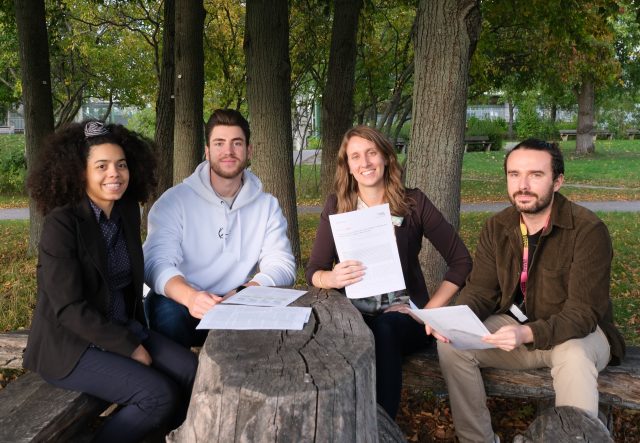
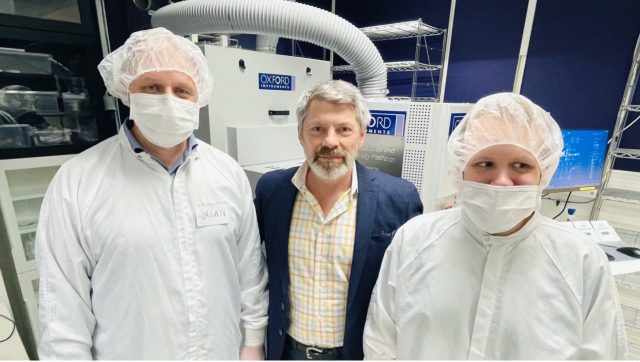
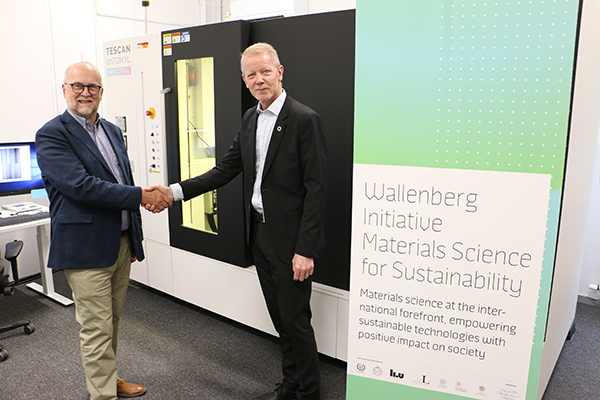
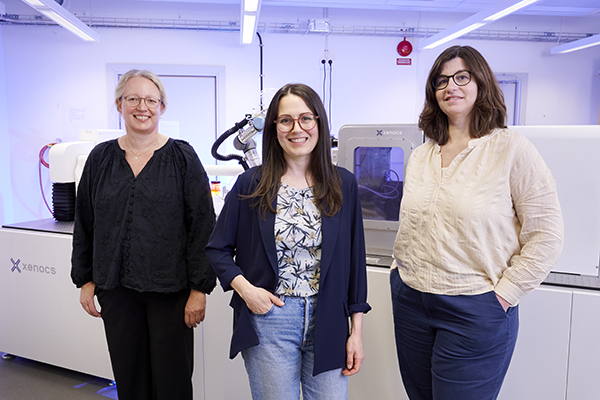
Figure caption: Professor Marie Skepö, Postdoc Martina Ambrogi and Technology specialist Anna Svensson in front of the BioSAXS instrument at Lund University. Photo by Fotograf Mats Persson.
While Tetra Pak’s fully paper-based barrier materials are already reaching markets in Europe and Asia, research continues to push the boundaries of sustainable packaging performance. One example is the WISE IP2 postdoctoral project, a collaboration between Tetra Pak, Lund University, and the WISE program. By bringing together researchers and industry experts, the project aims to advance the fundamental understanding of the materials that underpin next-generation food packaging solutions.
The Challenge Behind Everyday Packaging
Adhesives are essential but often unnoticed components in packaging. They hold layers together, influence strength and durability, and help secure food safety. Many of today’s industrial adhesives originate from fossil resources and exploring bio‑based alternatives especially those derived from renewable and non-edible feedstocks is an area of growing interest across industries such as packaging, furniture, and construction.
The potential benefits are promising, including reduced fossil dependence and improved material circularity. Yet several scientific questions remain. Bio‑based adhesives can show variability in water sensitivity, raw material consistency, and performance. These challenges often emerge from complex molecular interactions that are difficult to evaluate through traditional trial‑and‑error methods alone.
A Collaboration Built for Shared Insight
The ongoing collaboration started in 2025 and builds on previous successful work more than a decade ago between Tetra Pak and the Marie Skepö research group at Lund University. Their expertise in scattering techniques such as X‑ray and neutron analysis, and in molecular dynamics simulations offers powerful tools for probing the nano‑scale behavior of soft materials such as polymer adhesives and mineral fillers.
The WISE program provides a framework for long-term, sustainability‑oriented research, and the WISE‑funded postdoctoral project supports this interdisciplinary approach. Academic findings help inform industry thinking, while industrial constraints contribute to shaping research questions that are relevant and grounded. Students also participate through thesis projects, gaining experience at the crossroads of physics, sustainability, and applied material science.
“This project shows the value of industry and academia working together. We contribute practical challenges; they contribute deep scientific expertise. Together, we can take small but important steps toward the green transition,” says Anna Svensson, Technology Specialist at Tetra Pak and industry project leader.
Inside the Science: What the Project Is Studying
The project focuses on water‑based adhesive coatings often used in more sustainable packaging solutions. A central question involves understanding how molecules and particles arrange themselves as water evaporates. This process influences the structure, dewatering behavior, and mechanical properties of the final coating.
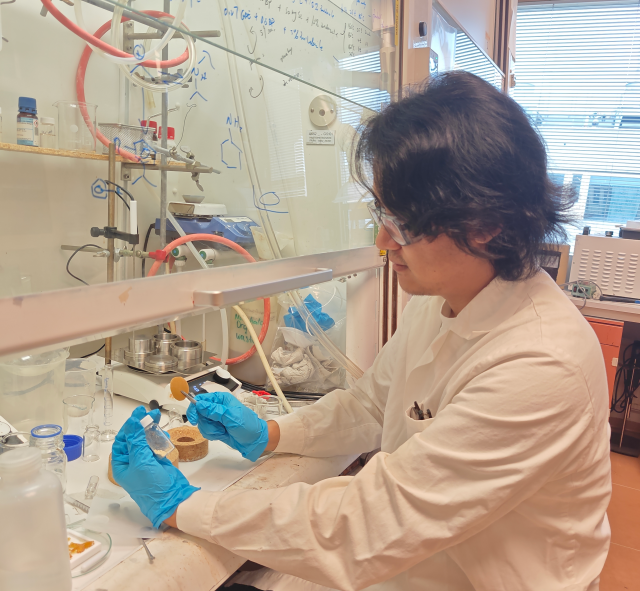
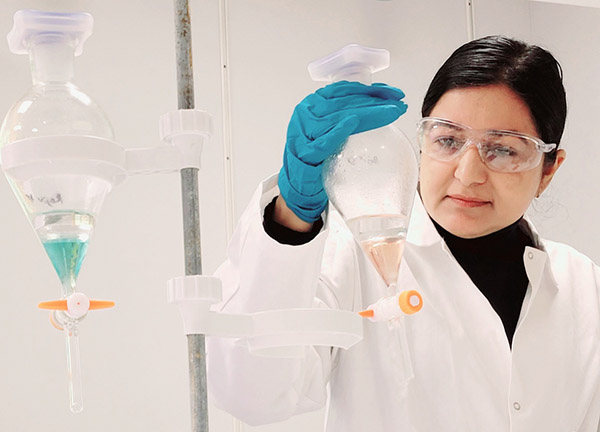
Researchers and postdoc Martina Ambrogi examine interactions between bio‑based polymers and clay fillers, exploring how factors such as polymer chain length, stiffness, and architecture interplay with filler concentration and water dynamics. By combining scattering experiments with molecular simulations, the project aims to improve the scientific understanding of how structure and processing conditions relate to material performance. Rather than providing immediate design recipes for new adhesives, the work contributes to a more detailed understanding of how bio-based polymers interact with mineral fillers in the coating process that can support future development efforts.
Why This Matters for Sustainability
Many industries are exploring how bio‑based systems might complement or replace fossil‑based materials. For such materials to be adopted more widely, their behavior must be reliable and well understood. This research seeks to clarify the molecular origins of performance variability, which may, over time, support more informed material choices.
In packaging contexts, deeper insight into adhesive systems can contribute to long‑term sustainability goals, such as enabling the use of renewable resources, supporting improved compatibility with paper-based systems, and reducing reliance on fossil feedstocks. While the project itself will not directly deliver these outcomes, the knowledge gained can serve as one step among many toward these ambitions.
Collaboration as a Pathway for Sustainable Innovation
Sustainability transitions often require both technological progress and foundational scientific knowledge. By working together, industry partners and academic researchers can jointly explore questions that neither could fully address alone. Integrating advanced methods such as molecular simulations and scattering analysis in industrial R&D strengthens a stronger internal competence in advanced materials characterization and modelling, while student involvement builds future expertise.
For the public, progress in this area may eventually support products with improved environmental profiles. While the scientific work is often invisible, the knowledge it produces can inform developments that affect everyday life.
What’s Next
In the short term, the project will continue to investigate how different polymer–clay combinations behave during dewatering, using synchrotron and neutron facilities alongside increasingly refined simulations. The goal is to develop a clearer understanding of how nano‑scale interactions relate to processing and material behavior
Conclusion
The collaboration between Tetra Pak, Lund University, and the WISE program represents a shared effort to deepen scientific understanding of bio‑based adhesive systems relevant to sustainable packaging. By studying how materials organize and interact in the coating process, the project contributes to the broader foundation needed to support future material innovations.
And while the familiar milk or juice carton may look unchanged on the outside, there is a vast and evolving field of science behind it steadily expanding what we know about how to create materials that balance performance, safety, and sustainability.