30 Apr 2026
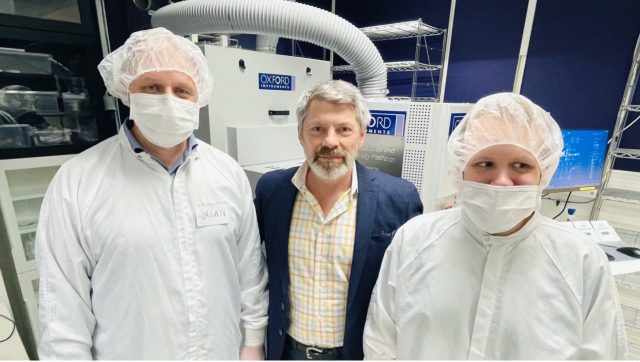
A Warm Welcome to Our New WISE Community Members – WISE Welcome Meeting 2026 coming up in August
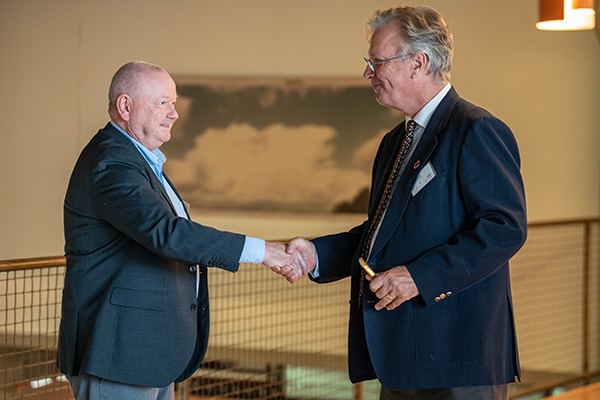
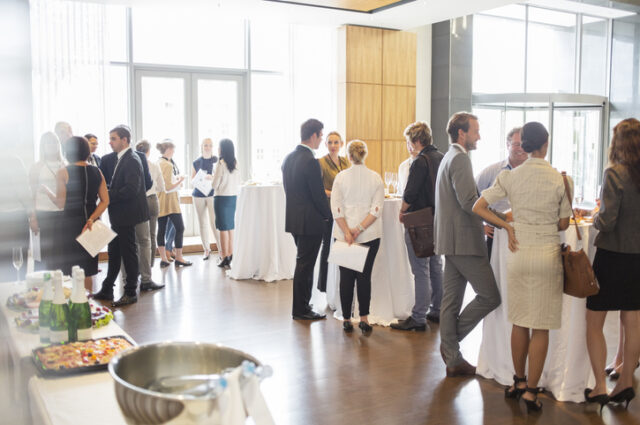
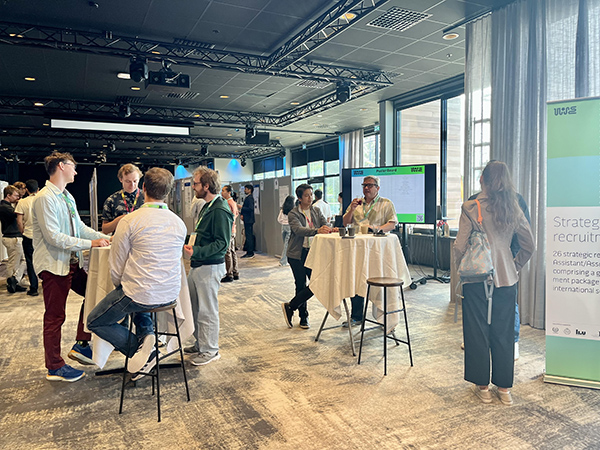
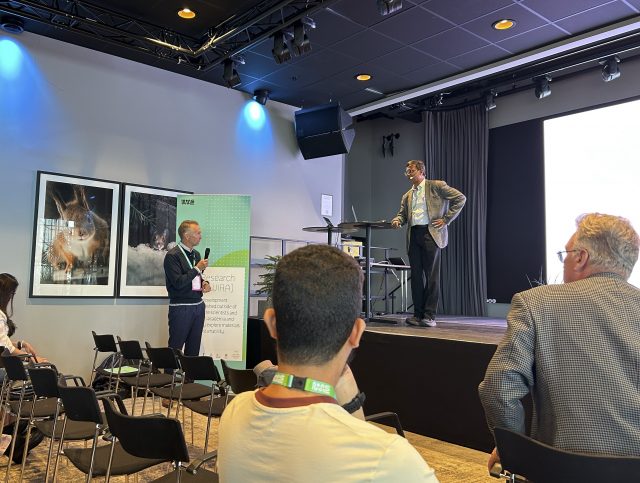
We are excited to welcome all new members of the WISE Community and invited guests to this year’s WISE Welcome Meeting!

11 Dec 2025
“Ce-based systems continues to surprise us in their unique physical and chemical properties, and the current discovery certainly should be placed under WISE thematic area Discovery, with hope to become a key ingredient in applications for sustainability”, says Prof. Eriksson from Uppsala University and WISE co-director.
Heavy fermions, explains Chin Shen Ong, researcher at Uppsala University, refers to electrons that, due to their interactions with other electrons, behave as if they were heavier than they would be without such interactions. In other words, their effective mass becomes much larger than that of a free electron. In materials where these interactions are weak, the increase is modest, typically around 1.5 times the free-electron mass. In the material examined in this study, the effect is dramatic: the electrons behave as if they are more than 100 times heavier. This unusual behavior can lead to phenomena such as superconductivity in certain heavy-fermion systems, and it remains an open question whether CeSiI might show related behavior under conditions not explored in this study. A material becomes superconducting when it can carry current without resistance, meaning that no energy is lost.
–Heavy fermions have been known since the mid-1970s in three-dimensional systems. Heavy-fermion-like behavior recently emerged in engineered two-dimensional heterostructures, while CeSiI provided the first example of a natural f-electron heavy-fermion state in two dimensions, says Ong.
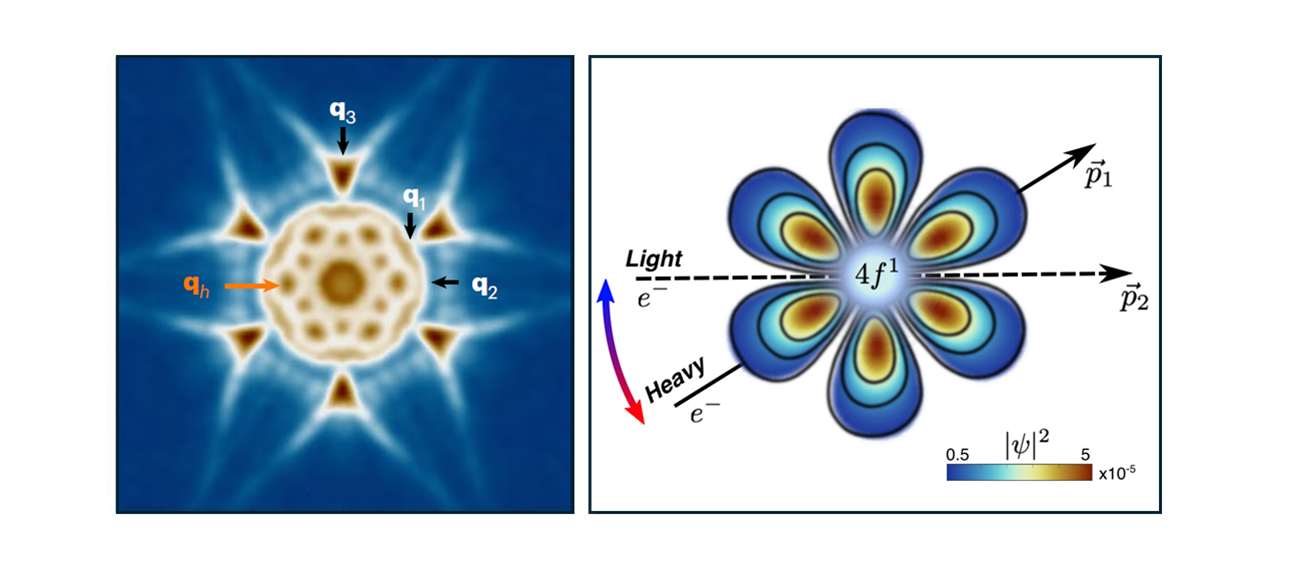
In their scientific article in Nature Physics, the researchers show that the reduced dimensionality of CeSiI creates a local electric field around the cerium atoms, that is strongly direction dependent. This environment isolates a specific f-electron state (Not sure what an f-electron is? Scroll down to learn more) buried deep inside the atom, where electrons interact strongly with one another.
The symmetry of that state controls how these localized f-electrons mix with the conduction electrons flowing through the material. This mixing—called hybridization—forms a nodal pattern: in some directions it drops to zero, letting electrons move freely and stay “light.” In other directions the hybridization is strong, causing the electrons to behave as if they were heavier. As a result, CeSiI hosts charge carriers that have effective mass varies dramatically depending on the direction they move.
–Ce-based systems continues to surprise us in their unique physical and chemical properties, and the current discovery certainly should be placed under WISE thematic area Discovery, with hope to become a key ingredient in applications for sustainability, says Prof. Eriksson from Uppsala University and WISE co-director.
This work brings together extensive experimental and theoretical efforts from a large international team. The study, titled Nodal hybridization in a two-dimensional heavy-fermion material, is authored by Simon Turkel, Victoria A. Posey, Chin Shen Ong, Sanat Ghosh, Xiong Huang, Asish K. Kundu, Elio Vescovo, Daniel G. Chica, Patrik Thunström, Olle Eriksson, Wolfgang Simeth, Allen Scheie, Angel Rubio, Andrew J. Millis, Xavier Roy and Abhay N. Pasupathy, and appears in Nature Physics (2025).
The article can be found at https://doi.org/10.1038/s41567-025-03060-y
An f-electron is an electron occupying an f-orbital, a type of atomic orbital characterized by its complex, multi-lobed shape, capable of holding up to 14 electrons, and found in the inner shells of heavier elements, particularly the lanthanides and actinides, leading to unique magnetic, electronic, and superconducting behaviors in f-electron materials.
30 Apr 2026
We are excited to welcome all new members of the WISE Community and invited guests to this year’s WISE Welcome Meeting!
29 Apr 2026
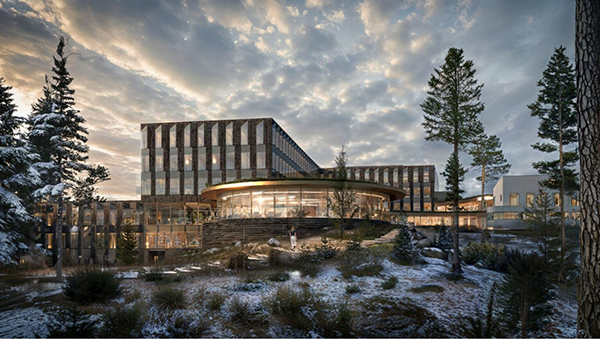
A new powerhouse for materials research is emerging at Luleå University of Technology.
20 Apr 2026
The call text for the third WISE Industrial Project Call (WISE-ip3) is now available, marking the start of a new round of funding aimed at strengthening collaboration between academia and industry. The application portal is set to open in April 2027.
17 Apr 2026
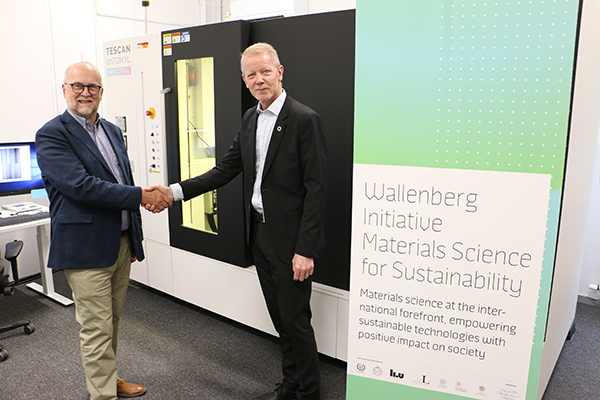
In the spring sunshine, the Uppsala node of Wise-EST was officially inaugurated at Uppsala University by Vice Rector Charlotte Platzer Björkman and WISE co-director Olle Eriksson, marking the launch of a new research infrastructure for tribology.
15 Apr 2026
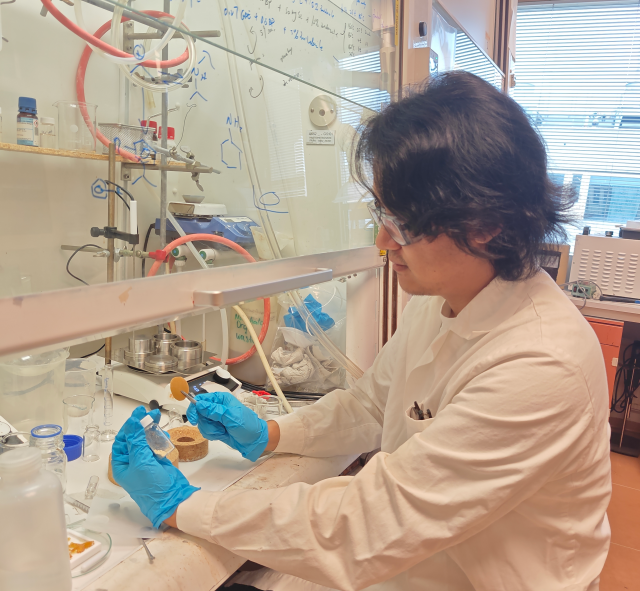
An international team of researchers has developed a high-performance, biodegradable membrane made from jute agricultural waste to filter oily water. The material is produced using a simple and scalable process and it can be removed using ultrasound and easily re-casted, restoring its performance again and again. Even after repeated use, the membrane maintains over 99% separation efficiency.
15 Apr 2026
The purpose of the grants is to bridge the gap from academic basic research to innovations in materials science for sustainability.
31 Mar 2026
On April 16, 2026, the Uppsala node of WISE-EST will be officially inaugurated at the Ångströmlaboratoriet in Uppsala. The event will take place from 09:30 to 15:00 CET in the Siegbahn lecture hall.
31 Mar 2026
When the WISE research and technology platform (WISE RTP) CII at Chalmers University of Technology was launched a year ago, the team expected a gradual development after inauguration.
30 Mar 2026
We are pleased to announce that WISE Networking Days 2026 will take place on November 23–24, 2026.
30 Mar 2026
Are you preparing a proposal for WISE-ap3? Make sure you’re fully equipped to meet its strong sustainability ambitions.
27 Mar 2026
”My appointment reflects the board’s ambition to further strengthen and embed sustainability within WISE. In this role, my responsibility is to ensure that sustainability is fully integrated across all WISE activities”, says Professor Joseph Samec, WISE Director for Sustainability.
19 Mar 2026
What if electronic devices could simply disappear once their job is done? From temporary medical implants to short-term diagnostic tools, researchers are exploring materials that perform like conventional electronics but safely degrade when no longer needed.
19 Mar 2026
WISE Dialogue 2026 has successfully wrapped up, gathering nearly 400 participants from academia, industry, and the public sector.
16 Mar 2026
Join us for the 8th Machine Learning Meets Materials Science Seminar, part of the WASP–WISE initiative! Mark your calendars: March 25 at 10:00!
12 Mar 2026
We are pleased to introduce Pär Jonsén as one of the speakers at the WISE Dialogue conference on March 17–18.
10 Mar 2026
“The WISE initiative is presently the most important initiative in materials science in Sweden. It is both exciting and imperative that MAX IV supports the programme by actively engaging in its activities. The WISE Dialogue is a great opportunity to learn about the latest developments and explore opportunities for deeper collaboration”, says Olof Karis, Director of MAX IV.
6 Mar 2026
“I’m very honored to receive the Göran Gustafsson Prize. For me, it recognizes the work my research group has carried out over many years to understand and control doping in organic semiconductors. I hope it will help us push this research further and develop new types of soft, flexible electronics” says Simone Fabiano.
6 Mar 2026
We are happy to introduce Erica Zeglio, Assistant Professor and WISE Fellow & Dr. Biswanath Das, two of our speakers at the WISE Dialogue conference, March 17-18.
2 Mar 2026
We are happy to introduce Francisco Panayo, one of our speakers at the WISE Dialogue conference, March 17-18. Francisco holds a key role as R&D Manager at Hitachi Energy.
27 Feb 2026
“Over the past few decades, computational modeling has gained widespread recognition in both academia and industry as an effective tool for accelerating materials design and deepening our understanding of materials behavior” says Carl-Magnus Lancelot, Technical Sales and Support Engineer at Thermo-Calc Software, responsible for customers in the UK and the Nordics.
26 Feb 2026
Until recently, most advanced 3D micro- and nanofabrication techniques were limited to polymers, restricting the range of materials that could be used. Now, an international research team has published a landmark study in the journal Nature demonstrating a state-of-the-art fabrication technique that overcomes these long-standing material limitations.
25 Feb 2026
Two cutting-edge research projects at Luleå University of Technology have been awarded Marie Skłodowska-Curie Postdoctoral Fellowships under the EU’s Horizon Europe programme.
23 Feb 2026
We are pleased to introduce Peter Dahlén as one of our speakers at the WISE Dialogue conference on March 17–18.
13 Feb 2026
The call text for the WISE Academic Project Call 2026–2027 (WISE-ap3) is now available. The application portal opens on 1 December 2026.
13 Feb 2026
WISE is introducing the WISE Research Master’s Thesis, a new research preparatory initiative designed for Master’s students in engineering and natural sciences.
Picture credit: Luleå University of Technology
11 Feb 2026
Eight collaborative research projects joining quantum technology and materials science have been approved funding. Together, the projects receive 1 MSEK each.
2 Feb 2026
WASP and WISE hereby announce the WASP–WISE 2026 call for NEST 2 (Novelty, Excellence, Synergy, and Teams) is open.
27 Jan 2026
WISE Dialogue 2026 is approaching – the major annual gathering for the entire WISE community!
20 Jan 2026
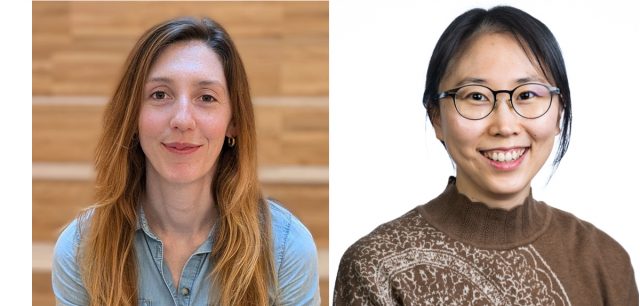
Don’t miss the chance to hear from two internationally renowned researchers in an upcoming digital seminar on February 5, 2026, from 3-4 pm CET.
16 Jan 2026
WISE is preparing its 3rd Academic Project Call (WISE-ap3) to fund PhD and postdoc research advancing sustainable, eco-friendly materials and manufacturing processes.