14 Oct 2026
23 Oct 2025
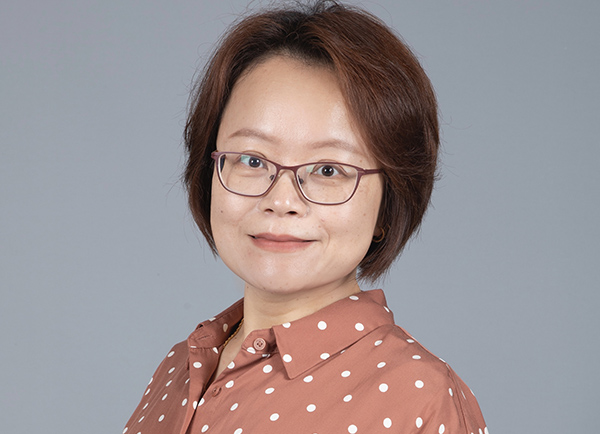
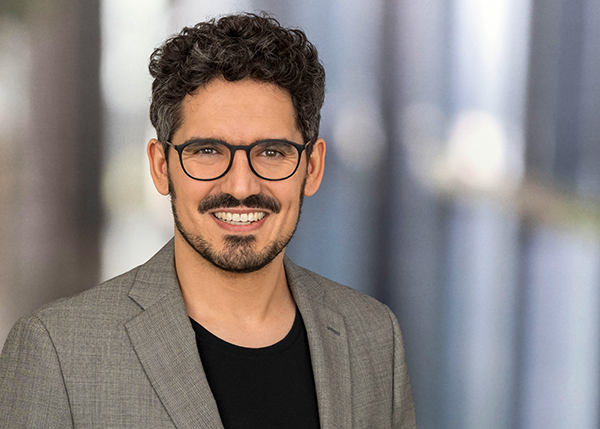
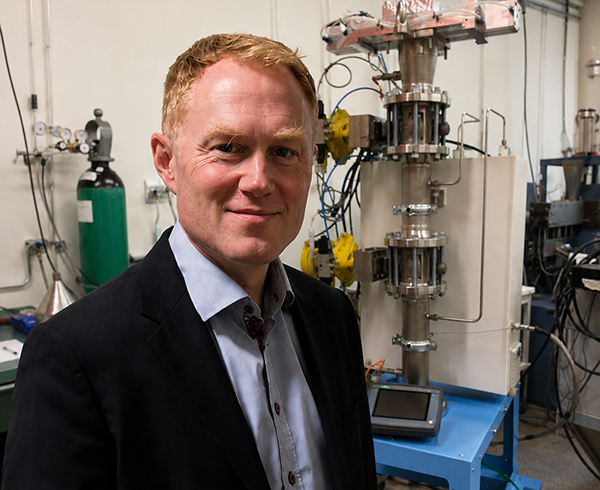
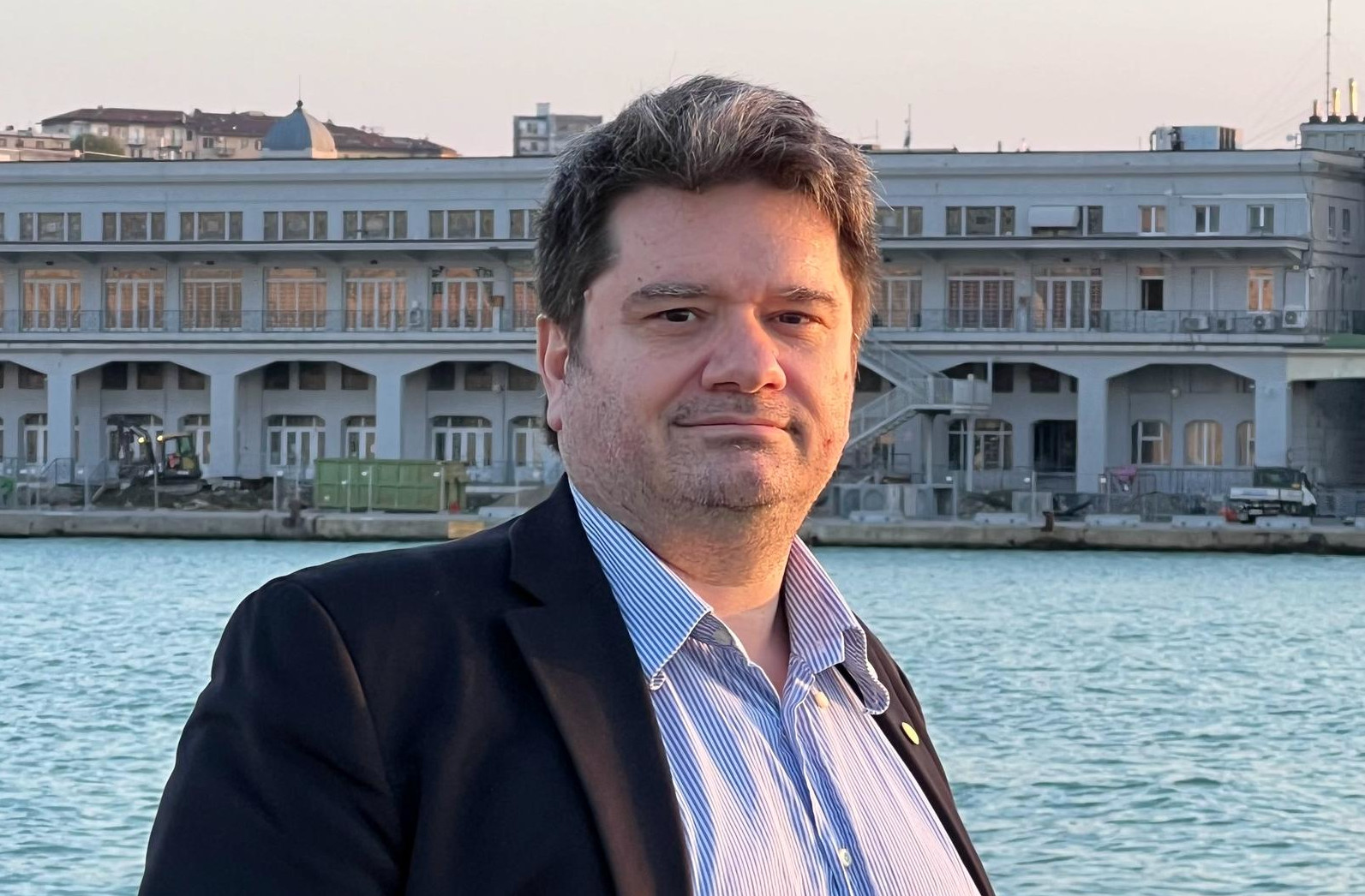
Meet our Guest Professor Federico Rosei
“Our society is increasingly dependent on technology. Take smartphones, for example: our entire lives are stored in them. Yet most of us are unaware of how energy-intensive their production processes are, how toxic or scarce some of the materials used in these devices can be, or how poorly many technologies are designed for recycling”, says WISE Guest Professor Federico Rosei at LTU.
The WISE Guest Professor (GP) Program is part of WISE’s international recruitment and outreach efforts, designed to build strong global research connections. This time, WISE is delighted to welcome Professor Federico Rosei from the University of Trieste, Italy, who recently joined Luleå University of Technology as a Guest Professor.
Through the GP Program, WISE aims to both strengthen excellent research environments in Sweden and introduce new collaborations, perspectives, and research areas. By engaging with internationally recognized researchers like Professor Rosei, WISE continues to expand its global network. We had the opportunity to sit down with Professor Rosei to talk about his research, his experiences, and his new role as a WISE Guest Professor.
What are your current research field and main research activities?
I began my scientific career in Italy, where I studied physics. After a short period in Denmark, I moved to Canada, where I spent a large part of my career before recently returning to Italy to the University of Trieste. During this time, my research gradually shifted toward materials science and applied physics, allowing me to focus on addressing major societal challenges.
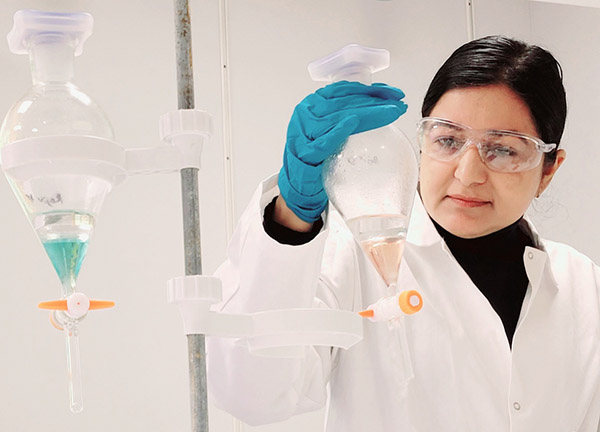
Over the past 15 years, my work has centered on solar technologies, particularly photovoltaic materials (like those used in solar cells), photoelectrochemical cells for hydrogen production from water, and solar windows (transparent surfaces capable of generating electricity). In our lab, we design and synthesize new materials, study their properties, and use them as building blocks to develop solar technological devices, which we then test and evaluate for performance.
What are the sustainability aspects of your research?
In my research, I address several Sustainable Development Goals (SDGs), specifically SDGs: 3, 4, 6, 7, 9, 12, and 13. While I thought for a long time that energy (SDG 7) is the bottleneck, I eventually realized that SDG 12 (Responsible Consumption and Production) is the most pressing challenge. Our society is increasingly dependent on technology. Take smartphones, for example: our entire lives are stored in them. Yet most of us are unaware of how energy-intensive their production processes are, how toxic or scarce some of the materials used in these devices can be, or how poorly many technologies are designed for recycling.
In short, the energy transition needs to be viewed from a broader perspective. It’s not enough to develop the most efficient solar cells, the entire manufacturing process and end-of-life management must also be sustainable. A similar challenge exists with batteries for vehicle electrification: do we even have enough lithium to meet the increasing demand?
How can Materials Science evolve to address sustainability and the climate change crisis?
Materials need to be used in a sustainable way. When designing new technologies, we must consider from the very start the availability of materials, their relative toxicity and how they can be recycled. During the design phase, we should ask ourselves: can we develop technology using less energy? Are we minimizing material waste? Are the production processes too energy-intensive?
I also believe there is an important role in outreach and education. The public needs to understand that achieving sustainability might sometimes mean accepting lower performance in our technologies. Building awareness and understanding around these trade-offs is a key part of creating a sustainable future.
What advice would you give to young researchers entering this area?
About twenty years ago, I co-authored a book titled “Survival Skills for Scientists,” which focuses on soft professional skills that are increasingly important to succeed in research. I would summarize it into two key qualities: i) drive and motivation, and ii) adaptability. Being intelligent is important, but it’s not enough to guarantee success. Adaptability matters because environments change: funding priorities, political directions, and research trends can all shift. A successful scientist needs to adapt and broaden their interests to stay relevant throughout their career.
Brief Bio:
- (2023-Present) Chair of Industrial Chemistry at the Department of Chemical and Pharmaceutical Sciences, University of Trieste, Italy.
- Full Professor at the Centre Énergie, Matériaux et Télécommunications, Institut National de la Recherche Scientifique, Varennes (QC) Canada.
- (2011–2019) Director of the Centre Énergie, Matériaux et Télécommunications, Institut National de la Recherche Scientifique, Varennes (QC) Canada.
- (2016-2023) Canada Research Chair (Senior) in Nanostructured Materials.(2013-2023)
- UNESCO Chair in Materials and Technologies for Energy Conversion, Saving and Storage
- (2003-2013) Canada Research Chair (Junior) in Nanostructured Organic and Inorganic Materials
- (2001) PhD from the University of Rome, Italy.
Awards & Honors
- Fellow of the Royal Society of Canada (2014) Fellow of the Canadian Academy of Engineering (2015)
- Member of the European Academy of Sciences (2014)
- Khwarizmi International Award, Iran (2015)
- Foreign Member of the Academia Europaea (2018)
- Blaise Pascal Medal in Materials Science (2019)
- Member of the European Academy of Science and Art (2021)
- Memorial Fellowship, John Simon Guggenheim Foundation (2023)
- Nano Energy Award (2025)
- Fellow of the World Academy of Sciences (2025)