
13 May 2026
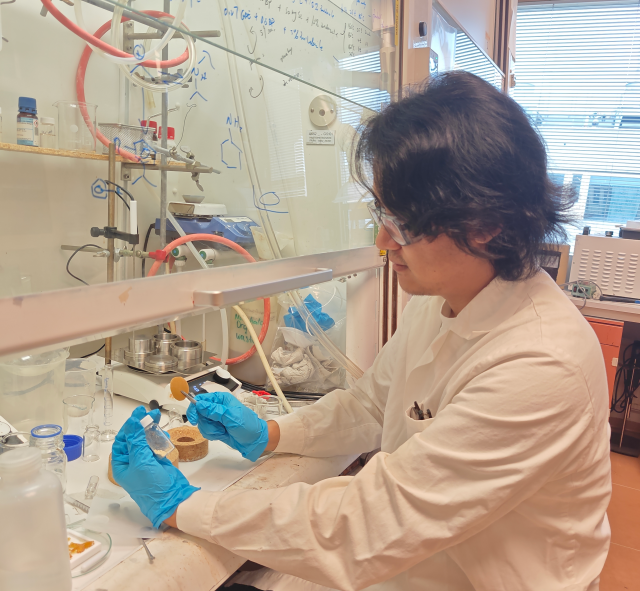
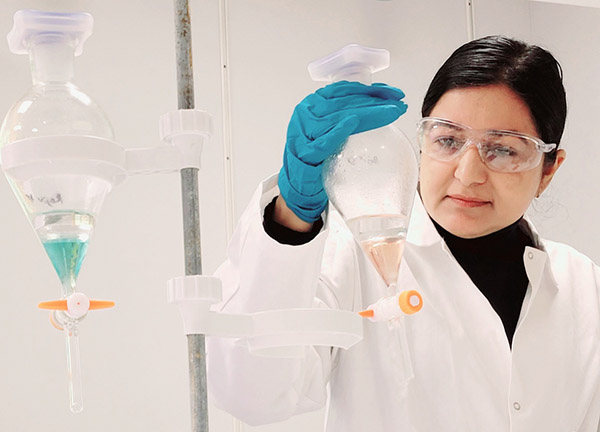
The WISE Alumni Spotlight: Asrar Alam
“The most valuable aspect of this program was meeting different people and understanding different aspects of research”.
26 Feb 2026
Until recently, most advanced 3D micro- and nanofabrication techniques were limited to polymers, restricting the range of materials that could be used. Now, an international research team has published a landmark study in the journal Nature demonstrating a state-of-the-art fabrication technique that overcomes these long-standing material limitations.
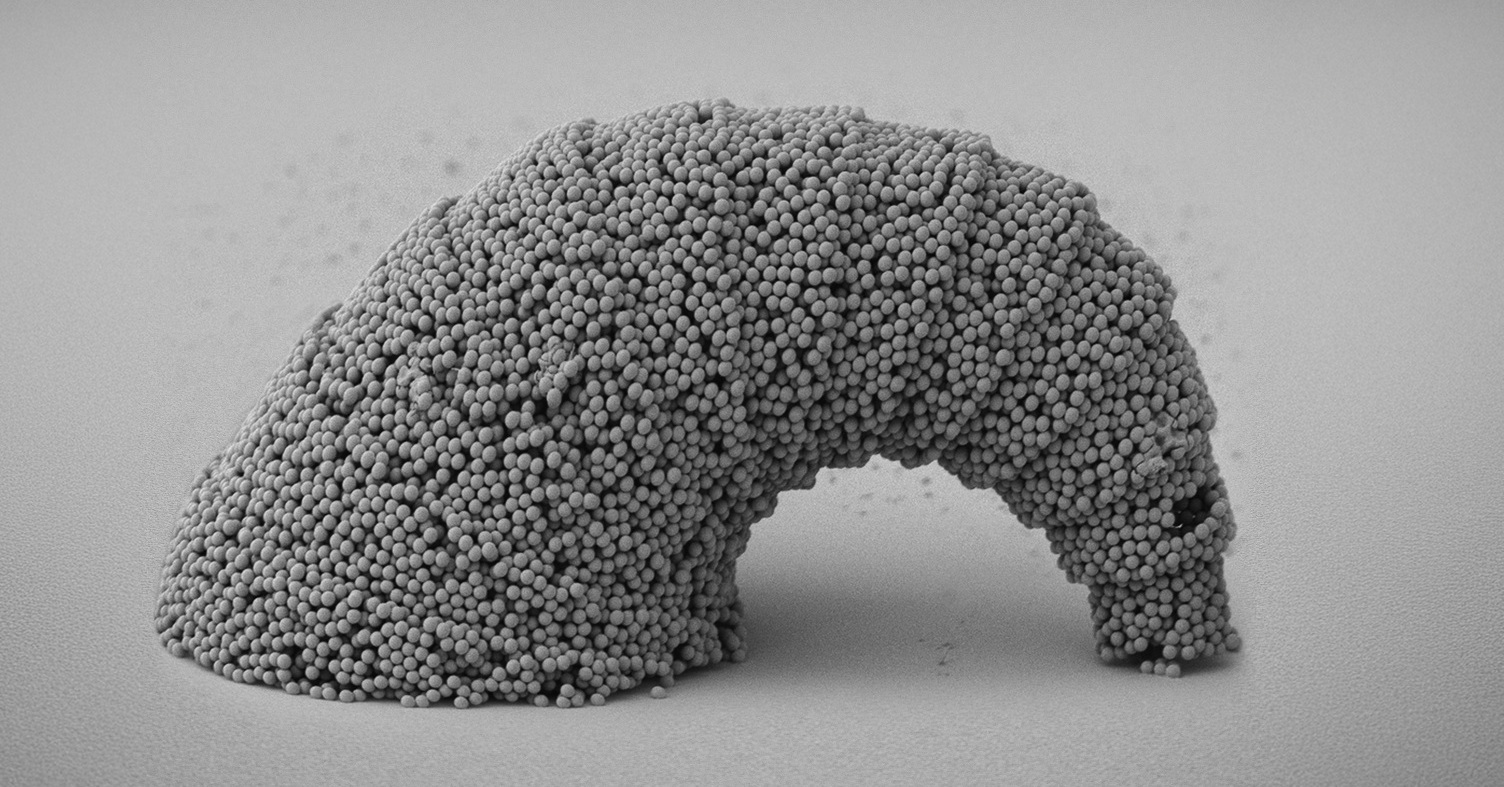
SEM images of a dangling croissant-shaped microstructure with a 3D curved surface assembled from SiO2 particles. Credit: MPI-IS.
Scientists are developing revolutionary methods to build ultra-small 3D structures—so tiny they are measured in millionths or even billionths of a meter. These breakthroughs are enabling the creation of miniature devices such as microrobots, microscopic actuators, and advanced nanoscale systems with applications across medicine, engineering, and robotics. Until recently, most advanced 3D micro- and nanofabrication techniques were limited to polymers (specialized plastics), restricting the range of materials that could be used. Now, an international research team has published a landmark study in the journal Nature demonstrating a state-of-the-art fabrication technique that overcomes these long-standing material limitations.
Moving Beyond Polymer-Only Fabrication
One of the most sophisticated existing methods, known as two-photon polymerization (2PP), works like an ultra-precise 3D printer that uses focused light to “draw” structures at the nanoscale. While it allows for extraordinary detail and complexity, it has historically been restricted to a narrow class of polymer materials.
The new approach changes this paradigm entirely.
Researchers from the Max Planck Institute, KTH Royal Institute of Technology, ETH Zürich, National University of Singapore and Koç University, developed a universal 3D micro-/nanofabrication strategy based on the direct assembly of material building blocks. Using a femtosecond laser inside a liquid environment, they generate highly localized thermal gradients and fluid flows. These forces precisely guide micro- and nanoparticles into pre-printed microtemplates, enabling light-driven assembly of complex 3D structures.
—This method allows the fabrication of structures made from a wide variety of materials, including metals, metal oxides, carbon nanomaterials, and quantum dots, sometimes even combined within a single structure, which removes the long-standing restriction to polymers, says Shervin Bagheri, professor in fluid dynamics at KTH and WISE-affiliated researcher.
Sustainability and Future Impact
This breakthrough introduces unprecedented flexibility in material choice for micro- and nanofabrication, opening the door to more sustainable, durable, and functional miniature devices. Such technologies are expected to play a crucial role in future advancements in biomedical devices, micro-robotics, nano-engineering, and advanced manufacturing.
The original publication can be found at:
Xianglong Lyu, Wenhai Lei, Gaurav Gardi, Muhammad Turab Ali Khan, Shervin Bagheri, Migchao Zhang and Metin Sitti,“Optofluidic three-dimensional microfabrication and nanofabrication”, Nature (2026) https://www.nature.com/articles/s41586-025-10033-x
To learn more about Prof. Bagheri’s research at WISE visit:
13 May 2026
“The most valuable aspect of this program was meeting different people and understanding different aspects of research”.
11 May 2026
Join us for the 9th Machine Learning Meets Materials Science Seminar, part of the WASP–WISE initiative! Mark your calendars: May 20 at 10:00!
11 May 2026
Registration is now open for the upcoming WISE Invited Professor Lecture on 4 June 2026, from 3.00–4.00 pm CET.
8 May 2026
The 2026 Machine Learning for Materials and Molecular Discoveries (ML2MD) symposium will bring together researchers to discuss recent advances at the intersection of machine learning, materials science, and molecular research.
7 May 2026
Sustainability is at the heart of WISE-ap3. All projects are expected to combine cutting-edge materials science with a meaningful contribution to a sustainable future.
7 May 2026
During our recent study visit to Kiruna in northern Sweden, participants had the opportunity to explore cutting-edge research, large-scale industry, and unique cultural experiences in an inspiring and unforgettable setting.
6 May 2026
Registration is now open for WISE Networking Days 2026, taking place on November
23 – 24, 2026.
5 May 2026
This time, you’ll have the chance to hear from Professor Carsten Gachot and Professor Yen-Chieh Huang. If you haven’t signed up yet, now’s a great time to secure your spot. It’s shaping up to be a valuable and engaging experience, and we don’t want you to miss out!
4 May 2026
This call aims to support joint research projects between researchers within WACQT and WISE in the areas of quantum technology for materials science or materials science for quantum technology, with a required focus on sustainability.
30 Apr 2026
We are excited to welcome all new members of the WISE Community and invited guests to this year’s WISE Welcome Meeting!
29 Apr 2026
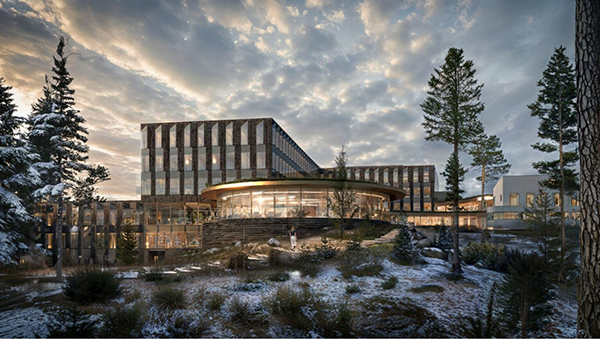
A new powerhouse for materials research is emerging at Luleå University of Technology.
20 Apr 2026
The call text for the third WISE Industrial Project Call (WISE-ip3) is now available, marking the start of a new round of funding aimed at strengthening collaboration between academia and industry. The application portal is set to open in April 2027.
17 Apr 2026
In the spring sunshine, the Uppsala node of Wise-EST was officially inaugurated at Uppsala University by Vice Rector Charlotte Platzer Björkman and WISE co-director Olle Eriksson, marking the launch of a new research infrastructure for tribology.
15 Apr 2026
An international team of researchers has developed a high-performance, biodegradable membrane made from jute agricultural waste to filter oily water. The material is produced using a simple and scalable process and it can be removed using ultrasound and easily re-casted, restoring its performance again and again. Even after repeated use, the membrane maintains over 99% separation efficiency.
15 Apr 2026
The purpose of the grants is to bridge the gap from academic basic research to innovations in materials science for sustainability.
31 Mar 2026
On April 16, 2026, the Uppsala node of WISE-EST will be officially inaugurated at the Ångströmlaboratoriet in Uppsala. The event will take place from 09:30 to 15:00 CET in the Siegbahn lecture hall.
31 Mar 2026
When the WISE research and technology platform (WISE RTP) CII at Chalmers University of Technology was launched a year ago, the team expected a gradual development after inauguration.
30 Mar 2026
We are pleased to announce that WISE Networking Days 2026 will take place on November 23–24, 2026.
30 Mar 2026
Are you preparing a proposal for WISE-ap3? Make sure you’re fully equipped to meet its strong sustainability ambitions.
27 Mar 2026
”My appointment reflects the board’s ambition to further strengthen and embed sustainability within WISE. In this role, my responsibility is to ensure that sustainability is fully integrated across all WISE activities”, says Professor Joseph Samec, WISE Director for Sustainability.
19 Mar 2026
What if electronic devices could simply disappear once their job is done? From temporary medical implants to short-term diagnostic tools, researchers are exploring materials that perform like conventional electronics but safely degrade when no longer needed.
19 Mar 2026
WISE Dialogue 2026 has successfully wrapped up, gathering nearly 400 participants from academia, industry, and the public sector.
16 Mar 2026
Join us for the 8th Machine Learning Meets Materials Science Seminar, part of the WASP–WISE initiative! Mark your calendars: March 25 at 10:00!
12 Mar 2026
We are pleased to introduce Pär Jonsén as one of the speakers at the WISE Dialogue conference on March 17–18.
10 Mar 2026
“The WISE initiative is presently the most important initiative in materials science in Sweden. It is both exciting and imperative that MAX IV supports the programme by actively engaging in its activities. The WISE Dialogue is a great opportunity to learn about the latest developments and explore opportunities for deeper collaboration”, says Olof Karis, Director of MAX IV.
6 Mar 2026
“I’m very honored to receive the Göran Gustafsson Prize. For me, it recognizes the work my research group has carried out over many years to understand and control doping in organic semiconductors. I hope it will help us push this research further and develop new types of soft, flexible electronics” says Simone Fabiano.
6 Mar 2026
We are happy to introduce Erica Zeglio, Assistant Professor and WISE Fellow & Dr. Biswanath Das, two of our speakers at the WISE Dialogue conference, March 17-18.
2 Mar 2026
We are happy to introduce Francisco Panayo, one of our speakers at the WISE Dialogue conference, March 17-18. Francisco holds a key role as R&D Manager at Hitachi Energy.
27 Feb 2026
“Over the past few decades, computational modeling has gained widespread recognition in both academia and industry as an effective tool for accelerating materials design and deepening our understanding of materials behavior” says Carl-Magnus Lancelot, Technical Sales and Support Engineer at Thermo-Calc Software, responsible for customers in the UK and the Nordics.
25 Feb 2026
Two cutting-edge research projects at Luleå University of Technology have been awarded Marie Skłodowska-Curie Postdoctoral Fellowships under the EU’s Horizon Europe programme.