
14 Oct 2026

15 Apr 2026
Nine innovation projects in materials science for sustainability receive Proof-of-Concept Grants
The purpose of the grants is to bridge the gap from academic basic research to innovations in materials science for sustainability.
The aim is to give researchers the opportunity to further develop their early discoveries in scientific projects toward innovation and commercialization. The call included innovations in materials science in a broad sense, but they must focus on a specific aspect of sustainability.
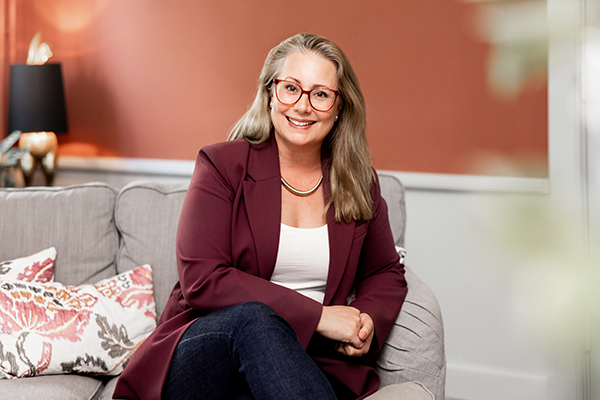
“Innovation in materials science is of greatest importance for sustainable development in the future. Through the Proof-of-Concept grant, the Foundation provides researchers with support to take academic research a step further towards innovation,” says Sara Mazur, Executive Director of Knut and Alice Wallenberg Foundation.
Eligible to apply are scientists that are employed at a Swedish University and have or have had grants from the Wallenberg Foundations are part of the Foundations strategic initiatives.
Between one and four million SEK
The projects that have been granted funding will receive between one and four million SEK each over a project period of a maximum of two years. In addition to funding, the project leaders will receive continued support from the Wallenberg Launch Pad, WALP, team to develop their innovations to commercial maturity.
Knut and Alice Wallenberg announce Proof of Concept grants in three areas: life science, materials science, and AI, quantum technology, or ICT.
This was the second call for Proof-of-Concept in materials science; next call opens September 1.
Since 2017, a total of 148 Proof-of-Concept grants have been awarded.
Proof-of-Concept grants awarded in the 2025 call in materials science:
Leif Asp, Chalmers University of Technology
Energy Efficient Manufacturing and Validation of Up-to-Scale High-Performance Structural Batteries
Daniel Weber, Chalmers University of Technology
Monolayer mesh catalysts for water oxidation towards green hydrogen production
Cecilia Persson, Uppsala University
Amorphous-matrix degradable alloys for sustainable bone repair solutions
Mikhail Vagin, Linköping University
High-selectivity oxygen pump for food storage
Daniel Aili, Linköping University
AI-Driven Raman-Based Materials Platform for Rapid Wound Diagnostics and Pathogen Identification (RAPID)
Daniel Brandell, Uppsala University
LiFILLERS – Li Based Ceramic Fillers for Next Generation Battery Polymer Electrolytes
Björn Wickman, Chalmers University of Technology
Mercury removal from concentrated sulfuric acid
Magnus Berggren, Linköping University
In Vivo Manufacturing of High-Aspect Ratio Organic Conductors and Electrodes for Sustainable and Minimally Invasive Electroceuticals
Richard Olsson, KTH Royal Institute of Technology
Electrochemical Factory for Sustainable Graphene Oxide Production from Carbon Fibers – Enabling Europe’s Transition from Critical Graphite Dependence to Circular Carbon Sources
For more information about upcoming calls and application procedures, visit the Knut and Alice Wallenberg Foundation website