The project aims to develop extremely thin catalytic layers that can perform the same energy-converting chemical reactions while using much smaller amounts of scarce and expensive raw materials. By designing the material at the atomic scale, the researchers hope to make technologies such as PEM electrolysis, a key method for producing green hydrogen more resource-efficient and easier to scale up.
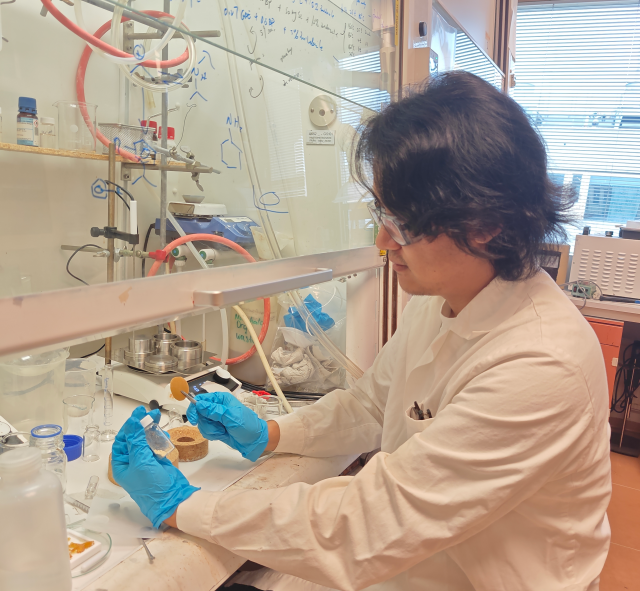
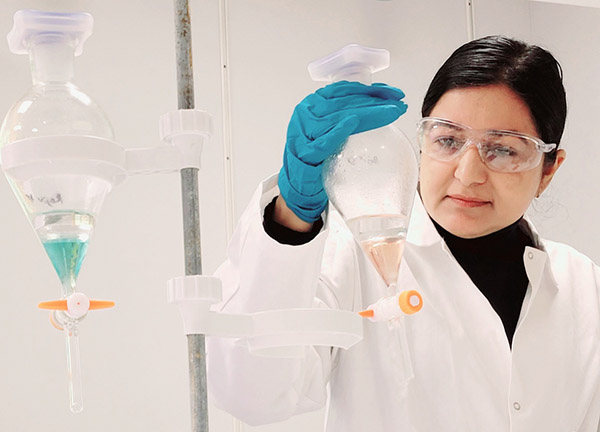
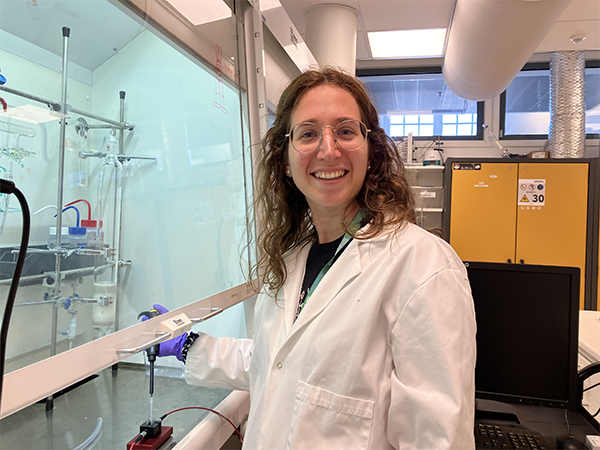
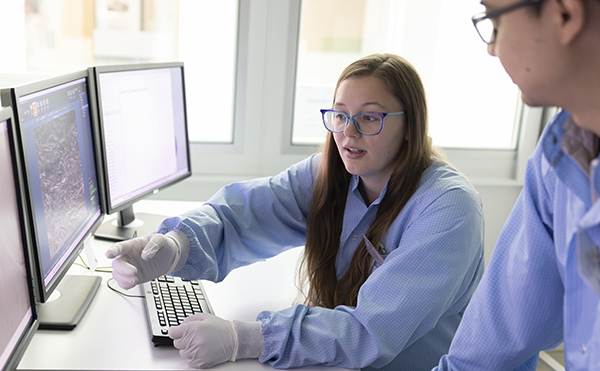
The idea originated from fundamental research, but its potential became clear when Weber’s research team, including WISE PhD student Raja Oubelhas and WISE postdoc Athira Anil, demonstrated that the chemistry worked as predicted. Discussions with industrial partners further confirmed that the challenge addressed by the project is relevant for future applications.
“Happy, and relieved” to receive support for a high-risk idea
The KAW PoC grant provides an opportunity to take the research beyond early laboratory results and explore its potential for real-world application.
“The idea is risky and knowing that reviewers outside our group saw the same potential made us more confident about it. We had the first results and nowhere to take them. This changed with receiving the KAW PoC.”
A step towards commercialization
For Weber, the grant represents a new direction in his research career, moving from fundamental science towards technologies with a more direct societal impact.
“Professionally, this is a new direction for me. I have worked mostly on fundamental questions, either purely academic or together with industry on scientific problems they cannot spend their own resources on.”
“Now I get to take that knowledge and aim it at something that reaches society more directly, which excites me.”
The funding will allow the team to continue developing the technology, retain key expertise, and test the material at a larger scale.
“Instead of describing the idea to our industrial partners, we can show them data,” Weber explains.
From laboratory discovery to sustainable solutions
The main challenge is demonstrating that the technology continues to work when moving from laboratory experiments towards larger-scale production.
“The central challenge is showing that what works in the lab still works when we scale it,” says Weber.
The team will work on improving both the material itself and the processes used to prepare and apply it.
Enabling the sustainability transition
The long-term ambition is to reduce the need for critical raw materials in green hydrogen production and contribute to more sustainable energy technologies.
“The Wallenberg Launch Pad can help significantly as a ‘bottom up’ accelerator that enables scientists like me to test whether our ideas are viable commercially,” Weber says.
If successful, the technology could eventually be scaled through a startup or in collaboration with industry partners, creating a pathway from academic research to societal impact.