
14 Oct 2026

19 Mar 2026
Electronics That Disappear: A New Approach to Sustainable Bioelectronics
What if electronic devices could simply disappear once their job is done? From temporary medical implants to short-term diagnostic tools, researchers are exploring materials that perform like conventional electronics but safely degrade when no longer needed.
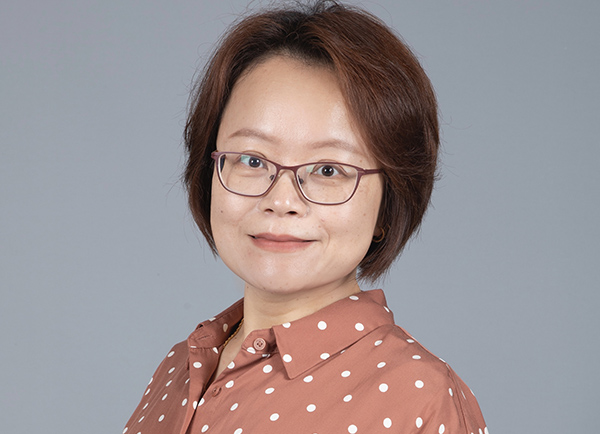
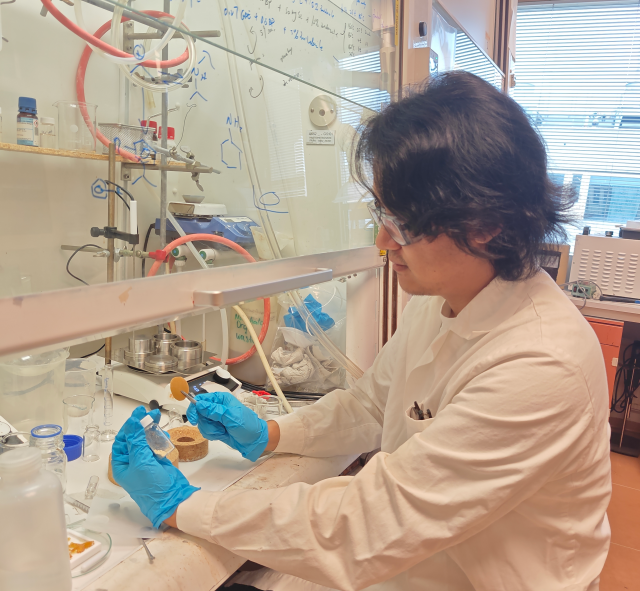
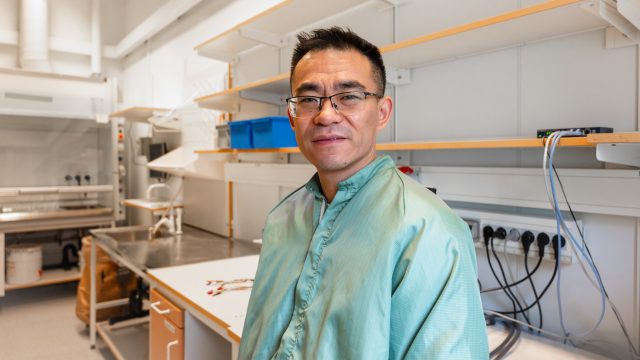
Jiayao Duan has recently been awarded a Marie Skłodowska-Curie Fellowship to continue his research as part of the Sustainable Bioelectronics Lab at Stockholm University with the project DOPTE (Degradable On-Demand Polymers for Transient Electronics), which aims to develop a new generation of high-performance electronic materials designed to break down. We spoke with Jiayao Duan about the project, its inspiration, and its potential impact.
About the Fellowship & Project
Congratulations on receiving the Marie Curie Fellowship! Could you briefly describe the DOPTE project and what you aim to achieve with it?
Thank you very much. The DOPTE project focuses on developing conductive polymers for bioelectronic devices that can also degrade in a controlled way when triggered.
These materials are designed to work in devices such as organic electrochemical transistors (OECTs), which are widely used in bioelectronics. By introducing special chemical bonds and responsive units into the polymer structure, we aim to create materials that maintain excellent electrical performance but can break down when exposed to triggers such as enzymes or light.
What inspired you to explore degradable polymers for transient bioelectronics?
I was interested in degradable materials before joining Erica’s group. Since the increasing attention on environmental challenges and carbon neutrality, designing degradable materials is becoming an important aspect in materials science.
At that time, my interest was mainly in degradability from a materials perspective. When I learned about Erica’s work on bioelectronics, I became very interested in the possibility of combining degradable materials with bioelectronic devices. After joining the group and working more closely with bioelectronic applications, this idea developed further.
Connection to WISE
How does DOPTE build on your current research within WISE?
DOPTE builds directly on my research within WISE. In my postdoctoral project, I explore greener synthetic strategies and degradable molecular structures for conjugated polymers in order to develop more sustainable bioelectronic materials.
The DOPTE project continues this line of research, but takes it a step further by integrating sustainability directly into high-performance electronic materials that can also degrade on demand.
What aspects of your WISE postdoctoral work motivated you to apply for the fellowship
Working within WISE provided the scientific foundation for developing the DOPTE project. Through my research on sustainable polymer chemistry, I became increasingly interested in how environmental considerations could be integrated into the design of electronic materials.
At the same time, the interdisciplinary environment of the research group, bringing together chemistry, materials science, and bioelectronics encouraged me to think about how polymer design could be connected more closely with bioelectronic devices. This perspective ultimately helped shape the idea behind the fellowship proposal.
Scientific and Societal Impact
What potential applications do you foresee for transient bioelectronics?
Transient bioelectronics could enable temporary medical devices, such as implants for post-surgical monitoring, drug delivery systems, or short-term neural interfaces.
In many current cases, implanted devices have to be surgically removed once they have completed their function. If the materials could safely degrade inside the body, this could eliminate the need for a second procedure, reducing both risks for patients and healthcare costs.
Beyond medical applications, degradable electronic materials could also help address the growing issue of electronic waste, particularly for disposable or short-lived electronic devices.
How could your research contribute to more sustainable bioelectronics?
In our research, we design polymers that can respond to specific triggers, such as enzymes or light, allowing us to control when the material begins to degrade. This means that devices could remain stable while they are operating but safely break down once their task is completed.
In this way, electronic materials would exist only for as long as they are needed, making them more compatible with biological systems and better aligned with the goals of sustainable technology.
Looking Ahead
What are the first steps in the project, and what milestones are you most excited about?
The first step will be synthesizing new polymer structures containing cleavable chemical bonds and testing their performance in bioelectronic devices like OECTs.
In parallel, we will study how these materials degrade and how quickly the process occurs. One milestone I am particularly excited about is demonstrating a device that performs well electrically and then breaks down in a controlled way when triggered.
What do you hope this fellowship will enable you to accomplish?
Scientifically, I hope the project will help establish a new design approach where degradability is built into electronic materials from the start.
For my career, the Marie Curie Fellowship provides the opportunity to develop as an independent scientist, build international collaborations, and further explore the intersection of organic electronics, polymer chemistry, and sustainability.
Personal Perspective
What does receiving a Marie Curie Fellowship mean to you personally?
Receiving the fellowship is both a great honor and a strong encouragement at this stage of my academic career. It provides the opportunity to further develop the ideas behind the DOPTE project and to explore them in greater depth.
More personally, it is very motivating to see that a research direction combining fundamental materials chemistry with sustainability and bioelectronic applications is gaining recognition.
Do you have advice for other early-career researchers considering applying for similar fellowships?
I would say it is important to communicate a clear scientific vision. A strong proposal should not only describe what you plan to do but also explain why the research matters.
It is also helpful to show how the fellowship will help you further develop your own research direction. And finally, seek feedback early comments from colleagues and mentors can make a big difference in strengthening the proposal.