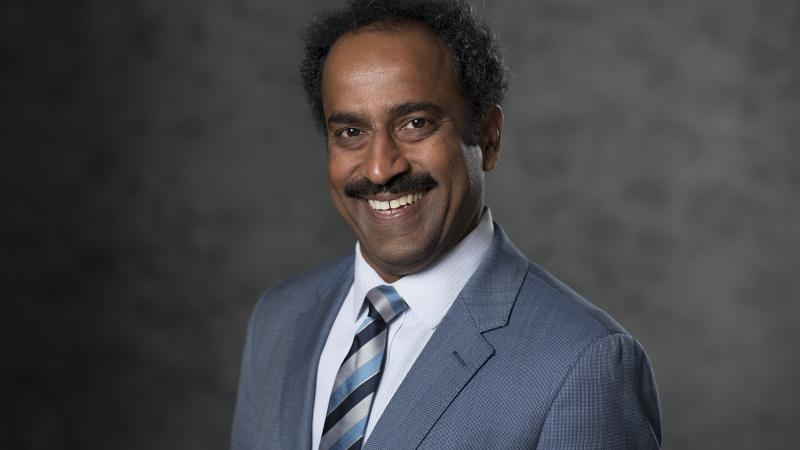
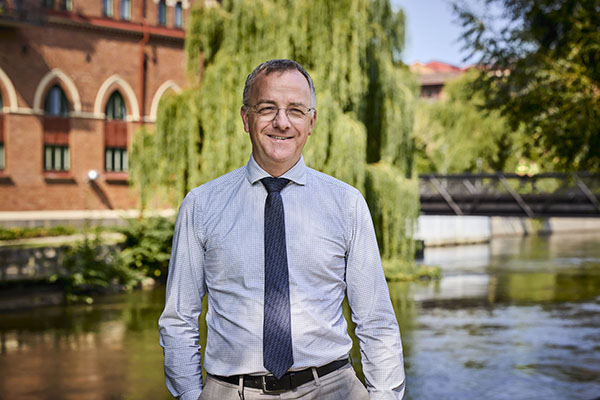
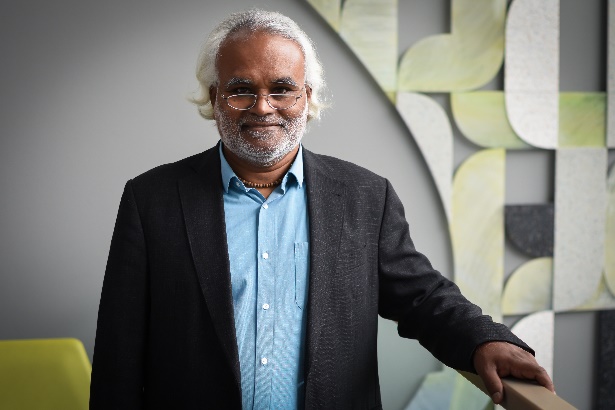
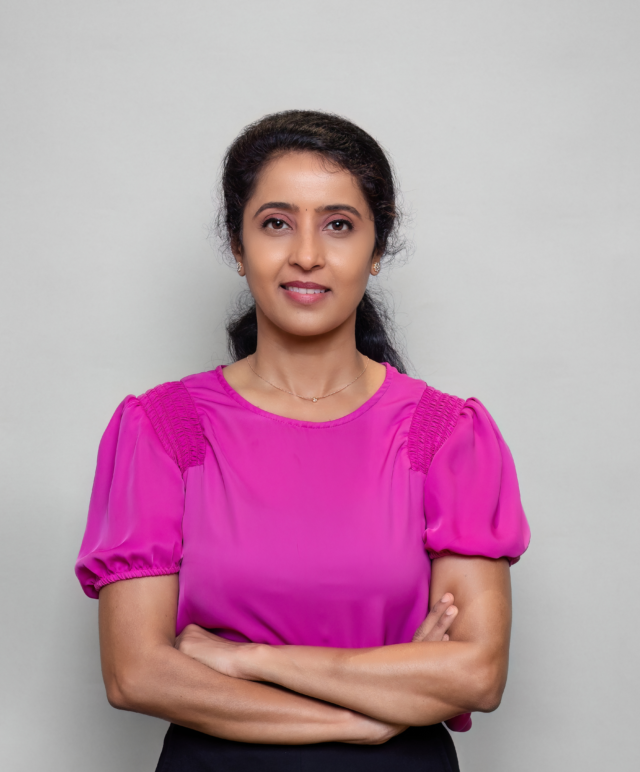
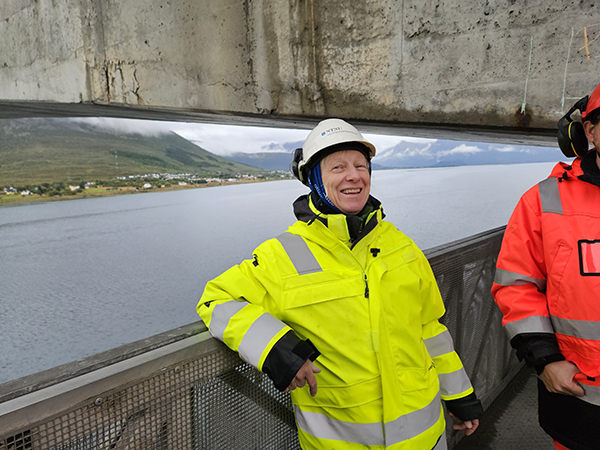
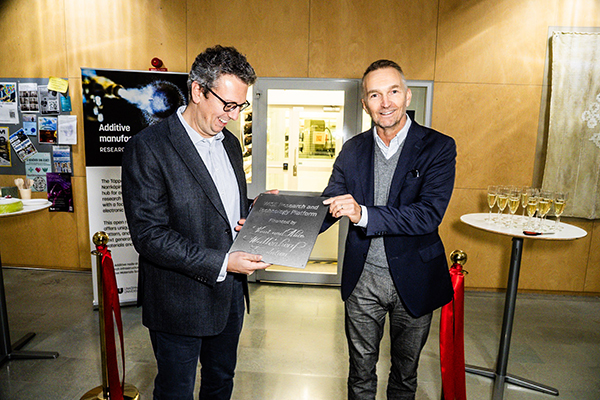
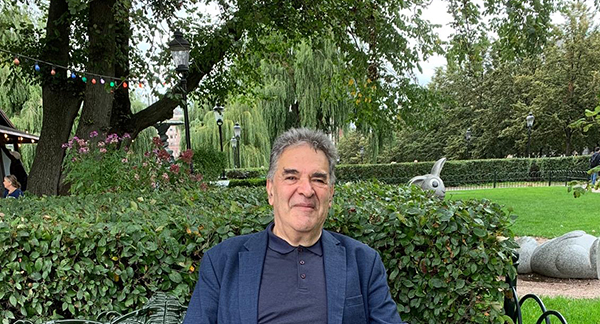
Picture: Professor Ganpati Ramanath. Picture credit: Professor Ganpati Ramanath
The WISE Invited Professor Program is part of WISE’s international recruitment and outreach efforts, designed to build strong global research connections. This time WISE is delighted to welcome Professor Ganpati Ramanath, from the Rensselaer Polytechnic Institute who recently joined Uppsala University as a WISE invited Professor.
The professor’s research focuses on designing and synthesizing microstructure‑tailored thin films and molecularly-engineered interfaces that enable entirely new properties for applications. By uncovering how processing, structure, chemistry, and performance are interconnected at the atomic level, the work aims to provide breakthroughs that can transform future nanoscale devices.
Can you give us a snapshot of the research that drives your work
I work in the field of thin film nanomaterials science and interface engineering to access novel properties for electronics and energy applications.
Current activities include tailoring microstructure (growth mode, morphology, texture, epitaxy) and properties of inorganic thin films; harnessing molecular nanolayers to chemically access and manipulate surface and interface phenomena to control film growth, stability and properties; and developing an atomistic understanding of processing-structure-chemistry-property relationships.
How does your research contribute to a more sustainable future?
I develop environmentally friendly ways to make advanced materials, and I fine‑tune their behavior by adding ultra‑thin molecular nanolayers or tiny but precise amounts of specific dopant atoms. These techniques can the next generation of faster, more efficient nano‑electronics, and also help capture and convert wasted heat into usable energy.
What made the WISE Invited Professorship an attractive opportunity for you?
I’m honored to be invited as a WISE professor. WISE is, in my view, a visionary and game-changing initiative that will leave an indelible impact on materials science and engineering. WISE offers a flexible structure with exceptional opportunities and resources for distinguished researchers from around the world to collaborate closely with their counterparts at Swedish universities over long periods of time. This kind of sustained interactions is ideal for pursuing out-of-the-box research ideas and making fundamental scientific breakthroughs for technological innovations for human and planetary well-being.
My previous five years as an invited professor at Linköping University (2019–2024) already led to highly successful collaborations, and the WISE Invited Professor Program is a perfect way to build on that foundation.
What benefits might your research bring to society in the future?
My research could help create smarter, more efficient, and more sustainable electronics and energy technologies. By learning how to fine‑tune the atomic structure and chemistry of nanomaterials and interfaces between them, we can unlock new properties that today’s devices don’t have.
This includes developing scalable ways to combine different atoms and nanoscale structures to better manage heat in electronics and even turn waste heat into useful energy. I also work on nano‑level methods to improve how electrical contacts and heat flow behave, which can significantly boost the efficiency of energy‑conversion technologies.
What is your academic background?
My academic background spans metallurgical engineering at the undergraduate level and materials science and engineering at the graduate level—fields that sit at the intersection of physics, chemistry, and engineering.
What inspired you to become a researcher, and specifically in this field?
Materials science sits at the cusp of pure sciences and engineering, the ability to explore and apply knowledge from solid‑state physics and chemistry to solve real technological challenges is what inspired me to pursue this field.