16 Dec 2025
WISE supports solar cell research
Research on organic solar cells at Karlstad University is advancing with support from WISE.

22 Dec 2025
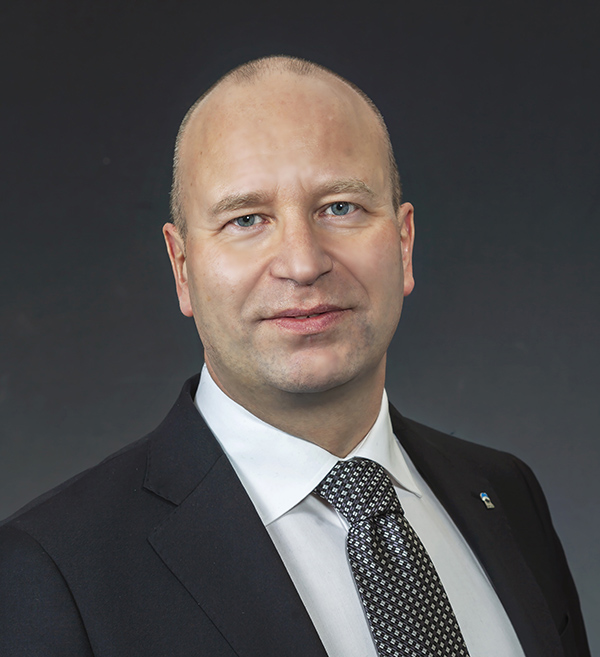
“Sustainability is at the center of everything we do. Our research focuses on some of the greatest challenges of our time – such as how we extract raw materials, use energy, deal with emissions and reduce waste.”
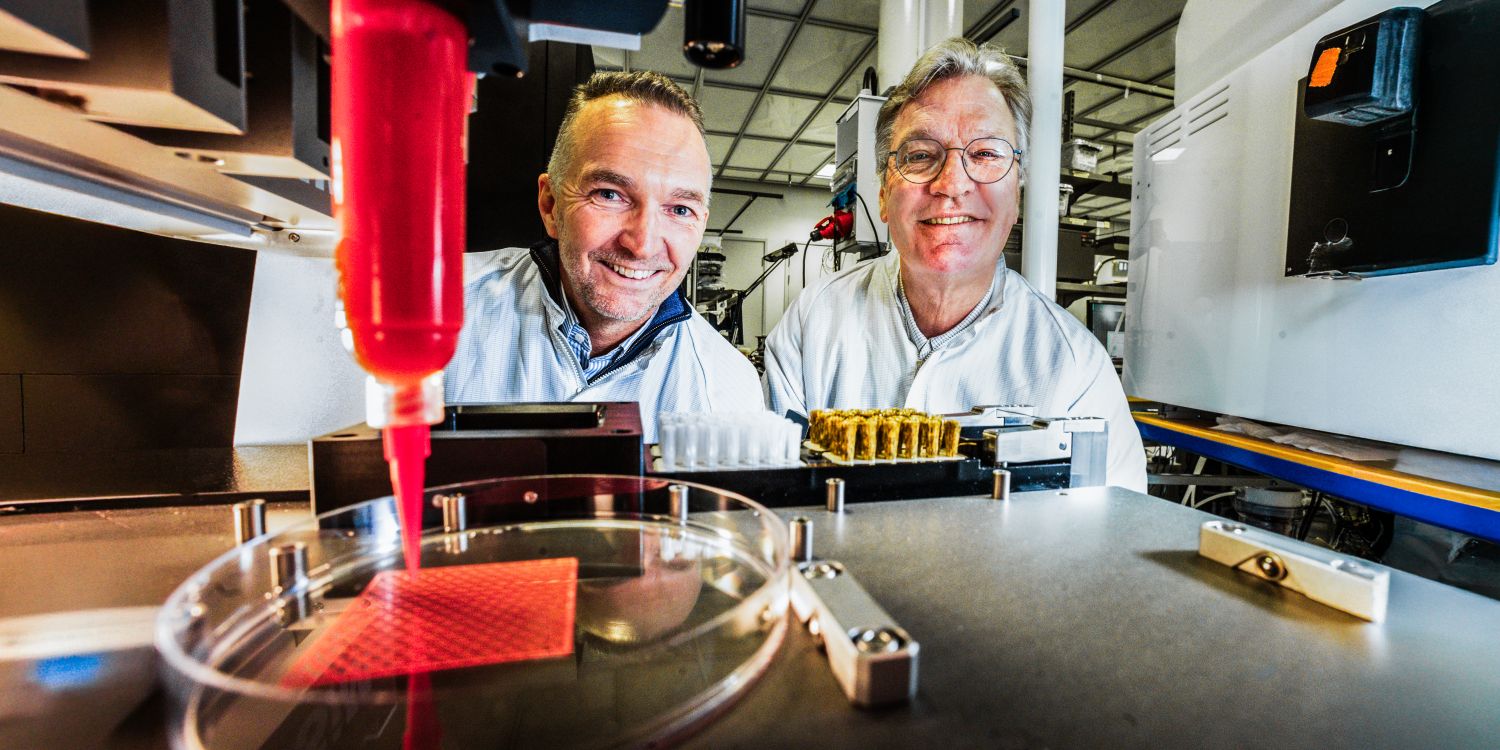
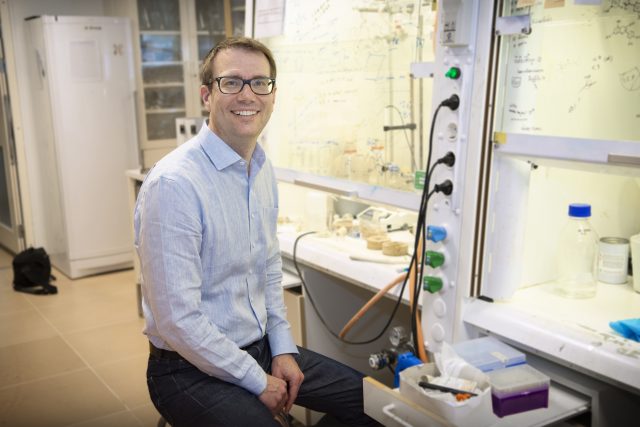
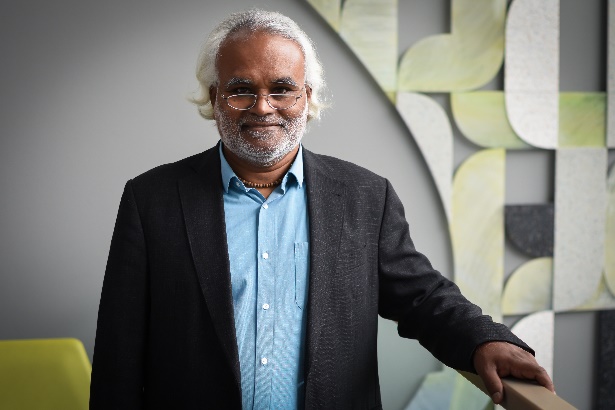
Photo credit: Thor Balkhed, Linköping University
“We believe that solutions require a holistic approach, something we can offer thanks to the wide range of expertise within our research program.”
So say Magnus Berggren, Program Director, and Olle Eriksson, Deputy Program Director for the Wallenberg Initiative Material Science for Sustainability (WISE). “Although materials are the main reason our society has a negative environmental impact, they are also our most important tool for solving the problem,” says Magnus wryly, adding that it was originally Olle who put it that way.
The two research leaders are in sync, often anticipating each other’s ideas or quoting one another as they meet to discuss the program, which was launched in 2022.
At that time, although Sweden already had a strong materials research community to build on, the sustainability dimension had not been a defining or unifying feature – either in Sweden or elsewhere.
Running out of time
Knowledge of new materials and their production have advanced humanity and our societies throughout history – from bronze and iron to the semiconductors that paved the way for our modern digital world. But many of the materials use and the way they are mined and produced have also contributed to today’s environmental problems, much due to a lack of sustainable thinking.
The numbers speak for themselves. Every year 100 billion tons of raw materials are extracted globally – mainly metals, minerals, fossil resources and biomass – to produce a variety of materials. This number is set to double by 2050. Most of the materials extracted are non-renewable resources, putting great pressure on the environment, society and climate. Global production of materials accounts for around 25 percent of total greenhouse gas emissions; metal production alone consumes about 8 percent of all the energy we generate.
“Every five seconds we produce enough plastic to wrap around the entire Eiffel Tower, and in one hour we make enough iron and steel to build 20 new towers,” says Eriksson, quoting examples from a book by Ed Conway.
Reducing the environmental and climate footprint of the materials we use in everyday life and industry is necessary to achieve global climate and environmental goals – and time is short.
“We don’t have time to wait until every last detail has been researched. As scientists, we often think there’s always more to study before moving on to applications – but we no longer have that time. We now have to do everything in parallel: conduct basic research, think about applications and move toward innovation. It’s a huge challenge,” says Berggren. “Without, of course, compromising scientific quality,” Eriksson adds.
Collaboration with Swedish industry
They also emphasize that the program’s research arenas – called WIRA – which are run in collaboration with several industrial companies, along with industry-sponsored PhD students and postdoctoral researchers within the program, have a crucial part to play.
“This approach enables us to learn from each other. We gain access to real-world problems we might not otherwise have known about, and we have the opportunity to quickly bring our results to industry. This can shorten timelines and further enhance the potential for innovation.”
Some 40 Swedish companies are involved in the program in various ways.
“What’s so exciting and important is that it’s not just a small corner of industry – the program is broad, spanning everything from steel and electrification to production,” says Olle Eriksson.
Another example they mention is Knut and Alice Wallenberg Foundation’s proof-of-concept grants.
“These grants give researchers an opportunity to demonstrate that a scientific discovery can be scaled and utilized by society – the research needed before it becomes investable and ready for commercialization,” explains Berggren.
Although industrial collaboration is an important part of the program, the main focus remains on basic scientific research and knowledge-building, particularly within the program’s graduate school.
“It’s gratifying that we manage to attract young researchers from all over the world, and roughly equal numbers of women and men.”
The program is unique of its kind, even by international standards – no other program can rival the scope and breadth of WISE. “We have engineers, materials scientists, chemists, physicists, all disciplines within materials science, and for materials of all kinds. It’s unique,” they point out.
Another key aspect is access to computational capacity and the Berzelius supercomputer.
“We hope the WISE program can inspire others, not only in Sweden but also internationally.”
Examples of ongoing research projects within the program include replacing insulation materials such as polystyrene and fiberglass with a cellulose-based material, developing more sustainable and recyclable concrete, and finding ways to replace rare earth elements used in magnetic materials, such as those needed for wind turbines.
“The research isn’t just about finding new materials but also about developing sustainable manufacturing methods and creating circularity through recycling and reuse,” Eriksson explains.
Even though human extraction and production of materials are contributing to the current crisis, Olle and Magnus believe that materials are also the solution.
“Sustainable materials research is crucial to reversing this trend. The drive and energy we see within the WISE program – both among researchers and in industry – give us hope,” they conclude.
Text: Carina Dahlberg
Translation: Maxwell Arding
Photo: Thor Balkhed

16 Dec 2025
Research on organic solar cells at Karlstad University is advancing with support from WISE.
15 Dec 2025
On February 2, 2026, WASP and WISE will launch a joint call for proposals for five-year NEST projects.
11 Dec 2025
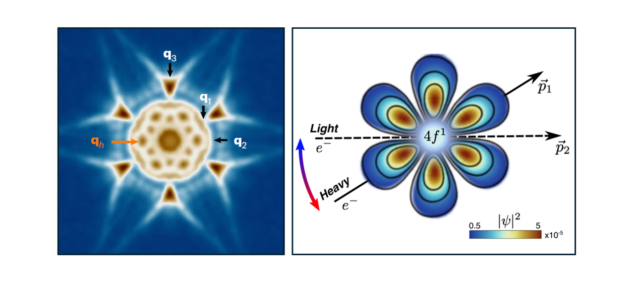
“Ce-based systems continues to surprise us in their unique physical and chemical properties, and the current discovery certainly should be placed under WISE thematic area Discovery, with hope to become a key ingredient in applications for sustainability”, says Prof. Eriksson from Uppsala University and WISE co-director.
5 Dec 2025
“For us it is important to work with sustainable materials and make sure that we manufacture them employing low-energy processes. We think from the beginning what elements we are going to use -their availability, price, recycling possibilities, etc.”, says Professor Thelakkat.
28 Nov 2025
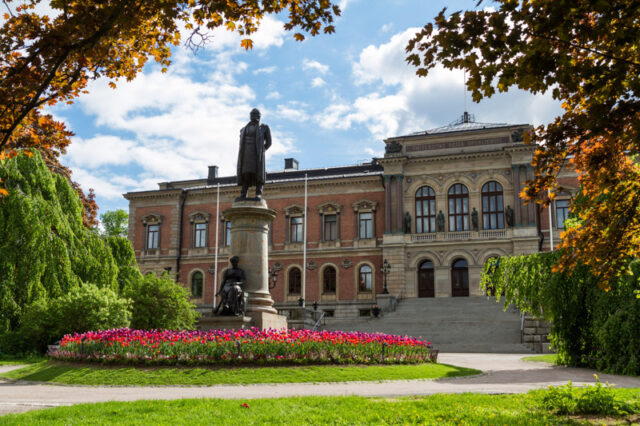
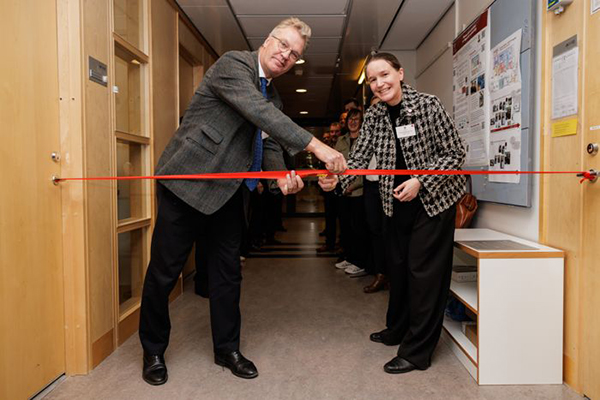
The Uppsala node of the WISE Additive Research and Technology Platform (RTP) was officially inaugurated this week, marking a significant step in strengthening Sweden’s national research capacity in additive manufacturing.
Picture credit: Tobias Sterner, Bildbyrån
25 Nov 2025
Energy storage is one of the great scientific challenges of our time. To move toward a more sustainable society, we need batteries that are not only efficient but also environmentally responsible.
20 Nov 2025
Join us for the 7th Machine Learning Meets Materials Science Seminar, part of the WASP–WISE initiative! Mark your calendars: November 26 at 10:00!
17 Nov 2025
Uppsala University’s WISE Symposium series will spotlight cutting-edge sustainability research on November 26, 2025, with a webinar dedicated to the environmental aspects of additive manufacturing.
12 Nov 2025
On December 4, 2025, from 15:00 to 16:00, Uppsala University will host a WISE Guest Professor Lecture featuring Professor Julie Beth Zimmerman and Dr. Sandrine Lyonnard, both WISE Guest Professors at the university.
11 Nov 2025
“This talk explores the emerging frontier of biotechnology in enabling greener battery technologies, specifically through biohydrometallurgy and bio-based materials, ” says Prof. Srinivasan Nanyang from the Technological University (NTU), Singapore.
10 Nov 2025
As part of WISE’s Guest Professor (GP) program — one of our key initiatives to foster international collaboration and enrich student learning — we are delighted to welcome Professor Mette Rica Geiker from the Norwegian University of Science and Technology (NTNU) to Chalmers University of Technology.
Picture by Ann-Marie Thoresen at Statens Vegvesen
6 Nov 2025
The inauguration of the WISE Additive node at Linköping University (LiU) took place this week, marking an important milestone in the development of Sweden’s research infrastructure for additive manufacturing and soft electronics for sustainability.
Picture by Thor Balkhed, Linköping University
3 Nov 2025
The Guest Professor (GP) program is one of WISE’s recruitment and outreach activities, designed to foster international research collaborations and support the development of our students.
27 Oct 2025
The Wallenberg Centre for Quantum Technology (WACQT) and the Wallenberg Initiative Materials Science for Sustainability (WISE) have launched a new call for proposals — now open for applications!
23 Oct 2025
“Our society is increasingly dependent on technology. Take smartphones, for example: our entire lives are stored in them. Yet most of us are unaware of how energy-intensive their production processes are, how toxic or scarce some of the materials used in these devices can be, or how poorly many technologies are designed for recycling”, says WISE Guest Professor Federico Rosei at LTU.
22 Oct 2025
The Wallenberg Initiative Materials Science for Sustainability (WISE) seeks a Director of Sustainability to lead and develop the initiative’s strategic sustainability efforts.
20 Oct 2025
“I think it is important to observe and learn from nature. Nature does not waste. What one organism discards, another uses as energy. The key question for us is how we can minimize and reuse our own waste, how we can create more with less”, says WISE Guest Professor Alexander Bismarck from University of Vienna.
16 Oct 2025
We’re thrilled to kick off the WACQT-WISE Pilot Call 2025 with an inspiring webinar.
14 Oct 2025
—Quantum phenomena and materials science have once again demonstrated unique phenomena with the potential to benefit society, says Professor Olle Eriksson at Uppsala University, WISE Co-Director and Chair of the Nobel Committee for Physics.
9 Oct 2025
In a world increasingly powered by lithium-ion batteries—from smartphones to electric vehicles—the race is on to find cleaner, smarter ways to recover this critical metal.
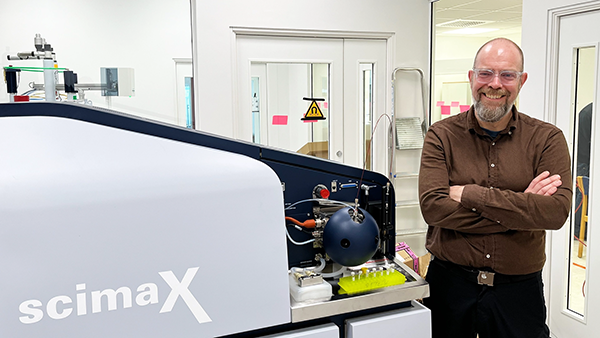
Photo taken by Retain.
3 Oct 2025
On 2 October 2025, Chalmers University of Technology officially inaugurated its new additive manufacturing infrastructure: AM@Chalmers and the Chalmers WISE Additive node.
3 Oct 2025
The Wallenberg Centre for Quantum Technology (WACQT) and the Wallenberg Initiative Materials Science for Sustainability (WISE) are launching a new call to spark collaboration at the cutting edge of research.
2 Oct 2025
—Imagine a world where vehicles, buildings, and even everyday devices become self-powering, seamlessly merging structure and storage. This is the vision of structural power composites. Structural power composites open the door to a future where every part of a product contributes not only to its form and strength, but also to its function as an energy source, says WISE Guest Professor Madhavi Srinivasan from Nanyang Technological University.
25 Sep 2025
-Our role is to act as a bridge between PhD students, postdocs, and WISE Research School management. We receive questions and concerns both from students and postdocs as well as from the RS management, which we bring to our meetings for discussion, says Yamini Portes, chairperson of the WISE Student Council and PhD student at Stockholm University.
24 Sep 2025
Join us for the 6th Machine Learning Meets Materials Science Seminar, part of the WISE–WASP initiative! Mark your calendars: October 1 at 10:00!
24 Sep 2025
We’re pleased to announce that registration is now open for the AM4Life/WISE Additive Autumn School on the theme “Post-processing in AM and Surface Engineering.”
24 Sep 2025
We are pleased to welcome Professor Johan Hjelm, WISE Guest Professor at Lund University (LU), and Professor Yury Gogotsi, WISE Guest Professor at Linköping University (LiU), for a joint digital event on October 2, 2025, from 15:00 to 16:00.
17 Sep 2025
At WISE, we love to share the stories of the people driving science forward. Meet Professor Chao Zhang, an Associate Professor at Uppsala University who is passionate about reimagining the future of energy.
10 Sep 2025
–Materials science can never be done in “vacuum.” By this I mean that sustainability and circular economy must be considered from the very beginning, and this requires collaboration. No one can be an expert in everything, says WISE Guest Professor Mari Lundström from Aalto University.
2 Sep 2025
On September 11, 2025, from 15:00 to 16:00, WISE (Wallenberg Initiative Materials Science for Sustainability) will host a special guest professor lecture featuring two leading international researchers in materials science.