
Host university: Stockholm University
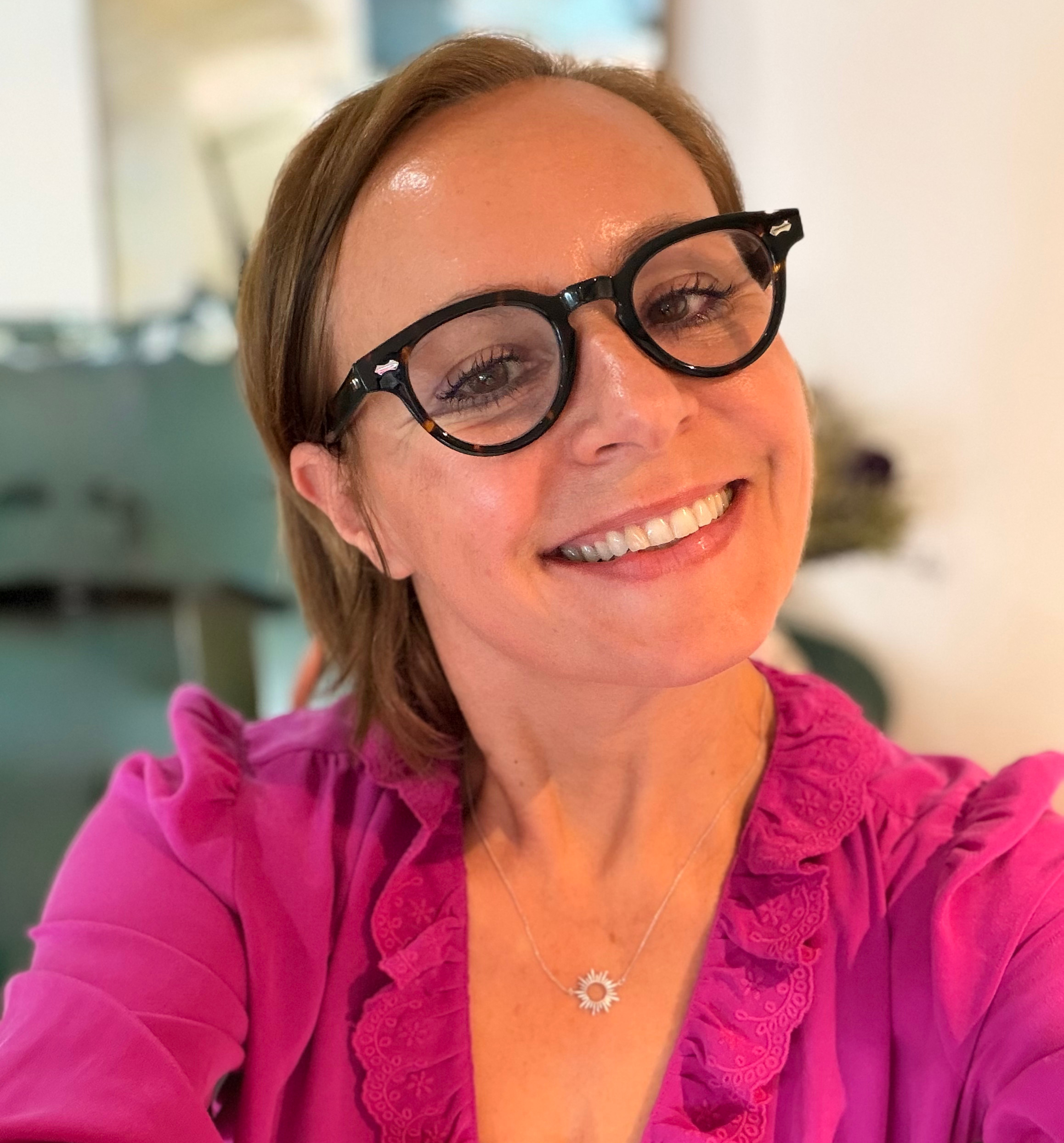
Magdalena Titirici
Active
Magda Titirici did her BSc at the University of Bucharest, her MSc jointly between the University of Rostock and University of Bucharest followed by a PhD started at the Johannes Guttenberg University Mainz and completed at the University of Dortmund in 2005. She did a 2 years postdoc at the Max-Planck Institute of Colloids and Interfaces in Potsdam near Berlin before becoming an independent group leader at the same institute. Magda obtained her German “Habilitation” in 2013. She then moved to the UK to take a “Reader” position at the School of Engineering and Materials Science, Queen Mary University of London being promoted to “Professor” only one year later. In 2019 Magda moved to the Department of Chemical Engineering, Imperial College London as a Chair in Sustainable Energy Materials. Magda has a RAEng Chair in Emerging Technologies. She also served as the “Director of Research” for the Chemical Engineering Department between 2020-2022. She is the President Elect of the Materials Chemistry Community Council at the Royal Society of Chemistry, and an International PI at the Advanced Institute for Materials Research (AIMR), University of Tohoku in Sendai Japan.
Magda’s research interests are in the field of sustainable materials for energy storage and conversion where she published around 400 papers being on the list of “Highley Cited Researchers” by Clarviate since 2018. Her research has been recognised by numerous awards from Royal Society of Chemistry: 2018 Corday-Morgan Prize; Institute of Materials and Mines: 2016 Rosenhain Medal and 2021 A. Griffith Medal and Prize, Royal Society: 2021 Royal Society Kavli Medal and 2023 Imperial College President Award for Excellent Research Team among others.
Magda leads a large (40 people) and very diverse research team (50% women) at Imperial College London. Only in 2023, four members of her groups obtained prestigious fellowships (Royal Society Research Fellow, Imperial Fellowship, Royal Academy of Engineering Fellowship) and academic positions at esteemed universities in the UK. She has many grants and projects with the developing world and is an active member of Africa Materials Research Society (MRS).
Magda has over 20 million in funding from RAEng, EPSRC (PI of a programme grant and a strategic equipment grant on automation for energy research), Faraday Institution (LISTAR, NEXGENA) Royal Society, EU and Industry (collaborations with BP, Shell, Petronas, Sinopec, Total, Toyota, etc).
Research question
My research focuses on developing sustainable materials and electrochemical technologies that can accelerate the transition to a net-zero society. At the heart of my work is a simple question: how can we store renewable electricity and produce sustainable chemicals using abundant resources, while minimizing environmental impact throughout the entire lifecycle?
My group develops next-generation batteries beyond lithium-ion, including sodium-ion, sodium-metal and multivalent battery systems, as well as electrocatalytic technologies for producing fuels and chemicals from renewable electricity. A particular focus is on designing materials from sustainable sources such as biomass, waste plastics and earth-abundant elements. We combine materials synthesis, advanced characterization, electrochemistry, automation and artificial intelligence to understand how materials function and to accelerate the discovery of more sustainable technologies.
Sustainability aspects
My research focuses on developing sustainable materials and electrochemical technologies that can accelerate the transition to a net-zero society. At the heart of my work is a simple question: how can we store renewable electricity and produce sustainable chemicals using abundant resources, while minimizing environmental impact throughout the entire lifecycle?
My group develops next-generation batteries beyond lithium-ion, including sodium-ion, sodium-metal and multivalent battery systems, as well as electrocatalytic technologies for producing fuels and chemicals from renewable electricity. A particular focus is on designing materials from sustainable sources such as biomass, waste plastics and earth-abundant elements. We combine materials synthesis, advanced characterization, electrochemistry, automation and artificial intelligence to understand how materials function and to accelerate the discovery of more sustainable technologies.
Host: Jiayin Yuan
Contact
Stockholm University
Magdalena Titirici
Professor
m.titirici@imperial.ac.uk
Explore invited professors under the WISE program
In this page, you will meet the WISE Invited Professors. The WISE invited professor (WIP) program is part of the recruitment and outreach activities of WISE and targets to establish research connections internationally. The purpose can be both to strengthen excellent research environments and to introduce new contacts and research areas into the Swedish research landscape. Through the WIP program, WISE will collaborate with internationally competitive research environments, enabling crucial networking. This page will be continuously updated.
Explore professors