
WISE Academic Projects 3 call 2026 – 2027
Application deadline: February 8, 2027 at 14:00
About WISE
The Wallenberg Initiative Materials Science for Sustainability (WISE, https://wise-materials.org) is the largest-ever investment in materials science in Sweden and will encompass major efforts at Sweden’s foremost universities over the course of (at least) 10 years. The aim is to create conditions for a sustainable society by researching the next generation of sustainable materials and manufacturing processes. This will also facilitate better technology for energy systems of the future, and to combat impacts such as climate change, pollution, and toxic emissions. Specifically, efforts will be devoted to identifying new or significantly improved materials, which provide a distinct advantage in physical, chemical, biological, or functional performance when compared to existing materials and technologies. This relates to materials that demand fewer and less resources, are less environmentally hazardous, and enable sound and efficient recycling processes. WISE will also explore materials that are relevant for energy technologies that will reduce negative environmental impacts.
Figure 1 The WISE matrix
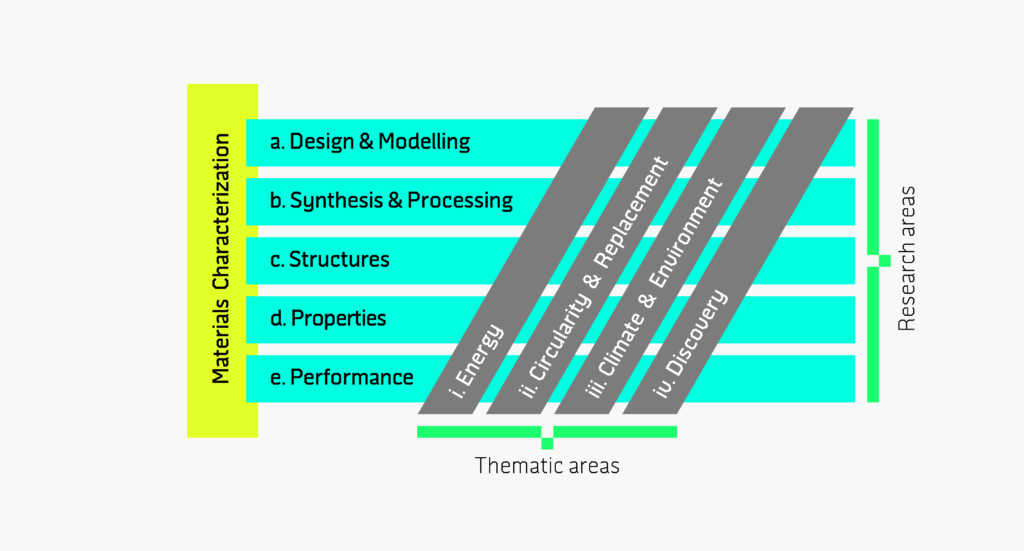
In this call, WISE is offering funding for up to 29 academic doctoral student positions and up to 29 academic postdoctoral researcher positions. Proposals in all areas of WISE are welcome. That is, proposed projects should be easily identifiable in the “WISE program matrix” (see Figure 1). Proposals are for a single PhD student or a single postdoc researcher.
WISE has the aim to promote a wide coverage of PhD and postdoc projects spanning the WISE matrix and with supervisors at different stages of academic seniority. WISE welcomes applicants with different backgrounds, experiences, and perspectives – diversity enriches our work and helps us grow. Preserving everyone’s equal value, rights, and opportunities is a natural part of WISE.
The sustainability focus in WISE-ap3 is enhanced by requiring a co-applicant with sustainability expertise. Your project should clearly comprise both excellent materials science and impactful contribution to a sustainable future, ensured by the contribution of the sustainability co-applicant throughout the project. Furthermore, it is mandatory for applicants to use a methodology to cover sustainability aspects of the proposed research in the preparation of the application: for instance, the WISE ASSIST tool.
Eligibility
This call is open for academic researchers (with qualification to be main supervisor according to the respective university) employed at least 50% at one of WISE’s eight partner universities, Chalmers University of Technology, KTH Royal Institute of Technology, Linköping University (LiU), Lund University (LU), Uppsala University (UU), Stockholm University (SU), Luleå University of Technology (LTU), and Umeå University (UmU) or with any of the affiliated groups of excellence at University of Gothenburg (GU), Karlstad University (KAU), and Örebro University (ORU).
The sustainability expert co-applicant should be employed at any Swedish university, industry, consultant company, or institute.
The maximum number of applications that may be submitted from each participating university is shown in Table 1. The pre-screening and selection of applications will be handled internally at each university as described in the section titled Evaluation Process.
Note that you should not apply through the WISE submission portal unless already approved during your university’s pre-screening process. For more information, contact your WISE University Representatives (URG members).
Table 1
| PhD proposal | Postdoc proposal | Total (per university) | Total (all universities) | |
| Chalmers, KTH, LiU, LU, SU, UU | 8 | 8 | 16 | 96 |
| LTU, UmU | 4 | 4 | 8 | 16 |
| Other associated (KAU, ORU, GU) | 1 | 1 | 2 | 6 |
| Total → | 118 |
A researcher can submit a maximum of one proposal as principal investigator. If you currently have WISE-funded activities, WISE expects significant novelty in your proposal in comparison to your previous proposal.
The sustainability expert can be co-applicant on a maximum of three proposals.
Evaluation Process
Projects will be pre-screened by each participating university to a maximum number of proposals (see Table 1) before submission to WISE. The pre-screening process may vary between universities, and it is the responsibility of the potential applicant to determine and adhere to any local instructions (contact the local URG member for details). Once submitted to WISE, the project proposals will be evaluated by one of four panels (corresponding to thematic areas i-iv, see Figure 1) of qualified international scientists and experts, generating a short-list.
The evaluation criteria that will be used for evaluating the project proposals are:
- Relevance to WISE (contribution to the program and placement in the WISE matrix)
- Scientific excellence and novelty of the proposed research (novelty will be of extra importance for proposals submitted to evaluation panel iv)
- Relevance and potential impact of the proposed project’s contribution to sustainable development
- Scientific merits of the applicant (taking into account academic age) and relevant merits of the sustainability co-applicant
- Feasibility
Proposal structure
The proposal should be composed in Times New Roman font, 12 pt, single-spaced text, margins 2.5 cm, and be structured as follows:
Project Description (max. 4 pages, references can be added beyond the page limit)
- Motivation, Significance, and Scientific Challenges
-
- Include a clear description of the visions and goals, the distinguishing features, and foci
-
- Include a motivation for why a doctoral student or postdoc is most appropriate for the proposed project
- State of the Art
- Scientific Approach, Methodology, and Novelty
-
- Describe the research contribution
- Preliminary and Previous Results
-
- Include results from previous related projects, if applicable.
- Research Environment and Supervision
-
- Description of research environment and infrastructure (demonstrating feasibility of the proposed project)
-
- Research supervision plan (for PhDs) and/or career development plan (for postdocs)
-
- List of key collaborators and their roles for the project, if applicable
Relevance to WISE (max ½ page, references can be added beyond the page limit)
-
- Select main WISE thematic area i-iv (see Figure 1)
-
- Select main WISE research area a-e (see Figure 1)
-
- Include a detailed explanation of primary (and possibly secondary) focus in the WISE research areas (a-e) and thematic areas (i-iv) (see Figure 1).
Relevance and Significance of Sustainability Aspects (max. 2 pages, references can be added beyond the page limit)
Besides integrating sustainability in the main application, a stand-alone text should include:
-
- A short introduction summarizing the proposed material science.
-
- Brief presentation of the sustainability methodology/methodologies1
-
- Sustainability Aspects and Impacts
- Description of the sustainability aspects addressed by the project, including how these relate to the UN Sustainable Development Goals (SDGs) from a materials science perspective as highlighted by the WISE program’s guidance “Sustainability considerations for excellent materials research conducted in WISE”).
- The description should include a reflection over advances/advantages as well as potential sustainability-related drawbacks or trade-offs with respect to the materials used or potential application developed. Below are some examples (in line with WISE Assist) to consider:
- Sourcing of materials
- Material criticality
- Resource efficiency
- Enabling circularity
- Environmental pressures
- Environmental and societal risk factors
- When applicable, need for further studies with respect to scaling or quantitative assessment could be described.
- Sustainability Aspects and Impacts
CV of the PI (main supervisor) (max. 2 pages, the publication list can be added beyond the page limit) including:
-
- Name, title, and affiliation
-
- PhD year
-
- Previous positions (and relevant supervisors)
-
- Periods of leave (parental, health-related, etc.), if applicable
-
- List of ongoing grants/projects
-
- (Optional) Short descriptions of utilization, commercialization, outreach, pedagogical, or other activities of relevance, e.g. efforts in sustainability
-
- Number (not name list) of current and number of former PhD students, postdocs, and master students
-
- List of 10 publications including:
-
-
- 5 most important publications (during past 15 active years)
-
-
-
- 5 recent publications most relevant for the proposed project (during past 7 active years)
-
-
- The PI should provide relevant bibliometric data and additional excellence markers of relevance to the proposed project.
-
- Link to Google Scholar profile or similar
CV of the sustainability co-applicant (max 2 pages, the appendices can be added beyond the page limit) including:
-
- Name, title, position, and affiliation
-
- Education
-
- Expertise and experience in sustainability of relevance to the proposed project
-
- Brief statement of role and planned activities in the project
-
- If applicable, describe any conflicts of interest, for example, any financial or personal dependencies between the company, the scholar, the higher education institute, or the supervisor(s)/PI(s).
-
- Appendix may include:
-
-
- (Optional) List of max 10 publications of relevance (no time limit)
-
-
-
- (Optional) List of patents
-
-
-
- (Optional) Link to Google Scholar profile or similar
-
Responsibilities
Academic recipients of awarded proposals (i.e., applicant/ supervisor) will become WISE faculty members and are expected to be engaged in the WISE program, including, e.g., attendance at WISE workshops and events, ensuring that WISE-financed PhD students and postdocs are members of WISE Research School, use WISE affiliation and acknowledge WISE and KAW in publications, conference presentations and in relevant communication channels, as well as submit requested reports to WISE Program Office. In addition, WISE expects that recipients of project funding from WISE are committed to maintaining an updated ORCID account.
The sustainability experts of awarded proposals (i.e., co-applicant) will be invited to WISE events and are expected to submit requested reports to the WISE Program Office.
Funding
PhD student project
Salary (including 52,5% social fees) for PhD student, 4 years full-time studies that can be extended to 5 years if the doctoral studies are carried out at 80% full-time
Salary (including 52,5% social fees) for supervision up to 10% of 4-year FTE for a maximum of 5 years.
Costs for travel to WISE events, and consumables will be covered up to 50 kSEK/year (total 200 kSEK).
Salary (including 52,5% social fees) for sustainability expertise contributions up to 10% of 4-year FTE for a maximum of 5 years up to 775 kSEK including travel costs.
The costs include a maximum of 5% surcharge for premises and a maximum of 20% surcharge for indirect costs.
Postdoc project
Salary (including 52,5% social fees) for postdoc, 2 years full-time that can be extended to 2.5 years if the research is carried out at 80% full-time.
Salary (including 52,5% social fees) for mentorship up to 5% of 2-year FTE during a maximum of 2.5 years.
Costs for travel to WISE events, and consumables will be covered up to 25 kSEK/year (total 50 kSEK).
Salary (including 52,5% social fees) for sustainability expertise contributions up to 10% of 2-year FTE for a maximum of 2.5 years up to 385 kSEK including travel costs.
The costs include a maximum of 5% surcharge for premises and a maximum of 20% surcharge for indirect costs.
Submission
The proposal should be submitted as a single PDF file to the submission portal. The link will be provided by your local WISE University Representative Group member.
Timeline
| 2026-02-15 | Call text available | |
| 2026-12-01 | Application portal opens | |
| 2027-02-08 | Call closes | |
| 2027-05 | Decision of accepted projects communicated | |
| 2028-08-01 | All candidates ready to start (individual decision can be made later) | |
| 2028-08
(preliminary date) |
WISE Welcome Meeting 2028 (mandatory participation for PhD students and postdocs) | |
Public access and confidentiality of the applications
Both the applying university and Linköping University (LiU) are subject to the principle of public access to official documents. A summary of the related laws and regulations is given here.
Call text in pdf
Q&A and Evaluation criteria and grading scales
Download the Evaluation criteria and grading scales here.
Contact
Should you have any questions do not hesitate to contact us at info@wise-materials.org