
Host university: Luleå University of Technology
Federico Rosei
Active
Host
Alberto Vomeiro
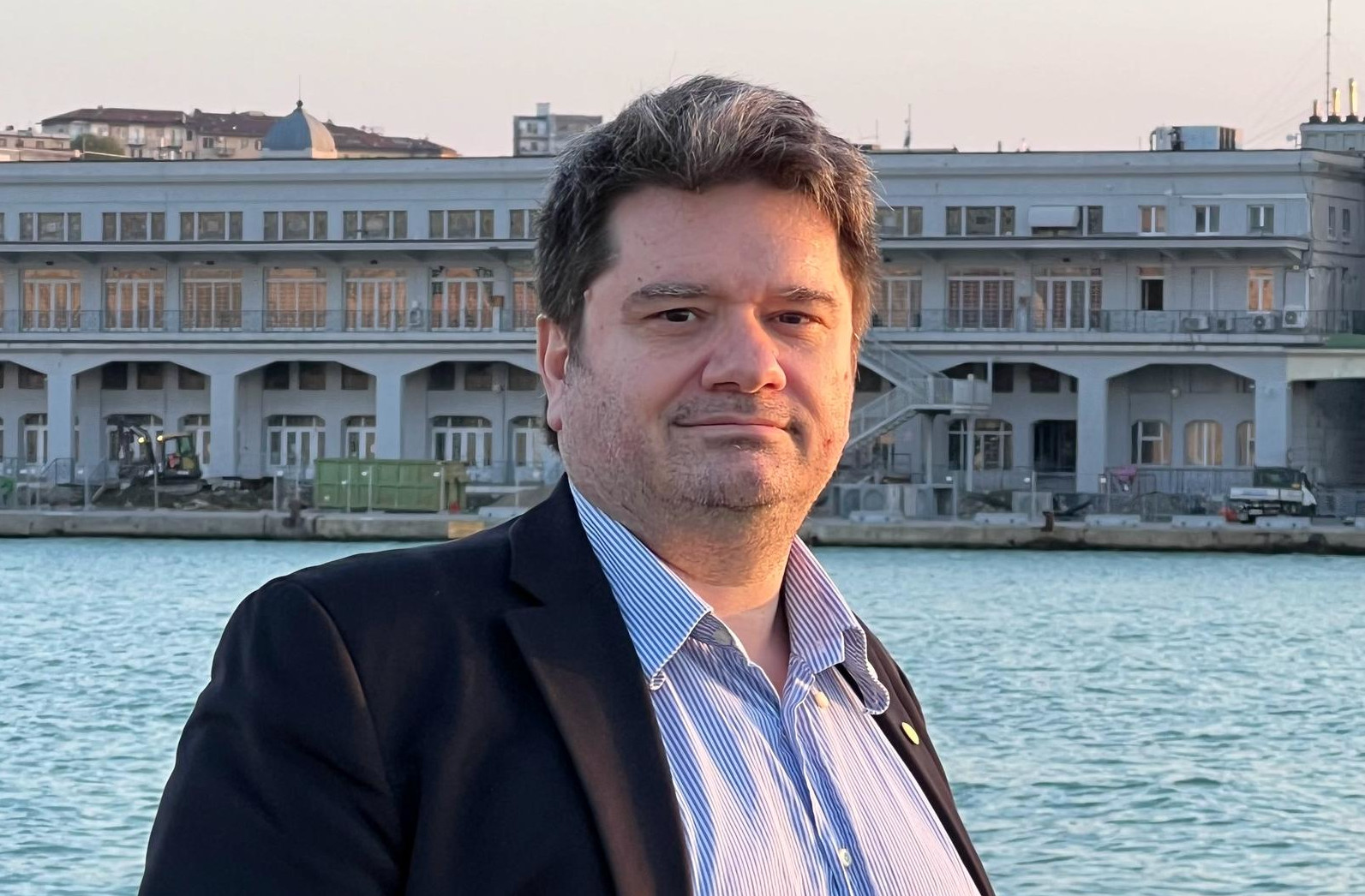
Federico Rosei (MSc (1996) and PhD (2001) from the University of Rome “La Sapienza”) is Full Professor at the Centre Énergie, Matériaux et Télécommunications, Institut National de la Recherche Scientifique, Varennes (QC) Canada, where he served as Director (07/2011–03/2019), currently on leave. He held the Canada Research Chair (Junior) in Nanostructured Organic and Inorganic Materials (2003–2013) and the Canada Research Chair (Senior) in Nanostructured Materials (2016–2023). Since January 2014 he holds the UNESCO Chair in Materials and Technologies for Energy Conversion, Saving and Storage. Since March 2023 he holds the Chair of Industrial Chemistry at the Department of Chemical and Pharmaceutical Sciences, University of Trieste.
Dr. Rosei’s research interests focus on structure/property relationships in nanomaterials and their use as building blocks in emerging technologies. His research has been supported by multiple funding sources from the Province of Quebec, the Federal Government of Canada as well as international agencies, for a total in excess of M$ 18. He has worked in partnership with over twenty Canadian R&D companies. He is co-inventor of three patents and has published over 485 articles in prestigious international journals (including Science, Nature Phot., Nature Mater., Nature Chem., Proc. Nat. Acad. Sci., Adv. Mater., Angew. Chem., J. Am. Chem. Soc., Adv. Func. Mater., Adv. En. Mat., ACS Nano, Biomaterials, etc.), which have been cited over 25,500 times (H index = 83). He has been invited to speak at over 375 international conferences (50 Keynotes, 30 Plenaries) and has given over 280 seminars and colloquia, over 60 professional development lectures and 50 public lectures in 51 countries on all inhabited continents.
He is Fellow of numerous prestigious national and international societies and academies, including: the Royal Society of Canada, the European Academy of Science, the Academia Europaea, the European Academy of Sciences and Arts, Royal Flemish Academy of Belgium for Science and the Arts (Foreign), the African Academy of Sciences, the World Academy of Art and Science, the World Academy of Ceramics, the American Physical Society, the Materials Research Society, AAAS, the American Ceramic Society, Optica, SPIE, the Canadian Academy of Engineering, ASM International, the Royal Society of Chemistry (UK), the Institute of Physics, the Institution of Engineering and Technology, the Institute of Materials, Metallurgy and Mining, the Engineering Institute of Canada, the Australian Institute of Physics, the Chinese Chemical Society (Honorary), the Mexican Academy of Engineering (Corresponding), the Bangladesh Academy of Sciences (Foreign), Senior Member of IEEE, Global Young Academy (Alumnus) and Member of the Sigma Xi Society.
He has received several awards and honours, including the FQRNT Strategic Professorship (2002–2007), the Tan Chin Tuan visiting Fellowship (NTU 2008), the Senior Gledden Visiting Fellowship (UWA 2009), UWA Professor at Large (2010–2012), a Marie Curie Post-Doctoral Fellowship (2001), a F.W. Bessel Award (Humboldt foundation 2011), the Rutherford Memorial Medal in Chemistry (Royal Society of Canada 2011), the Herzberg Medal (Canadian Association of Physics 2013), the Brian Ives Lectureship (ASM international 2013), the Award for Excellence in Materials Chemistry (CSC 2014), the NSERC EWR Steacie Memorial Fellowship (2014), the José Vasconcelos Award for Education (World Cultural Council 2014), IEEE Distinguished Lectureships (NTC 2015–2016, Photonics Society 2020–2022, Electron Devices Society 2022– 2024), the Lash Miller Award (ECS 2015), the Chang Jiang Scholar Award (China), the Khwarizmi International Award (Iran), the Recognition for Excellence in Mentorship (American Vacuum Society 2015), the Selby Fellowship (Australian Academy of Sciences 2016), the J.C. Polanyi Award (Canadian Society for Chemistry 2016), the Outstanding Engineer Award (IEEE Canada 2017), the President’s Visiting Fellowship for Distinguished Scientists (Chinese Academy of Sciences 2017), the Sigma Xi Distinguished Lectureship (2018–2020), the Sichuan 1000 talent (short term) award, the Lee Hsun Lecture Award (2018), the Changbai Mountain Friendship Award (2018), the IEEE Montreal Gold Medal (2018), the APS John Wheatley Award (2019), the Blaise Pascal Medal (European Academy of Science 2019), the Guangxi Golden Silkball Friendship Award (2020), the TMS Brimacombe Medal (2021), the Wolfson Fellowship (Royal Society), the Prix Urgel Archambault (ACFAS 2021), the Prix du Quebec “Marie Victorin” (2021), the J.C. Smith Medal (Engineering Institute of Canada 2022), the Premio Nazionale “Gentile da Fabriano” (Associazione Premio Gentile, Italy 2022), the Envoy of People’s Friendship Award (Jiangsu Province, 2022), the Brockhouse Medal (Canadian Association of Physics 2022), the Canadian Light Source – TK Sham Award in Materials Chemistry (CSC 2023), the Spirit of Salam Award (ICTP 2023), a Guggenheim Fellowship in Engineering (2023), Knight of the National Order of Quebec (2023) and the AVS Nanotechnology Recognition Award (2024).
Research question
Federico began his scientific career in Italy, where he studied physics. After a short period in Denmark, he moved to Canada, where he spent a large part of his career before recently returning to Italy to the University of Trieste. During this time, his research gradually shifted toward materials science and applied physics, allowing him to focus on addressing major societal challenges.
Over the past 15 years, his work has centered on solar technologies, particularly photovoltaic materials (like those used in solar cells), photoelectrochemical cells for hydrogen production from water, and solar windows (transparent surfaces capable of generating electricity). In the lab, they design and synthesize new materials, study their properties, and use them as building blocks to develop solar technological devices, which then is tested and evaluated for performance.
Sustainability aspects
In his research, he addresses several Sustainable Development Goals (SDGs), specifically SDGs 3, 4, 6, 7, 9, 12, and 13. While he thought for a long time that energy (SDG 7) was the bottleneck, he eventually realized that SDG 12 (Responsible Consumption and Production) is the most pressing challenge. Society is increasingly dependent on technology. Smartphones, for example: people’s entire lives are stored in them. Yet most of people are unaware of how energy-intensive their production processes are, how toxic or scarce some of the materials used in these devices can be, or how poorly many technologies are designed for recycling.
In short, the energy transition needs to be viewed from a broader perspective. It’s not enough to develop the most efficient solar cells, the entire manufacturing process and end-of-life management must also be sustainable. A similar challenge exists with batteries for vehicle electrification: do we even have enough lithium to meet the increasing demand?
Contact
Luleå University of Technology
Federico Rosei
Professor
FEDERICO.ROSEI@units.it
Explore invited professors under the WISE program
In this page, you will meet the WISE Invited Professors. The WISE invited professor (WIP) program is part of the recruitment and outreach activities of WISE and targets to establish research connections internationally. The purpose can be both to strengthen excellent research environments and to introduce new contacts and research areas into the Swedish research landscape. Through the WIP program, WISE will collaborate with internationally competitive research environments, enabling crucial networking. This page will be continuously updated.
Explore professors